



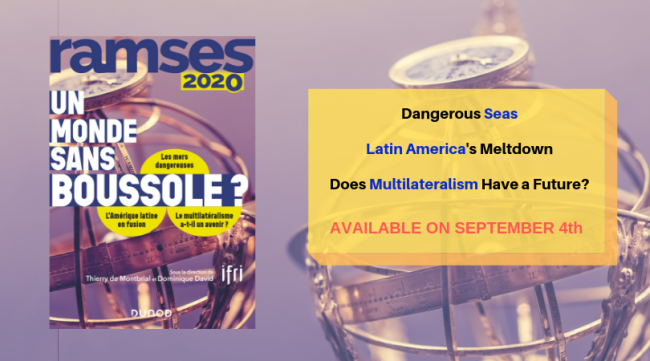
RAMSES 2020. A World without a Compass?
RAMSES 2020. A World without a Compass?, written by Ifri's research team and external experts, offers an in-depth and up-to-date analysis of geopolitics in today’s world.
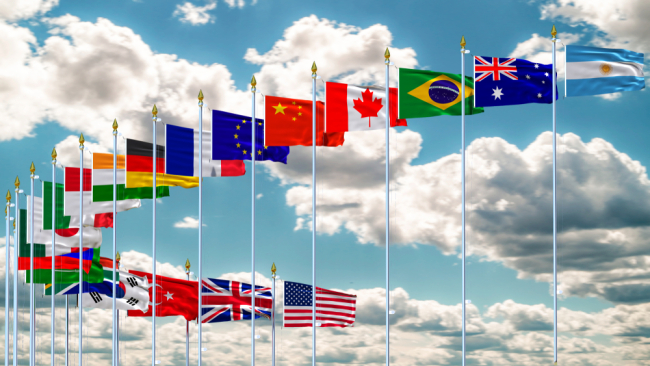
Sustaining Multilateralism in a Multipolar World. What France and Germany Can Do to Preserve the Multilateral Order
While international multilateralism is under strain, it is vital for France and Germany to defend it, since it is the most appropriate system for preserving their interests – particularly in terms of welfare, security, prosperity and environmental protection. Against this backdrop, three political fields offer opportunities for joint initiatives: trade, conventional arms control and climate change.
Seven Years of The 16+1: An Assessment of China’s ‘Multilateral Bilateralism’ in Central Europe
Since mid-2012, in the wake of the global financial crisis, China has sought to reinvigorate relations with Central and Eastern Europe (CEE), notably through the creation of the 16+1 formula.
International trade disagreements: Beyond Trump
The trade war between the United States and China is not only due to Donald Trump’s impulsiveness. Its roots are in fact profound and follow three structural changes in the multilateral trading system: the reversal of comparative advantages, the now central role of certain developing countries, and the re-balancing of power that makes coordination between states difficult. In this context, the future of world trade has yet to be written.

Middle East, the new "Great Game"
Will a divided Middle East become the center of a new “Great Game”? The world’s global powers are aligned in it: the United States, falsely tempted by retraction; Russia, establishing its position in an unexpected state of play, France, destabilized by the contradictions of its own policy… In addition are tussles for regional hegemony between Iran, Turkey, and Saudi Arabia.
Russia in the Middle East: Back to a “Grand Strategy” – or Enforcing Multilateralism?
Russian military intervention in Syria was not an attempt to exert dominance as a hegemonic power in the Middle East.
“Minilateralism”: A New Form of Defense Cooperation
Multilateralism has played a significant role in international cooperation.
The Internet and the Flaws of Multistakeholderism
The Internet Governance debate opposes multilateral thinking, favoring the role of State and interstate bodies, with a multistakeholder model, which aims to unite all concerned actors: states, business, experts, academics and internet groups, among others.
What Role for the EU in Doha?
Historical leader of the fight against climate change, the European Union’s influence declined in Copenhagen. This opened the way to the so-called BASIC countries to show their willingness to become a driving force in the international climate agenda. Interestingly enough, the Copenhagen conference also introduced a welcome shift in the traditional UN separation between developed and non-developed countries.
Ifri, a foundation recognized as being of public utility, relies largely on private donors – companies and individuals – to guarantee its sustainability and intellectual independence. Through their funding, donors help maintain the Institute's position among the world's leading think tanks. By benefiting from an internationally recognized network and expertise, donors refine their understanding of geopolitical risk and its consequences on global politics and the economy. In 2026, Ifri partners with over 90 French and international companies and organizations.
