





Practical information
Please find here all the substantive elements related to the conference held on April 27, which marks the launching of an axis of research on Canada.The morning started with a few introductory remarks by Thierry de Montbrial and the Honourable Geoff Regan, MP and Speaker of the House of Commons, followed by a discussion with the audience. The Honourable Lawrence Cannon, Canadian ambassador in Paris, also participated in the general debate.
The Hounourable Geoff Regan was heading an all-party parliamentary delegation, comprised of the Honourable Andrew Leslie (liberal MP for Orléans and former former chief of the Canadian land staff), the Honourable Marjolaine Boutin-Sweet (MP for Hochelaga and NDP whip) and Gord Brown (MP for Leeds-Greenville and chwhip)

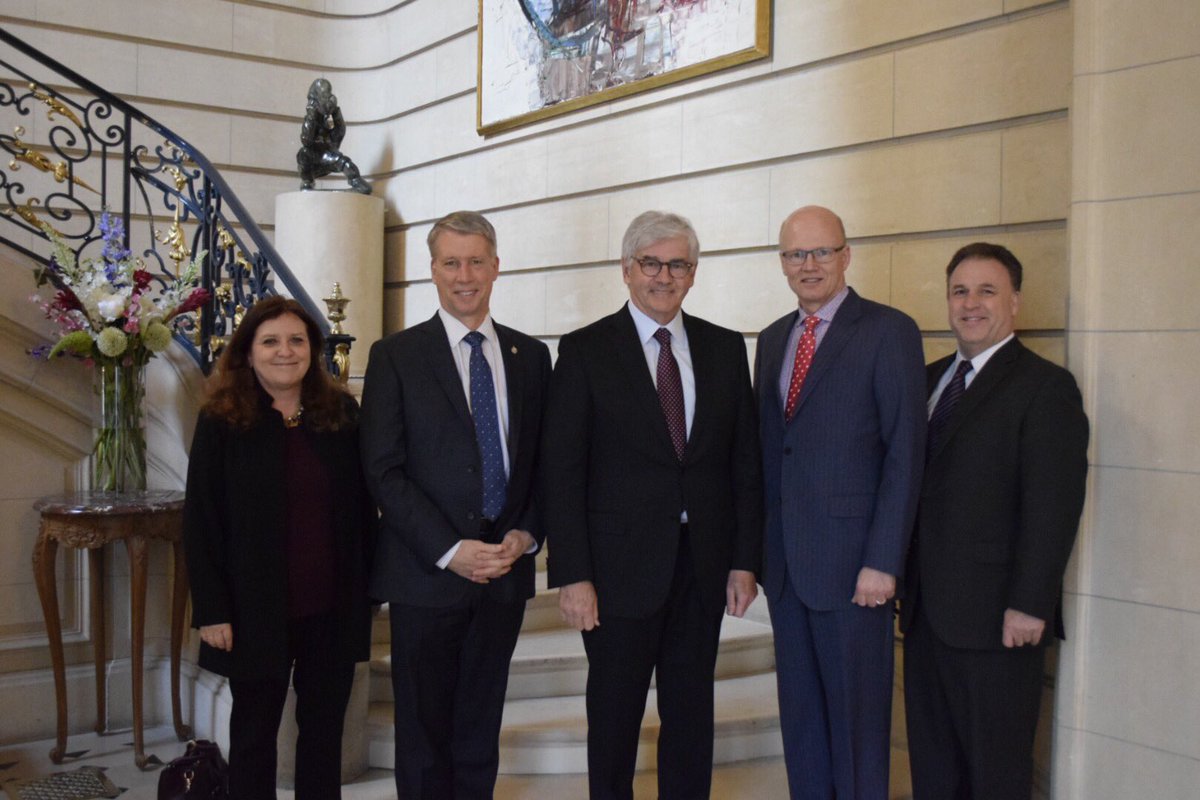
Geoff Regan and Lawrence Cannon at Ifri on April 27. The parliamentary delegation at the ambassador's residence on April 27.
1st theme : environmental policy under Trudeau
Céline Bak, president of Analytica Advisors and researcher at the Centre for International Governance and Innovation (CIGI), and Carole Mathieu, researcher at the Ifri Centre for Energy, presented the audience with the expected changes regarding the country's environmental policy. More particularly, the discussion evolved around the anouncements made at the COP 21, carbon pricing and the future of clean technologies in Canada.
For more information on this panel, please refer to Celine Bak's presentation and video available below (in French).
2nd theme : CETA, a next generation free trade agreement
The discussion between Richard Ouellet, full professor at Laval University in Quebec city, and Sabrina Robert-Cuendet, lecturer at la Sorbonne's Law School, focused on the forthcoming ratification of the Comprehensive Economic and Trade Agreement (CETA); many innovations are indeed to be expected from the coming into force of the free trade agreement.
For more information on this panel, please refer to Richard Ouellet's presentation and video available below (in French).
3rd theme: Canada's defense and security policy
Ferry de Kerckhove, former Canadian ambassador to Egypt and researcher at the Centre for International Policy Studies (CIPS) discussed Canada's strategic outlook with Jean-Baptiste Jeangène-Vilmère, mission officer at the Centre for Analysis, Planning and Strategy at the French Ministry of Foreign Affairs and International Development. Attention was paid to Canada's action in the Middle East and to the concept of "responsible conviction".
For more information on this panel, please refer to Ferry de Kerckhove's video available below (in French); we also recommend the his latest publication (in English).
Debates were held in French.
Related Subjects
Other events
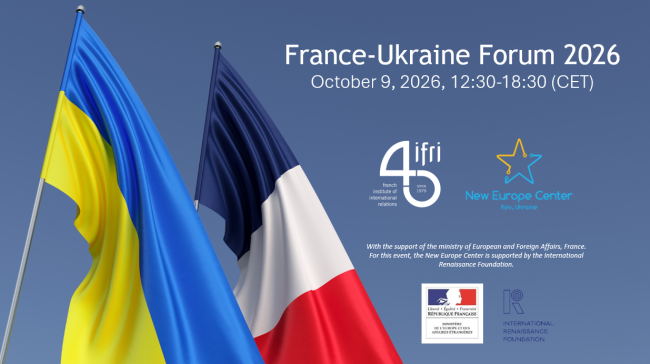
France-Ukraine Forum 2026
More than four and a half years after the start of the full-scale war launched by Russia against Ukraine, the 2026 France-Ukraine Forum will bring together policymakers, experts, academics, and civil society representatives from both countries to discuss three main topics: the formats and conditions for a lasting diplomatic settlement; Ukraine’s Euro-Atlantic integration, encompassing both the EU accession process and closer ties with NATO; and the societal transformations of postwar Ukraine, as well as its prospects for reconstruction.
The EU in a World of Economic Warfare: Trade, Geopolitics, and the Battle for Economic Sovereignty
The international trading system has become a primary theatre of geopolitical competition. Tariffs, sanctions, and technology controls have replaced dialogue as the default instruments of economic relations.
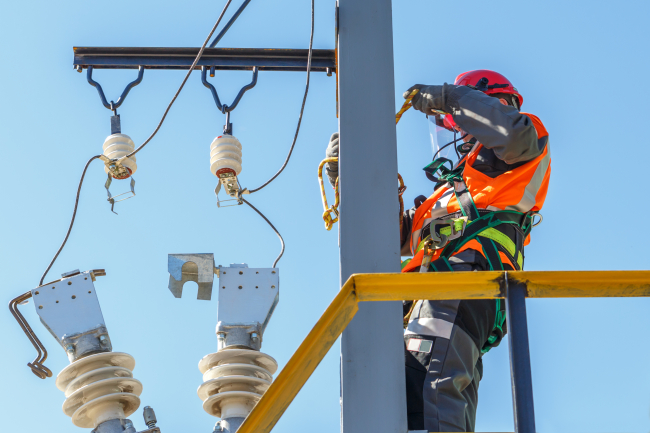
The Road to 27 Electrification Action Plans: Planning and Investing in Europe’s Electric Future
The European Commission’s Electrification Action Plan places the continent on an electric path to structurally reduce dependence on fossil fuel imports and boost the energy transition in industry, transport and buildings.