



Chinese Investment in Europe. A Country-Level Approach
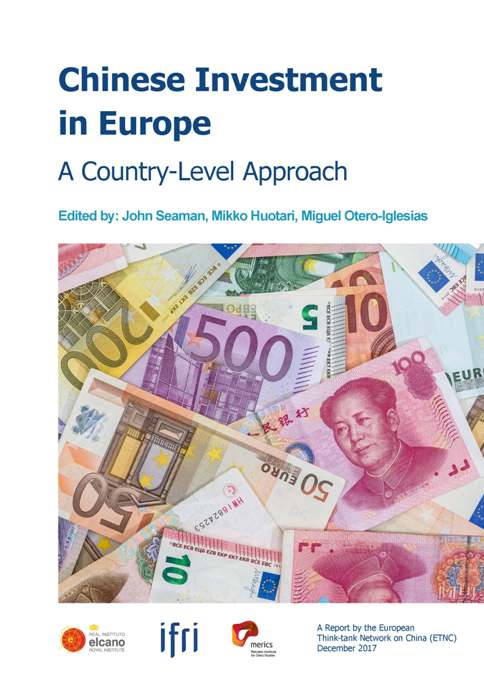
Chinese investments in Europe have surged in recent years, becoming both a source of hope and growing concern across the continent.
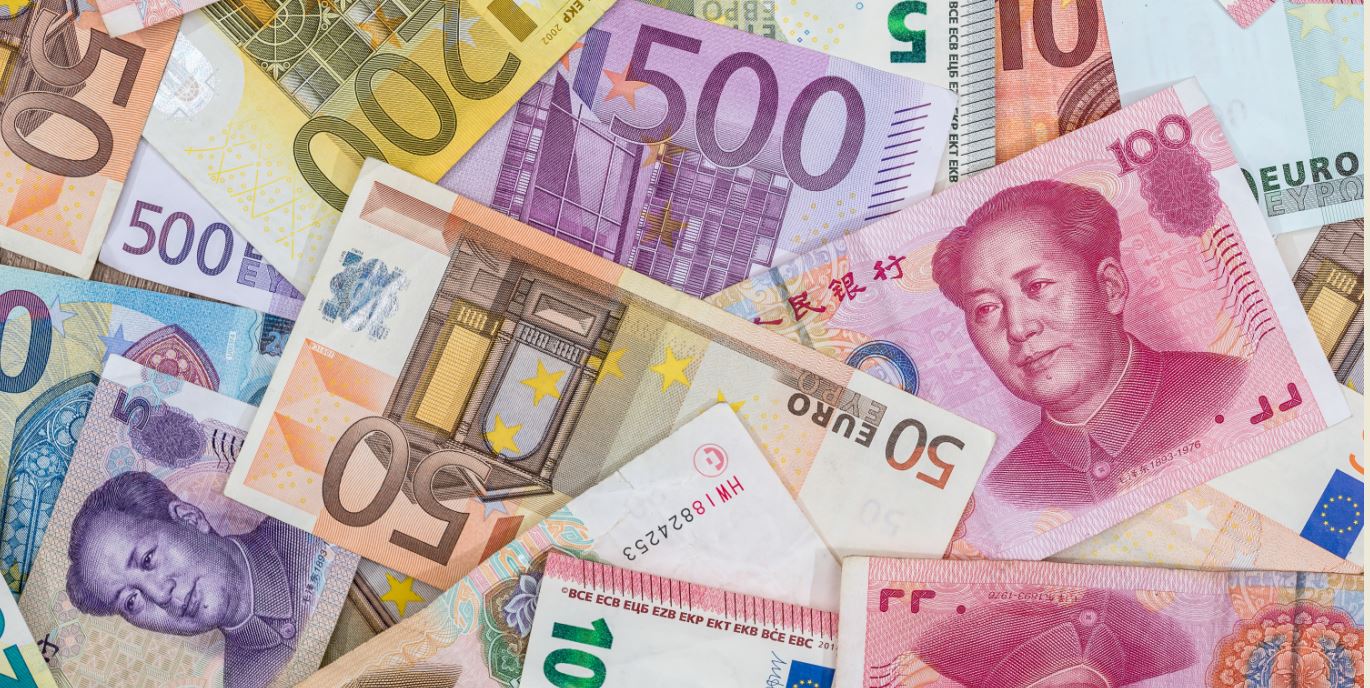
Foreign direct investment (FDI) in the European Union traced back to mainland China hit a record EUR 35 billion in 2016, compared with only EUR 1.6 billion in 2010, according to data gathered by the Rhodium Group. In a historic shift, the flow of Chinese direct investment into Europe has surpassed the declining flows of annual European direct investments into China. As China continues to grow, develop, and integrate into the global economy, its overseas investments expand in quantity and quality, reflecting both the growing sophistication of the Chinese economy and broader Chinese commercial and policy goals. Going beyond FDI, Chinese investment is creating new realities for Europe-China relations.
This report by the European Think-tank Network on China (ETNC) brings together original analysis from 19 European countries to better understand these trends and their consequences for policy making and Europe-China relations, including at the bilateral, subregional and EU levels. As in all ETNC reports, it seeks to do so using a country-level approach. Through these case studies, including an introductory explanation and analysis of EU-wide data, the report aims to identify and contextualize the motives for Chinese investment in Europe and the vehicles used. However, the originality of the report also lies in the analysis of national-level debates on China, Chinese investment, and openness to foreign investment more generally. This is not just a story about FDI strictly defined, but about the (geo)political implications that emanate from deeper economic interaction with China. Ultimately, Europe is far from speaking with a single voice on these matters, and identifying where the divergences and convergences lie will be crucial in formulating solid and complementary policy positions at the EU and national level moving forward.
This report is the third in an on-going effort to dissect and reassemble Europe–China relations from a European country-level perspective. The first roundtable discussions on the report were graciously hosted by the Finnish Institute of International Affairs (FIIA) in Helsinki in May 2017, and its conclusions further refined in discussions organized at the Istituto Affari Internazionali (IAI) in Rome in October 2017. The report has been coordinated by Ifri with the active participation of all ETNC institutions and an equal sharing of publication costs between Ifri, Elcano and MERICS.

List of institutions contributing to ETNC
Coordinating Institutions
- French Institute of International Relations (Ifri), France
- Elcano Royal Institute, Spain
- Mercator Institute for China Studies (MERICS), Germany
Participating Institutions
- Egmont Royal Institute for International Relations, Belgium
- Institute of International Relations, Czech Republic
- Danish Institute for International Studies (DIIS), Denmark
- Finnish Institute for International Affairs, Finland
- Institute of International Economic Relations, Greece
- Corvinus University of Budapest, Hungary
- Istituto Affari Internazionali (IAI), Italy
- Latvian Institute of International Affairs (LIIA), Latvia
- The Netherlands Institute of International Relations “Clingendael”,
The Netherlands - Norwegian Institute of International Affairs (NUPI), Norway
- Polish Institute of International Affairs (PISM), Poland
- University of Aveiro, Portugal
- Institute for World Economy, Romanian Academy, Romania
- University of Economics in Bratislava, Slovakia
- The Swedish Institute of International Affairs (UI), Sweden
- Chatham House, United Kingdom
This Report is available in English only

Available in:
Regions and themes
ISBN / ISSN
Share
This page contains only a summary of our work. If you would like to have access to all the information from our research on the subject, you can download the full version in PDF format.
Chinese Investment in Europe. A Country-Level Approach



Center for Asian Studies
Asia is a nerve center for multiple global economic, political and security challenges. The Center for Asian Studies provides documented expertise and a platform for discussion on Asian issues to accompany decision makers and explain and contextualize developments in the region for the sake of a larger public dialogue.
The Center's research is organized along two major axes: relations between Asia's major powers and the rest of the world; and internal economic and social dynamics of Asian countries. The Center's research focuses primarily on China, Japan, India, Taiwan and the Indo-Pacific, but also covers Southeast Asia, the Korean peninsula and the Pacific Islands.
The Centre for Asian Studies maintains close institutional links with counterpart research institutes in Europe and Asia, and its researchers regularly carry out fieldwork in the region.
The Center organizes closed-door roundtables, expert-level seminars and a number of public events, including an Annual Conference, that welcome experts from Asia, Europe and the United States. The work of Center’s researchers, as well as that of their partners, is regularly published in the Center’s electronic journal Asie.Visions.
European Think-tank Network on China (ETNC)
The European Think-tank Network on China (ETNC) is a gathering of China experts from a selection of European research institutes. It is devoted to the policy-oriented study of Chinese foreign policy and relations between China and European countries as well as China and the EU. It facilitates regular exchanges among participating researchers with a view to deepening the understanding within the European policy and research community and the broader public of how Europe, as a complex set of actors, relates with China and how China’s development and evolving global role is likely to impact the future of Europe. The network’s discussions and analyses take a decidedly ‘bottom-up’ approach, accounting for the various aspects of bilateral relations between European countries and China, and the points of convergence and divergence among EU member states in order to examine EU-China relations in a realistic and comprehensive way. The views presented in ETNC reports are the sole responsibility of the signed authors and do not in any way represent the views of all members of the ETNC, its participating institutions, nor the institutions with which the authors are affiliated.
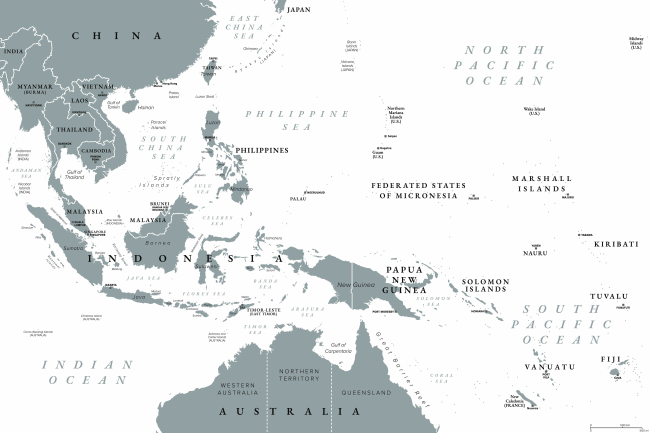
The Oceania Factor in France’s Evolving Indo-Pacific Strategy
This paper examines the two-way relationship between France’s Indo-Pacific strategy and developments in Oceania. Oceania was not a priority in the initial years of France’s Indo-Pacific strategy, as the region was largely treated as secondary to major strategic hotspots and key partnerships, while overseas territories were primarily handled as domestic issues and recipients of a top-down strategy.

France’s View: From Diplomacy to Public-Private Action
France has emerged as the EU’s IMEC forerunner, combining port infrastructure, diplomatic alliances and public-private cooperation. With Marseille Fos at its core, the country brings a strategic hub for logistics, energy and digital connectivity to the corridor.
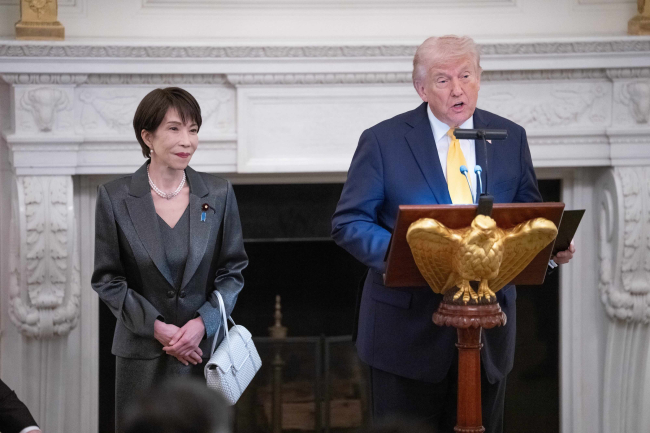
Trump II, the Crisis of the Rules-Based Order and Europe’s Indo-Pacific Strategy
This article examines the implications of Trump II for Europe’s engagement in the Indo-Pacific. The piece contends that Trump II is accelerating the erosion of the rules-based order and undermining the relevance of the Free and Open Indo-Pacific (FOIP) concept, while forcing Europe to refocus on its own continental security amid US retrenchment. Paradoxically, these very constraints create conditions for a more autonomous, pragmatic, and explicitly interest-driven European engagement in the Indo-Pacific, rather than outright withdrawal.
China and Trade in Critical Raw Materials (CRMs)
Critical raw materials (CRMs) have become central features of a new dynamic in global power politics, with China now wielding considerable leverage. Amid rising regional and global uncertainty, resource security is back in the spotlight as a key determinant of sovereignty and national security for Europe, its allies and its partners. The very survival of key, even vital industries, from automotive to aerospace to health to energy to defense, is at stake.