




Practical information
Themes and regions
Related centers and programs
This is a private event.
Learn more about our corporate support packagesEvent organized in partnership with the French-American Foundation
The election of President Obama, son of a Kenyan father, stirred the African continent and raised enthusiasm for American initiatives. However, the refocusing of the presidential priorities on interior politics provoked by the impact of the economic crisis is not going to lead to a major shift of the American strategy for Africa. A year and half after his election, and almost a year after the landmark Accra speech, what are the administration"s priorities when it comes to Africa?
Around Dr Eric Silla, Special Advisor to the Assistant Secretary for African Affairs, Johnnie Carson, at the Department of State. His main topic for the discussion will be: "Promoting Stability and Democracy in Africa: Through Collaborative Diplomacy"
The conference will be held in English
Chairman: Alain Antil, Head of Ifri's Sub-Saharan program
Dr Eric Silla's short Biography: Dr. Eric Silla has worked on Africa in different capacities for the U.S. Government for over ten years. He is currently the and focused on policy strategy. Previously, he served as Chief of the Futures Branch in the Knowledge Development Division at the United States Africa Command, where he established the Command"s strategic analysis and social science research programs. He has also served on the National Intelligence Council as Deputy National Intelligence Officer for Africa. Prior to his government service, Dr. Silla taught at Georgetown and Northwestern Universities and the University of Maryland. He established a study abroad program in Mali for the School for International Training. Dr. Silla holds a Ph.D. from Northwestern University and a B.A. from Yale College. His book, “People are not the Same: Leprosy and Identity in Twentieth-Century Mali” was awarded The Amaury Talbot Prize for African Anthropology by the Royal Anthropological Institute of United Kingdom in 1998.
Speakers

Our team

Alain ANTIL
Directeur du Centre Afrique subsaharienne de l'Ifri
External contributor(s)

Eric SILLA

Related Subjects
Other events
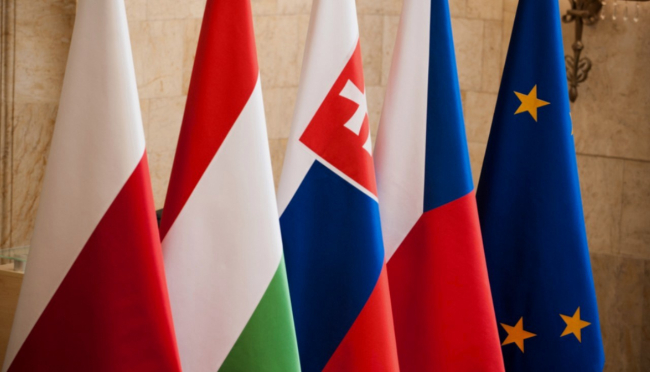
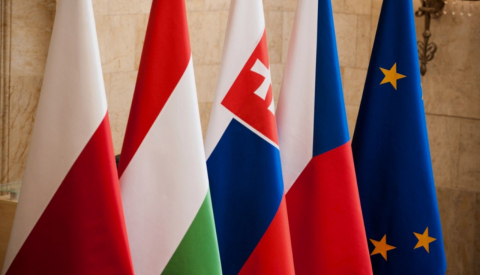
A New Moment for Central Europe? Regional Cooperation in a Time of European Strategic Choices
Recent political developments in Central Europe have revived the debate about the future of regional cooperation and the Visegrád Group. Changes in Hungary, Poland, the Czech Republic and Slovakia, together with Austria’s growing interest in closer cooperation with its neighbours, could create new opportunities for dialogue and coordination around shared priorities.

China’s Nuclear Buildup: Developments, Drivers, and Implications for Major-Power Relations and Arms Control
China has been steadily expanding its nuclear arsenal for several years amid levels of geopolitical tension unseen since the end of the Cold War, marked by a resurgence in nuclear proliferation and a broader, global arms race.

Reinventing Coordination in an Age of Fragmentation
The world economy is being reordered. The certainties of the post-Cold War era, open trade, dollar centrality, predictable multilateral coordination, are giving way to a landscape shaped by rivalry between the United States and China, the weaponization of interdependence, and a scramble to secure supply chains, technologies and critical resources. What once looked like a stable architecture now appears fragile, contested, and in places actively being dismantled.