





The China-Pakistan Economic Corridor and the New Regional Geopolitics
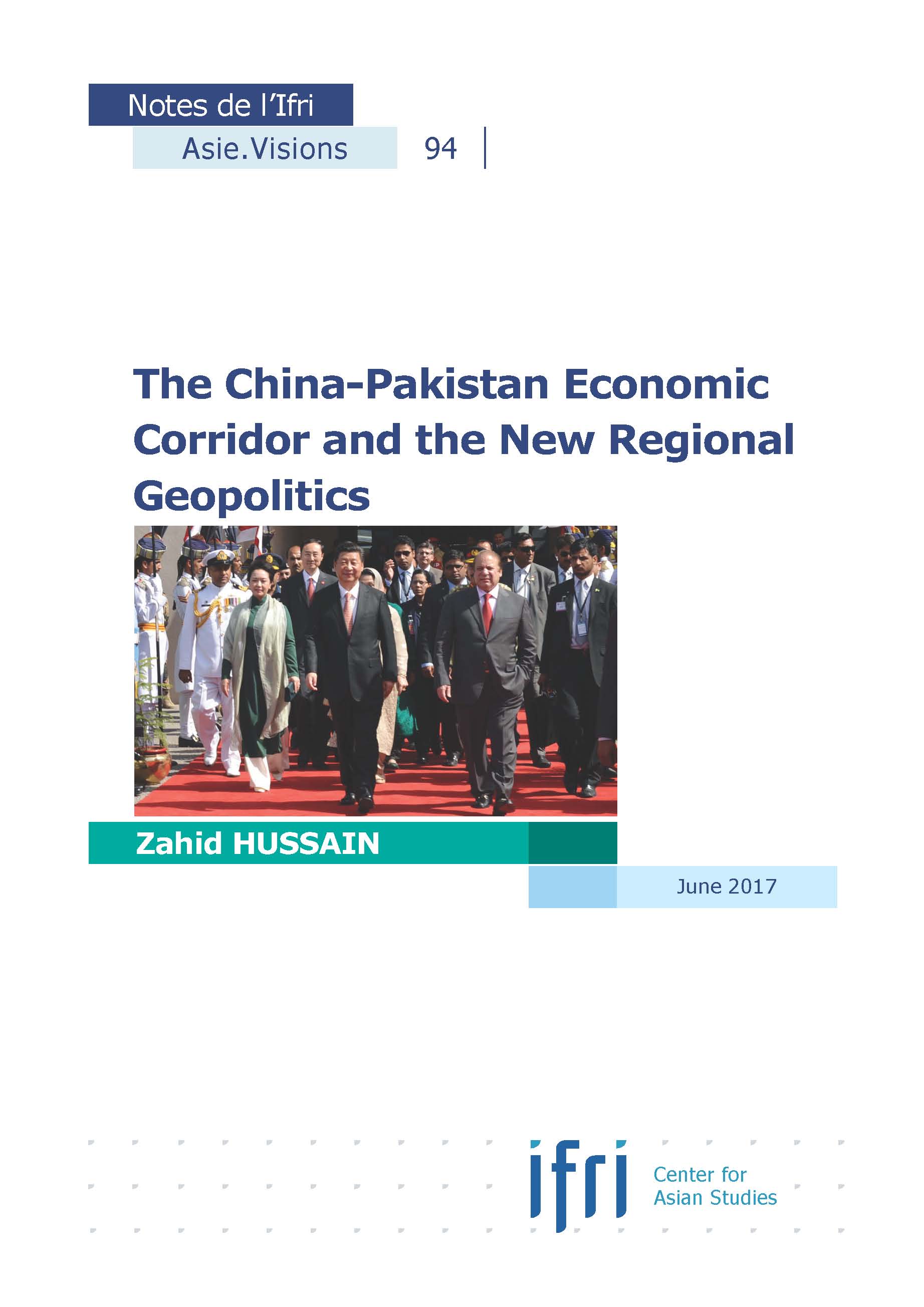
The China-Pakistan Economic Corridor (CPEC) brings a dimensional shift in the two countries' relations at a time of significant geopolitical change. But while it promises wide-ranging benefits for infrastructure development and economic growth in Pakistan, a number of important challenges remain to be overcome if the project is to be sustainable and produce long-term benefits for Pakistanis.
The CPEC is a nodal part of China’s larger Belt and Road Initiative that envisages connecting China to Europe, the Middle East and Africa. As part of the project, Pakistan welcomes investments worth tens of billions of dollars for infrastructure and power sector development at a time when it desperately needs foreign investment to boost its fledgling economy. The addition of an expected 10,000 MW of electricity to the national grid by end 2018 will help overcome energy shortages and give a major boost to the economy. Similarly, the development of roads and other transport infrastructure will also improve connectivity inside the country as well with other neighboring countries in the future. The connectivity part of the project could actually become a game changer for Pakistan.
However, there may be some unintended, adverse consequences for public finances if Pakistan does not put its policies right. The Chinese money may be coming with a cost that many believe could have serious long-term implications for Pakistan’s balance of payments. Although China has an extremely positive image among Pakistanis, the lack of transparency on the terms of various CPEC projects has generated a growing skepticism in Pakistan’s civil society and business circles. For instance, there is a strong apprehension that the concessions granted to Chinese firms could adversely affect domestic industries. There are also questions about Chinese firms bringing their own labor to work on the projects, thus depriving Pakistanis of important employment opportunities.
In other words, a major challenge for Pakistan is to negotiate better terms with the Chinese firms so as to reap maximum benefit from their investments. The underlying issue for Pakistan’s leadership is how to implement the CPEC program in a way that removes structural imbalances and puts the economy on a sustainable growth trajectory. The CPEC can also become a source of regional economic integration provided efforts are made to reduce inter-provincial disparities and focus more on the country’s economically backward areas. Despite disagreement over the distribution of CPEC projects, there is complete consensus among the provinces and political parties on the long-term economic benefits that the Chinese investments could bring for the country. The notion that economic growth will bring political stability is also largely shared.
Finally, the growing China–Pakistan axis reflects Asia’s emerging geopolitics and realignment of forces. Pakistan’s estrangement with the United States and heightening tension with India has led Islamabad to increase its reliance on China, its “all weather friend”. The burgeoning relationship between the United States and India is also a factor that is further consolidating the China-Pakistan axis. Meanwhile, the CPEC has raised hope of greater connectivity and economic cooperation among the regional countries. Once the projects are implemented, Pakistan’s geostrategic location should make it a potential nexus for the Eurasian “Silk Road Economic Belt” and a Southeast Asian “Maritime Silk Road”. The CPEC could then not only serve as a game changer for Pakistan, but also for the entire region.
This page contains only a summary of our work. If you would like to have access to all the information from our research on the subject, you can download the full version in PDF format.
The China-Pakistan Economic Corridor and the New Regional Geopolitics


Center for Asian Studies
Asia is a nerve center for multiple global economic, political and security challenges. The Center for Asian Studies provides documented expertise and a platform for discussion on Asian issues to accompany decision makers and explain and contextualize developments in the region for the sake of a larger public dialogue.
The Center's research is organized along two major axes: relations between Asia's major powers and the rest of the world; and internal economic and social dynamics of Asian countries. The Center's research focuses primarily on China, Japan, India, Taiwan and the Indo-Pacific, but also covers Southeast Asia, the Korean peninsula and the Pacific Islands.
The Centre for Asian Studies maintains close institutional links with counterpart research institutes in Europe and Asia, and its researchers regularly carry out fieldwork in the region.
The Center organizes closed-door roundtables, expert-level seminars and a number of public events, including an Annual Conference, that welcome experts from Asia, Europe and the United States. The work of Center’s researchers, as well as that of their partners, is regularly published in the Center’s electronic journal Asie.Visions.
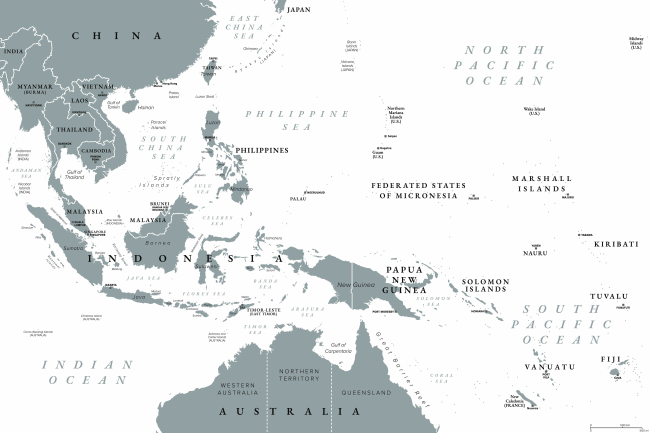
The Oceania Factor in France’s Evolving Indo-Pacific Strategy
This paper examines the two-way relationship between France’s Indo-Pacific strategy and developments in Oceania. Oceania was not a priority in the initial years of France’s Indo-Pacific strategy, as the region was largely treated as secondary to major strategic hotspots and key partnerships, while overseas territories were primarily handled as domestic issues and recipients of a top-down strategy.

France’s View: From Diplomacy to Public-Private Action
France has emerged as the EU’s IMEC forerunner, combining port infrastructure, diplomatic alliances and public-private cooperation. With Marseille Fos at its core, the country brings a strategic hub for logistics, energy and digital connectivity to the corridor.
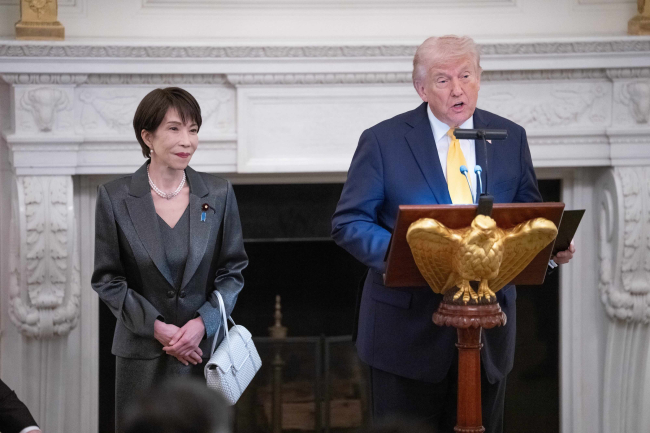
Trump II, the Crisis of the Rules-Based Order and Europe’s Indo-Pacific Strategy
This article examines the implications of Trump II for Europe’s engagement in the Indo-Pacific. The piece contends that Trump II is accelerating the erosion of the rules-based order and undermining the relevance of the Free and Open Indo-Pacific (FOIP) concept, while forcing Europe to refocus on its own continental security amid US retrenchment. Paradoxically, these very constraints create conditions for a more autonomous, pragmatic, and explicitly interest-driven European engagement in the Indo-Pacific, rather than outright withdrawal.
China and Trade in Critical Raw Materials (CRMs)
Critical raw materials (CRMs) have become central features of a new dynamic in global power politics, with China now wielding considerable leverage. Amid rising regional and global uncertainty, resource security is back in the spotlight as a key determinant of sovereignty and national security for Europe, its allies and its partners. The very survival of key, even vital industries, from automotive to aerospace to health to energy to defense, is at stake.