



United States of America
Despite polarized domestic politics and social tensions, the United States remains a major player in international relations, on the economic, military and diplomatic levels.
Related Subjects
Trump II and Asia: The Wind is Picking Up…
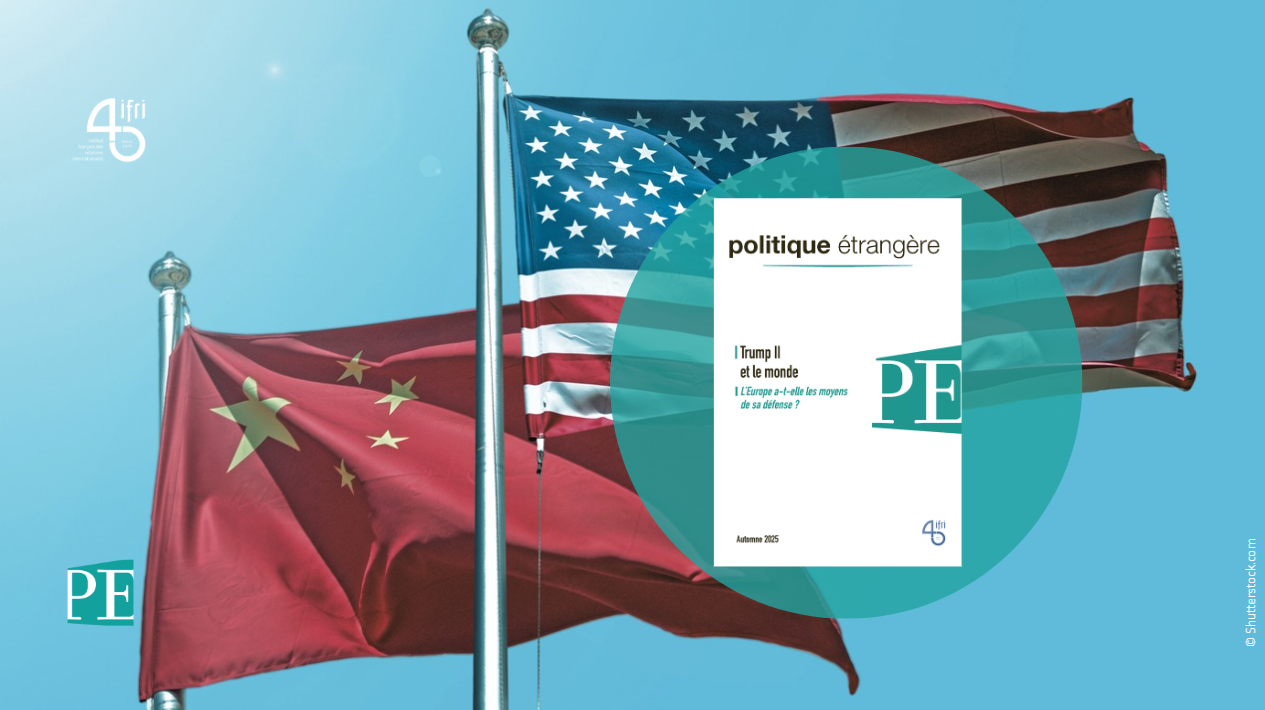
The Indo-Pacific is a priority for the second Trump administration, which sees China as the United States' principal rival. However, Donald Trump began his second term in a rather disconcerting fashion by taking a harder line with Washington's traditional partners. He then provoked hostilities with Beijing, sparking a trade war even more intense than during his first term. The Chinese authorities have no intention of taking it lying down.
Taiwan's Security: Challenges Ahead and the Impact of a Trump Administration
An interview with I-chung Lai, President, Prospect Foundation, in which he explains how Taiwan's security environment has evolved and what to expect from the next Trump administration.
Trump’s Indo-Pacific and European Strategies: Change or Continuity?
An interview with Kelly Grieco, Senior Fellow at the Stimson Center, in which she explains what changes and continuities might the future Trump administration bring to U.S. alliances and Indo-Pacific strategy.
NATO: 75 Years of Strategic Solidarity (replay)
The war in Ukraine, burden-sharing between Allies, U.S. disengagement from Europe, new areas of conflict... At a time when the Alliance has just celebrated its 75th anniversary and the Stoltenberg era is drawing to a close after ten years at the head of the organization, NATO's agenda bears witness to the diversity of its areas of action, as well as to the different perceptions of the Allies on these issues.
In the wake of the Washington summit, this conference of diplomats, military officers and researchers aims to analyze the short- and medium-term prospects for the Atlantic Alliance.
2024 Election: What's Next for U.S. International Economic Policy?
An interview with Emily Blanchard, Tuck School of Business at Dartmouth College and CEPR.
How does she see the prospects for U.S. international economic policy, depending on who wins the election in November 2024?
Can U.S. Export Controls Stop China’s Tech Rise?
An interview with Kevin Wolf, Partner, Akin, led at Ifri on September 24, 2024. For years, Kevin Wolf has played a key role elaborating and implementing export controls within the U.S. administration. How does he evaluate the efficiency of these controls? Are they likely to reach the stated objective of maintaining the biggest lead possible between the U.S. and China, particularly for semiconductors? How could existing controls and regulations be altered to improve their efficiency?

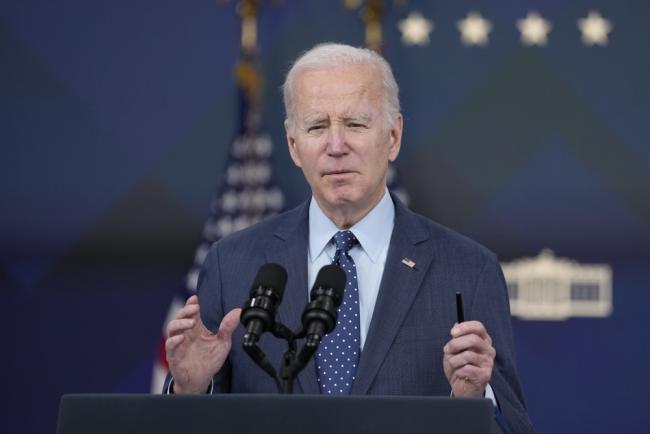
'Joe Biden's economic record is not a good enough argument for the Democrats to win the next election'
As the incumbent US president prepares to run for a second term, Americans are not convinced that the Biden administration has improved their lives, despite flattering macroeconomic data, Stéphane Lauer writes.


How Rwanda Became Africa’s Policeman
From Benin to Mozambique, President Paul Kagame is flexing his small country’s military muscle—and transforming the continent’s security landscape.

We need to talk about Xi Jinping: G7’s discord over powerful trading partner
Disagreements have opened up about strategy when China is also seen as an existential threat. Western powers in the G7 group of nations are failing to coordinate their China strategies, senior western officials admit, adding that the need to do so has been given sharp impetus by Xi Jinping’s consolidation of power at this month’s Communist party congress.

French delight as Emmanuel Macron will be first world leader to visit Biden in US
President Macron is set to become the first world leader to make a state visit to the US during the Biden presidency, to the delight of Paris. Following the announcement on Tuesday, some commentators claimed that France was being “pampered” by the US, while others drew a contrast with what they described as Britain’s loss of prestige on the global stage following Brexit.
Support independent French research
Ifri, a foundation recognized as being of public utility, relies largely on private donors – companies and individuals – to guarantee its sustainability and intellectual independence. Through their funding, donors help maintain the Institute's position among the world's leading think tanks. By benefiting from an internationally recognized network and expertise, donors refine their understanding of geopolitical risk and its consequences on global politics and the economy. In 2025, Ifri supports more than 80 French and foreign companies and organizations.

Related centers and programs
Americas Program
Ifri's work on the Americas region focuses mainly on the United States. Indeed, for more than 20 years, Ifri's Americas Program has provided keys to understanding American society and domestic policy while shedding light on developments in the country's foreign policy, including transatlantic relations and trade issues.
Since 2023, a specific axis on Latin America structures more actively Ifri's research on this region.
Ifri's Canada program was active in 2015 and 2016.