




United States of America
Despite polarized domestic politics and social tensions, the United States remains a major player in international relations, on the economic, military and diplomatic levels.
Related Subjects
Trump’s Trade Wars: The Outcry Against Multilateralism
The aim of multilateral trade as established after the Second World War was to prevent trade wars.
How will Middle America vote in 2020? (Lara Putnam)
An interview with Lara Putnam, Professor and Chair, History Department, University of Pittsburgh.
Transatlantic relations in the age of "America First" (Sophia Besch)
An interview with Sophia Besch, Research Fellow, Center for European Reform.
How will Middle America vote in 2020? (Henry Olsen)
An interview with Henry Olsen, Senior Fellow, Ethics and Public Policy Center (EPPC).
Transatlantic relations in the age of "America First" (James Lindsay)
An interview with James Lindsay, Senior Vice President, Council on Foreign Relations.

The U.S. opioid crisis: from prescription abuse to a full blown epidemic
The opioid crisis in the U.S. has reached increasingly tragic proportions – accounting for two thirds of the 72,000 overdose deaths of 2017.
A New Japan-France Strategic Partnership: A View from Paris
On the occasion of the conference held on the 22 November 2018 marking the 160th anniversary of Franco-Japanese diplomatic relations, Ifri publishes two parallel articles offering French and Japanese perspectives on the bilateral security partnership. Michito Tsuruoka's analysis of Japan's point of view is available here.
A New Japan-France Strategic Partnership: A View from Tokyo
On the occasion of the conference held on the 22 November 2018 marking the 160th anniversary of Franco-Japanese diplomatic relations, Ifri publishes two parallel articles offering French and Japanese perspectives on the bilateral security partnership. Céline Pajon’s analysis of French point of view is available here.
The Geopolitics of Artificial Intelligence: The Return of Empires?
Artificial intelligence (AI) is swiftly moving forward and becoming a real tool of power.
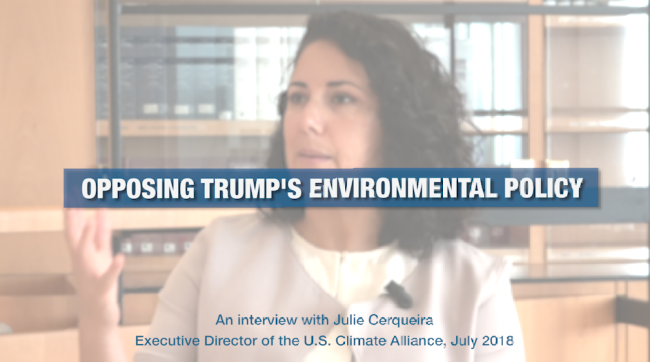
Opposing Trump's Environmental Policy
An interview with Julie CERQUEIRA, Executive Director of the U.S. Climate Alliance.
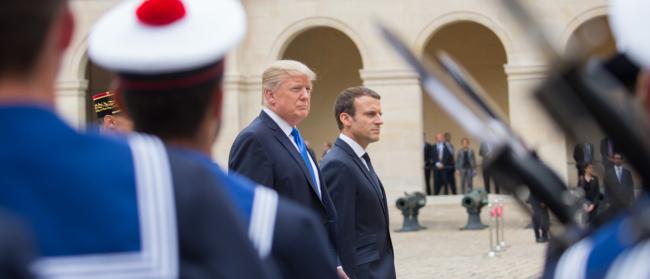
Trade Wars: A French Perspective
The Section 232 tariffs on steel and aluminum announced by the United States in March would, if applied, have little direct impact on the French economy, but rather point toward a broader trend of protectionism and economic nationalism and a widening gap in transatlantic relations that is likely to have far-reaching implications for France.


Macron takes a risk in courting Trump, but has little to show for it
PARIS — President Emmanuel Macron was put on the spot this year in front of a room full of journalists when one asked, provocatively: Which man is more dangerous, North Korea’s leader, Kim Jong-un; or Donald J. Trump?
Bad cop, Bad cop : la nomination de Mike Pompeo et John Bolton
Benjamin Haddad, a Research Fellow at the Hudson Institute in Washington D.C., reviews Mike Pompeo's appointment as the new U.S. Secretary of State and John Bolton's recent nomination as National Security Advisor. According to Haddad, U.S. President Donald Trump has appointed two lawyers known for their hawkish and interventionist stands on foreign policy and security matters. He thus explains what official policies are to be expected on Iran, North Korea and Russia.
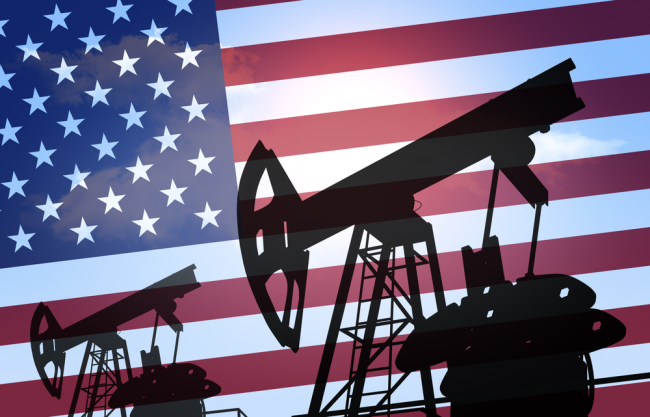
Trump's Tax Reform and Trade Policy: Renewables Spared, Oil Industry Wins
The energy sector is one where the break between the Trump and Obama administrations is the most pronounced. The three officials in charge, Rick Perry at the Department of Energy (DoE), Scott Pruitt at the Environmental Protection Agency (EPA) and Ryan Zinke at the head of the Department of the Interior (DoI), share the same indifference to the issue of climate change, the same will to encourage oil and gas production in the USA in order to bring an era of American “energy dominance”, the same desire to promote the extraction of “beautiful, clean coal”, to paraphrase President Trumps’s State of the Union address, and the same deep mistrust of renewable energies such as wind and solar.

US Foreign Policy: Mr. Trump's Foreboding Vision
Since Donald Trump’s rise to power, American foreign policy has become more unpredictable. Nonetheless, several coherent strategies stand out, in particular those that advocate a nationalist approach. An examination of Trump’s entourage also reveals some more conventional figures, who may exert some degree of influence. However, there may yet be surprises to come.
The legalization of cannabis in the United States, the examples of Colorado and Washington State
The use of recreational cannabis became legal in the States of Colorado and Washington in January and July 2014 respectively. The regulations, based on the examples of the tobacco and alcohol markets, intend to tackle the black market and to protect minors more efficiently. How do these two pioneering experiments inform the ongoing debate in France?
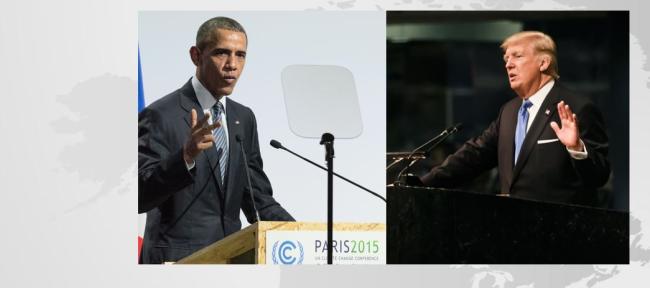
US Energy and Environmental Policies. From Obama to Trump. Continuities and Divergences
President Trump’s administration is characterized by its systematic denial and repealing of measures from his predecessor, be it in foreign policy or domestic policy. This is particularly the case for the energy and environmental policies. There is however a continuity from one administration to another: the steady rise of US hydrocarbon production and the development of the US as a global leader in oil and gas production and in the near future, their exports to global markets.

International Order and Trump’s America
Donald Trump is disrupting the established world order. But, despite his provocative declarations, is he really looking to challenge it?
Michala MARCUSSEN - Trump: One Year After The Election
Is the American economy doing well? Will the Tax Reform change this? How could the bond markets evolve in 2018?
Jeffrey GOLDBERG - Trump: One Year After The Election
3 questions to Jeffrey GOLDBERG, Editor in Chief, The Atlantic
Ifri, a foundation recognized as being of public utility, relies largely on private donors – companies and individuals – to guarantee its sustainability and intellectual independence. Through their funding, donors help maintain the Institute's position among the world's leading think tanks. By benefiting from an internationally recognized network and expertise, donors refine their understanding of geopolitical risk and its consequences on global politics and the economy. In 2026, Ifri partners with over 90 French and international companies and organizations.

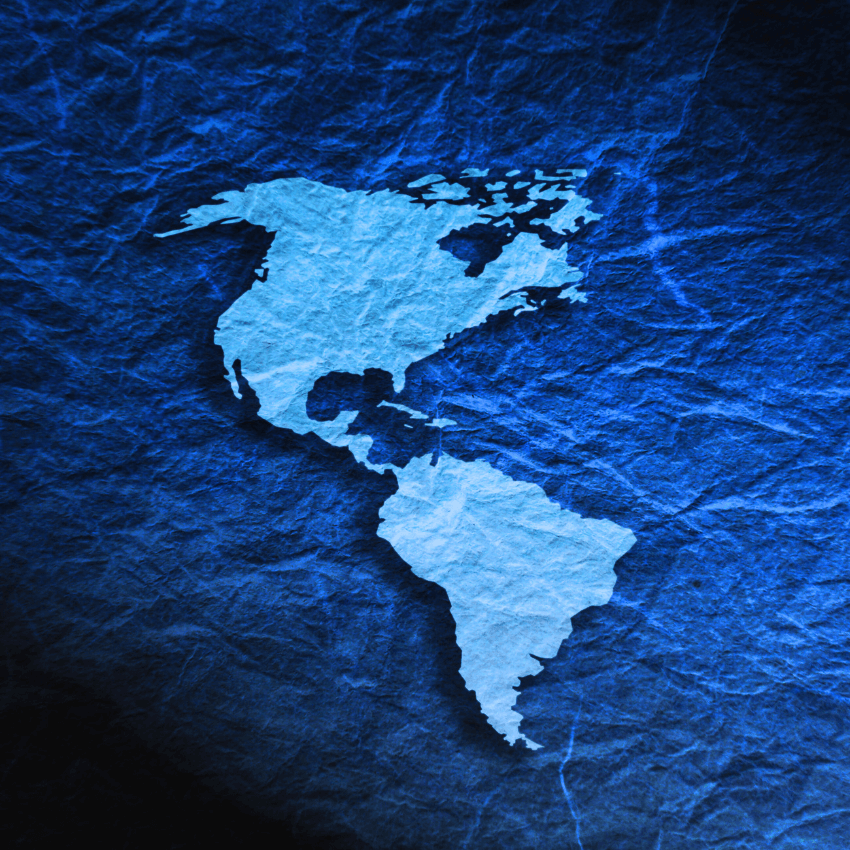
Ifri's work on the Americas region focuses mainly on the United States. Indeed, for more than 20 years, Ifri's Americas Program has provided keys to understanding American society and domestic policy while shedding light on developments in the country's foreign policy, including transatlantic relations and trade issues.
Since 2023, a specific axis on Latin America structures more actively Ifri's research on this region.
Ifri's Canada program was active in 2015 and 2016.