






United States of America
Despite polarized domestic politics and social tensions, the United States remains a major player in international relations, on the economic, military and diplomatic levels.
Related Subjects

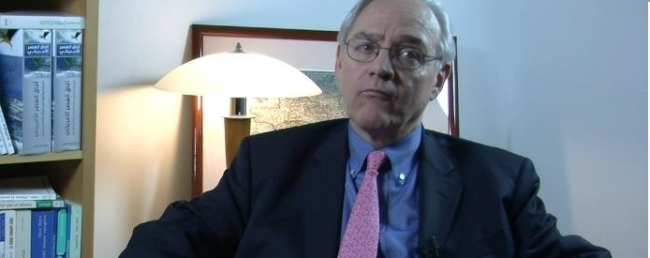
Who are the candidates for 2016?
The speakers from the Annual Conference on the United States summarize their talks in short videos. Here, E.J. Dionne discusses Barack Obama's presidency and evaluates potential candidates for the 2016 presidential election.

La Chine and the TPP
The speakers from the Annual Conference on the United States summarize their talks in short videos. Here, Françoise Nicolas considers what is at stake for Asia-Pacific countries, notably China, in the Trans-Pacific Partnership.
La Californie : laboratoire de la dépolarisation ?
California benefits from a long-time extraordinarily positive image. Because of its climate, its cultural diversity, its size, its population and its energy wealth, California itself represents the essence of the American dream, every day attracting new hopeful migrants.

The United States: the Black Question
We all wanted to believe that Barack Obama's dazzling election in 2008 would accelerate history's forward trajectory in a good way for once. Barack Obama, would lead the United States into a post-racial era and serve as an example for all democracies. Six years later we see that we were wrong: the American president did not perform any of the expected miracles.
Last August in Missouri, a white police officer shot Michael Brown, a young African-American male. After courts found the officer not guilty, riots broke out in Ferguson and a number of large American cities. This anger demonstrates that 50 years after civil rights legislation race continues to deeply divide the United States. Are events in Ferguson emblematic of a larger problem? What impact will racial tensions have on American politics just two years from the next presidential election?

BFM BUSINESS: Does the post-Obama era begin today?
The issues from the United States midterm elections explained by Laurence Nardon on Fabrice Lundy's TV show "Les décodeurs de l'éco" on BFM Business.
RADIO CLASSIQUE: The Economy's Guest
Laurence Nardon, head of the United States Program at Ifri, joined Eric Mauban, this Tuesday, November 4th at 7:20 AM on Radio Classique.

The United States' Midterm Elections
Audrey Pulvar welcomed Laurence Nardon to I-télé on "On ne va pas se mentir" to discuss this year's midterm elections in the United States.

L'opinion: Barack Obama Reduced to Lame Duck
Laurence Nardon, head of the United States program at IFRI sits down with Gilles Sengès to discuss the midterm elections and the Obama administration's politics.
BFM BUSINESS : International Current Events
Laurence Nardon, head of the United States Program at Ifri, joined Frabrice Lundy on October 4th on "Good Morning Weekend" on BFM Business. She discussed major current events including the Brazilian presidential election, the American fight against ISIS and the protests in Hong-Kong.

The end of globalization?
Michael Lind, Policy Director of the Economic Growth Program at the New America Foundation in Washington, D.C, was the guest of the French Institute of International Relations (IFRI) on September 29th 2014. In this video, he discusses the evolution of globalization.
The end of globalization ?
Michael Lind, Policy Director of the Economic Growth Program at the New America Foundation in Washington, D.C, was the guest of the French Institute for International Relations (IFRI) on September 29th 2014. In this video, he analyzes the major economic trends post-2008, and forecasts the end of globalization.
The end of globalization ?
Michael Lind, Policy Director of the Economic Growth Program at the New America Foundation in Washington, D.C, was the guest of the French Institute for International Relations (IFRI) on September 29th 2014. In this video, he analyzes the major economic trends post-2008, and predicts the end of globalization.

The United States and the World: what can we expect in the near future?
|
Michael Lind, Policy Director of the Economic Growth Program at the New America Foundation in Washington, D.C, was the guest of the French Institute for International Relations (IFRI) on September 29th 2014. In this video, he discusses the limits and challenges of US foreign policy, particularly regarding the ongoing conflict against ISIS in the Middle East. |
|---|
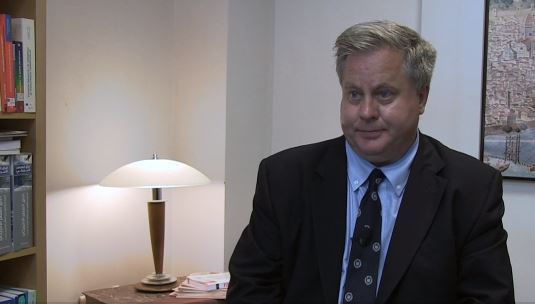
The United States and the World: what can we expect in the near future?
Michael Lind,of the New America Foundation, visited IFRI on September 29, 2014 for a seminar on "the beginning of a new pollitical term in Washington". In this video he disccusses the constraints on U.S. foreign policy, notably in its fight against ISIS in the Middle East.
What major trends in US politics or party ideology do you see happening over the next generation ?
Michael Lind, Policy Director of the Economic Growth Program at the New America Foundation in Washington, D.C, was the guest of the French Institute for International Relations (IFRI) on September 29th 2014. In this video, he discusses the evolution of US politics and party ideology.
Homeland : une série de l'ère Obama
Once widely praised as one of the best shows on television, Homeland will be back for a fourth season starting next week. The show was originally intended as a breaking point with the one-sided and trigger-happy foreign policy of the Bush administration. However, Homeland is sadly turning out to be the reflection of Obama’s foreign policy, itself rather disappointing up to now. What will the new episodes tell us?
FRANCE CULTURE : Obama's War
Almost 7 years ago, Barack Obama was elected on a promise:to end wars. Just as the wars in Iraq and Afghanistan are winding down, Barack Obama announcd this week that America will begin another war against terror, this time in Iraq and Syria. Why does the American president feel the accute need to act? How can the coalition with Arab countries and Euorpe work?
Ifri, a foundation recognized as being of public utility, relies largely on private donors – companies and individuals – to guarantee its sustainability and intellectual independence. Through their funding, donors help maintain the Institute's position among the world's leading think tanks. By benefiting from an internationally recognized network and expertise, donors refine their understanding of geopolitical risk and its consequences on global politics and the economy. In 2026, Ifri partners with over 90 French and international companies and organizations.
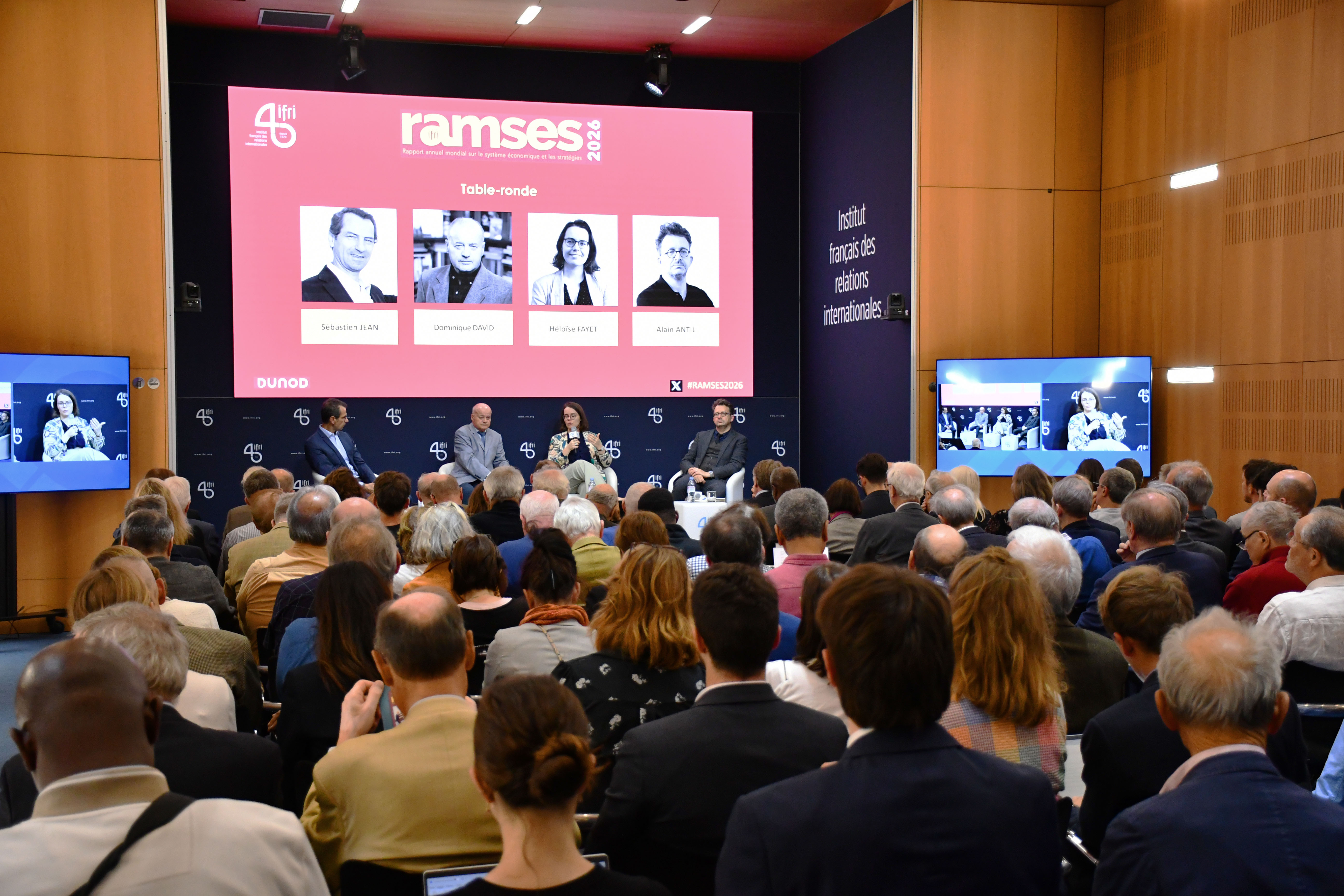
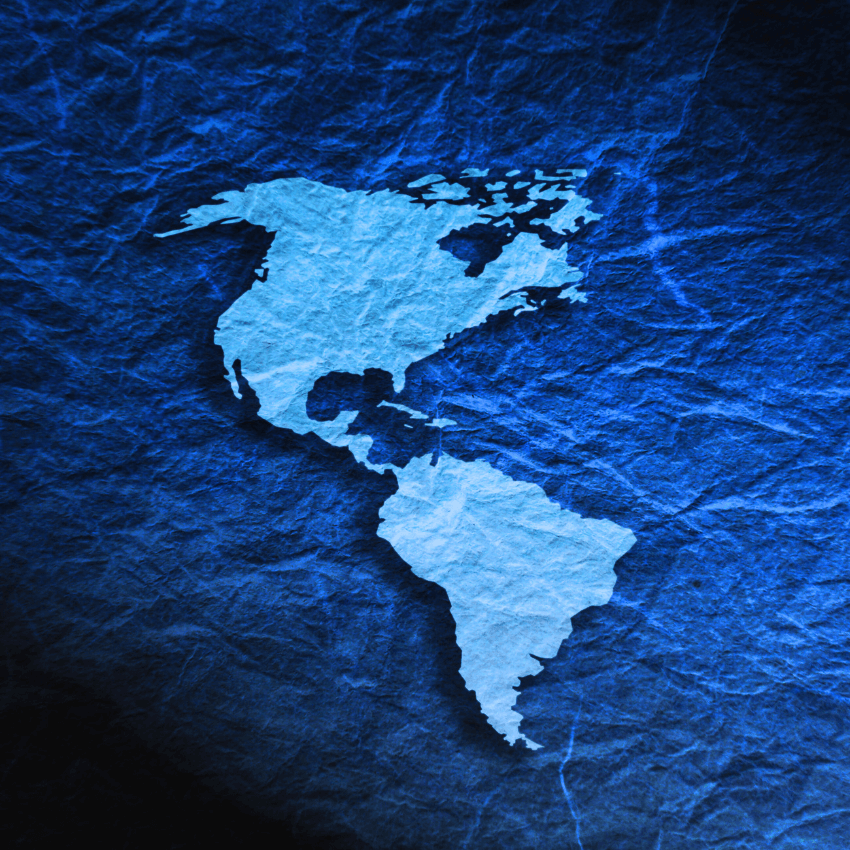
Ifri's work on the Americas region focuses mainly on the United States. Indeed, for more than 20 years, Ifri's Americas Program has provided keys to understanding American society and domestic policy while shedding light on developments in the country's foreign policy, including transatlantic relations and trade issues.
Since 2023, a specific axis on Latin America structures more actively Ifri's research on this region.
Ifri's Canada program was active in 2015 and 2016.