




United States of America
Despite polarized domestic politics and social tensions, the United States remains a major player in international relations, on the economic, military and diplomatic levels.
Related Subjects
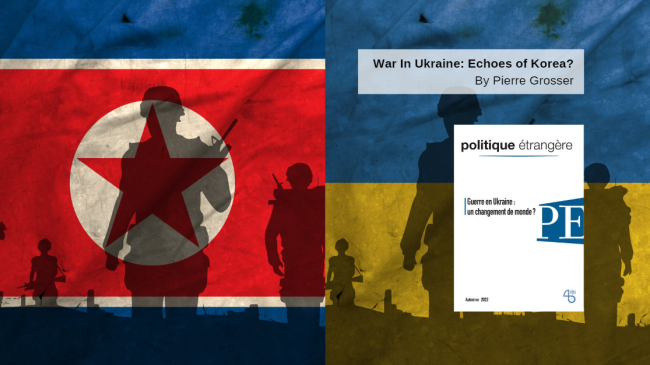
The War in Ukraine: Echoes of Korea?
The war in Ukraine has revived discussion about the Washington-Beijing-Moscow triangle as well as Europe’s place in the geopolitical power struggles.
The U.S. Political Landscape Two Months Before Midterms. Can the Democrats Avoid Defeat?
The Biden Administration has succeeded this summer in passing several important pieces of legislation. In addition to progressive societal measures that break with the Supreme Court's rulings, the Administration has focused on the economy and the environment: the CHIPS Act and the Inflation Reduction Act promote the relocation of semiconductor and electric vehicle battery plants.
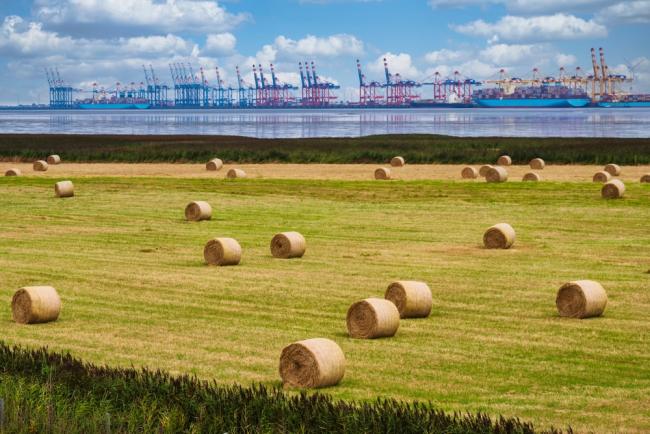
Support and conflict: transatlantic agricultural trade since 1945
Agriculture is an area of strategic importance, where relations between the United States and the European Union (EU) vary from solidarity to competition.
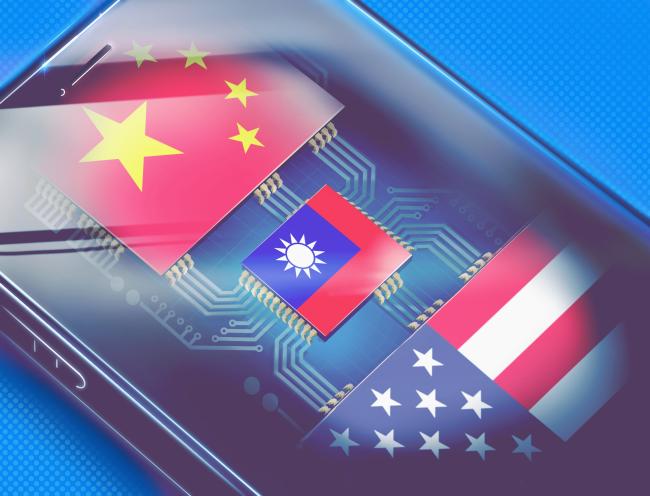
Implications of the Global Supply Chain Reform: A Taiwanese Perspective
How have both the private and public sectors in Taiwan sought to mitigate the challenges posed by the reform agenda for global supply chains (GSCs)?

Arctic: Toward the End of the Exception? Strategic, Nuclear and Maritime Issues in the Region
Through multiple international initiatives, including the creation of the Arctic Council at the end of the Cold War in 1996, the Arctic appears to be one of the last areas of peaceful cooperation in the world. This “Arctic exception” is also devoid of any serious territorial dispute between the neighboring countries, some of which are nevertheless great powers: Russia, the United States, Canada, but also Sweden, Norway, Denmark (via Greenland), Iceland and Finland.

Emmanuel Macron: The Preferred Choice for Taipei and Beijing
The second round of the French presidential election on April 24 will decide whether Emmanuel Macron, the incumbent president, or Marine Le Pen, the leader of the far right nationalist party Rassemblement national (national gathering), will become president of the French Republic for the next five years.


Meet the woman researching the geopolitics of technology
Alice Pannier is leading a new programme looking at the relationship between technology and geopolitical alliances. Recent events have proven this to be more important than ever.
Sino-American Climate Diplomacy
During COP26, Beijing and the Biden administration committed to reviving Sino-American cooperation on climate issues, in the name of their common interest in climate stability.

Convince and Coerce: U.S. Interference in Technology Exchanges Between its Allies and China
The tough-on-China policy adopted by the Trump and Biden administrations has – and will increasingly have – important consequences for Washington’s allies, both on their infrastructure choices (5G, submarine cables...) and on their technological exchanges with China.
Preparing for 2050: From “Foresight” to “Grand Strategy”
China and the United States both have a “grand strategy”: Beijing aspires to be the world’s leading power in 2049, while Washington plans to remain primus inter pares.
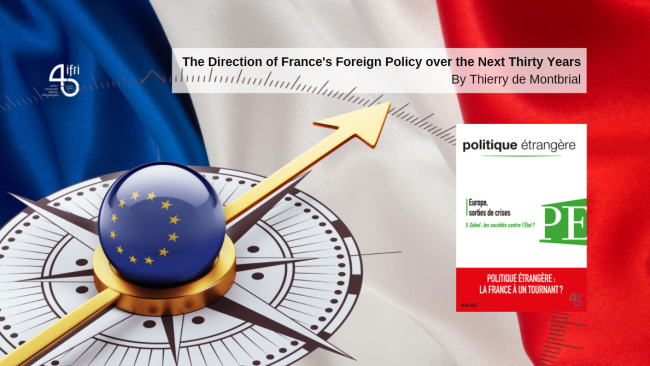
The Direction of France’s Foreign Policy over the Next Thirty Years
A foreign policy points to a united society that manages its relationships with its surroundings while defending its own interests.
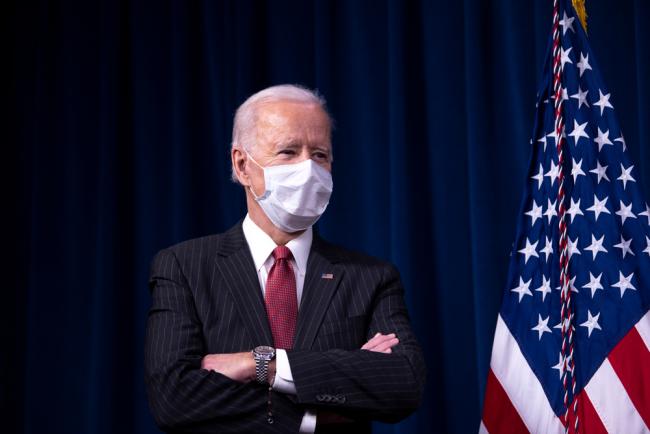
The Biden administration in turmoil (video replay)
Celebrating its 20th edition, Ifri's Annual Conference on the United States convened a first panel on national politics and a second on the evolution of U.S. trade. An exchange between Thierry de Montbrial and Henry Kissinger, 56th Secretary of State, concluded the day. Videos of all interventions are below.

Helium‑3 from the lunar surface for nuclear fusion?
Since 1969, the return of a human mission to the Moon has never seemed so close. Although scientific interest continued to flourish, space programmes had for many decades abandoned it in favour of the International Space Station and missions to explore the solar system.
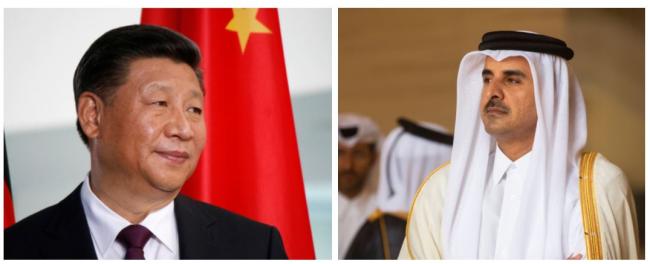
Qatar and the US-China Rivalry: The Dilemmas of a Gulf Monarchy
Like its neighbors in the Arabian Peninsula, Qatar finds itself increasingly confronted with a difficult dilemma: while its economy is looking to the East, more specifically towards China, the security and stability of the country still depend on the United States.

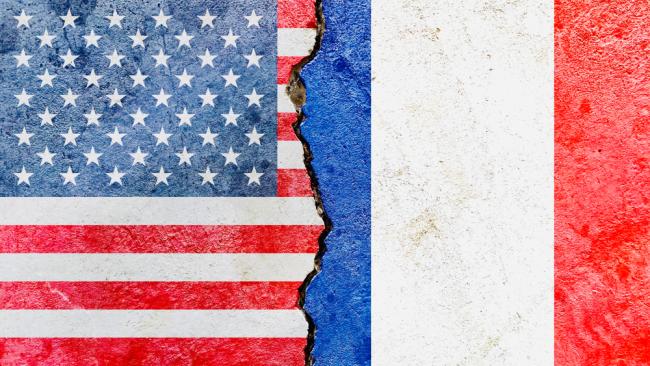
Sub snub just one symptom of longtime French unease with US
Born of a revolution fought for liberty, ties between the United States and its oldest ally, France, have long been fraternal, but they've also been marked by deep French unease over their equality.


China Bristles as EU Turns Its Attention Toward Indo-Pacific
Recent months have seen the United States and its allies step up their assertiveness toward China, with support voiced for Taiwan, a new deal to provide Australia with nuclear submarines and a new European strategy for increased presence in the Indo-Pacific, according to the Associated Press.
Americans First: The Biden Administration’s Geopolitics
The Biden administration’s geopolitics is beginning to be noticed. It aims to build on a reconciled nation willing to see its foreign policy objectives as a defense of its own interests.
German Foreign Policy: Caught Between Multilateralism and Germany First
Underneath the rhetoric of commitment to a multilateral order, Germany's policy seems to be mainly structured around its national interests.
Is Europe a “Digital Colony” of the United States?
Edward Snowden’s revelations, the Cambridge Analytica affair and the digital transformation accelerated by the Covid-19 crisis have all shown Europe's technological dependence on foreign powers.
Climate and International Trade: The Clash of Powers
The fight against climate change has a major economic dimension. With climate neutrality as their new objective, the major powers are counting on green industrial policy, and trying to contain the emissions related to their imports.

The Washington Tea Party
The near meltdown of the United States government evoked worldwide dismay and confusion. Both reactions were especially acute among America’s well-wishers. For not only would they have suffered the consequences of a global economic crisis but they also feel dependent on the probity of American leadership. That dependence may stem in part from their own failures to assume their reasonable share of responsibility for sustaining an orderly international system - a state of affairs remarkably unaffected by the costly flaws in Washington’s custodianship over the past several years. It is nonetheless real.
The U.S. Oil and Gas Boom
A funny thing happened in the last few years when no one was paying attention. J.R. Ewing, the legendary Texas oilman, and his wife Sue Ellen sold Southfork, their ranch near Dallas, and moved to a new home in Pennsylvania (Northfork?). JR immediately began buying subsurface mineral rights for acres of land above the Marcellus and Utica shale formations in the Appalachian Basin. Cliff Barnes, J.R.'s nemesis, sold all his Texas properties and moved to North Dakota, where he started leasing mineral rights to acreage above the Bakken shale play.
Don't Bank on Change: Finance and Regulatory Reform in the U.S.
As a number of provisions of the Dodd-Frank Act are entering into force, five years after the beginnings of the financial crisis, Professor Herman Schwartz explains how the U.S. banking community will continue to hurt the interests of the American economy and political system.
Is Omar Sy an Uncle Tom? Race relations in America and France as seen through "Les Intouchables"
The Intouchables tells the story of a young Senegalese immigrant named Driss, who has been hired to be the caretaker of Philippe, a rich tetraplegic. The feel-good comedy has been a smashing success in France and across the world, grossing over $350m worldwide. While reviews of the film both in France and abroad have been mostly positive, there is a contingent of American critics that thinks that The Intouchables highlights racial stereotypes.
The Democratic Party Under Obama and Beyond
The Democratic Party relies today on very different segments of the U.S. electorate, making it impossible for a Democratic President to sustain long-term public support. In the context of the current campaign, Prof. Nicol Rae provides an analysis of the Party's electoral strategy, since 2008 and beyond 2012.
U.S. Demographics: The Hispanic Boom
As confirmed by the 2010 Census, Hispanics have become the largest and most dynamic ethnic minority in the United States. While still facing many difficulties, this rather diverse group is undergoing important changes in terms of political representation, economic situation and cultural recognition. It should play a growing role on the national scene in coming years.
Strategic Stability in the Cold War: Lessons for Continuing Challenges
During the Cold War, the phrase “strategic stability” gained currency both as a foreign policy objective and as an apt way of describing the fact that the United States and the Soviet Union never actually went to war.
What Now for Obama ?
Larry J. Sabato, Professor of Politics at the University of Virginia, provides us with solid historical references and tools of analysis to understand midterms in general and those of 2010 in particular.
He points to the damaging effect of Tea Party candidacies on the Republican victory in the Senate, and on the impact of Republican gains on the 2011 redistricting process. But the bad economy seems to have been the key issue for 2010 voters - it may be key as well in the 2012 presidential election.
‘‘I'm Not a Feminist, But…'', a Comparative Analysis of the Women's Movement in the United States and France
The emergence of a feminist thought in the 18th century gave rise to steady and regular exchanges between French philosophers and American activists. They illustrate in a very particular sector the wealth of the relation between both countries. This dialogue continues on renewed bases today: both in universities (with the exploration of the concept of gender) and in the militant world (with the defense of precise and limited causes).
One Year Into the Obama Administration, What Has Really Changed?
NATO-Russia: Is the ‘Russian Question’ European?
The proliferation of theaters (in Europe, the Caucasus, Central Asia, the Far East, the Middle East and the Arctic) and cross-cutting issues (proliferation, disarmament, energy, arms sales) demonstrate the overall importance of the NATO/Russia relationship.
The Reform of NATO and the Free World’s Security Pact
Reforming the structure does not go to the heart of the problem. A new understanding has to be reached among the allies that takes into consideration the political, economic and technical changes of the last decade.
Shoulder-fired Missiles and Civil Aviation: The U.S. Response to a "New" Terrorist Threat
Ifri, a foundation recognized as being of public utility, relies largely on private donors – companies and individuals – to guarantee its sustainability and intellectual independence. Through their funding, donors help maintain the Institute's position among the world's leading think tanks. By benefiting from an internationally recognized network and expertise, donors refine their understanding of geopolitical risk and its consequences on global politics and the economy. In 2026, Ifri partners with over 90 French and international companies and organizations.

Ifri's work on the Americas region focuses mainly on the United States. Indeed, for more than 20 years, Ifri's Americas Program has provided keys to understanding American society and domestic policy while shedding light on developments in the country's foreign policy, including transatlantic relations and trade issues.
Since 2023, a specific axis on Latin America structures more actively Ifri's research on this region.
Ifri's Canada program was active in 2015 and 2016.