




United States of America
Despite polarized domestic politics and social tensions, the United States remains a major player in international relations, on the economic, military and diplomatic levels.
Related Subjects

International Order and Trump’s America
Donald Trump is disrupting the established world order. But, despite his provocative declarations, is he really looking to challenge it?
Jeffrey GOLDBERG - Trump: One Year After The Election
3 questions to Jeffrey GOLDBERG, Editor in Chief, The Atlantic
Karlyn BOWMAN - Trump: One Year After The Election
3 questions to Karlyn BOWMAN, Senior Fellow, American Entreprise Institute
Jeremy SHAPIRO - Trump: One Year After The Election
Has Trump changed his views of transatlantic relations? What should Europeans do? Is Trump's Russia policy dictated by the Russia probe?
Michala MARCUSSEN - Trump: One Year After The Election
Is the American economy doing well? Will the Tax Reform change this? How could the bond markets evolve in 2018?
Russia's election interference has undermined American democracy
In January 2017, U.S. intelligence agencies confirmed that Russia had indeed attempted to interfere with the 2016 U.S. election campaign. This effort took two forms: on the one hand, beginning in the Summer of 2016, the hacking and publication of the Democratic National Committee (DNC) emails, in order to hurt the Democratic candidacy; and on the other hand, an aggressive communication campaign aimed at disrupting the electoral process in favor of Donald Trump.
Saving the Liberal Order from Itself
The election of Donald Trump is a symptom of a general crisis in international liberal order.
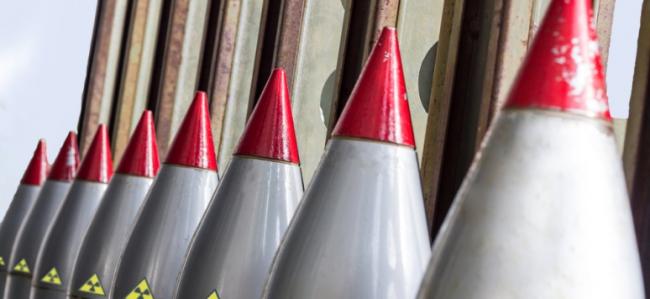
La guerre nucléaire limitée : un renouveau stratégique américain
Over the past few years, a debate on possible scenarios of limited nuclear weapons use has surfaced again in the United States. Russian nuclear saber-rattling since 2014 and the growing tensions in the Korean peninsula have led Washington to reassess its own ability to deter, or respond to, such a limited use of nuclear weapons.
U.S. Visions of China: From Henry Kissinger to Donald Trump
Chinese power continues to grow both militarily and economically: its disputed territorial gains in the South China Sea are complemented by its extensive investment initiative in the New Silk Roads through the Eurasian continent.
Where is the U.S. nuclear arsenal headed?
An interview with Jon WOLFSTHAL, nonresident scholar, Nuclear Policy Program, Carnegie Endowment for International Peace


Trump : enough is enough?
The provocative, contemptuous and threatening style of the American president even irritate Republicans. Facing his overflows at the national and international levels, what mechanisms could limit the potential damages ?
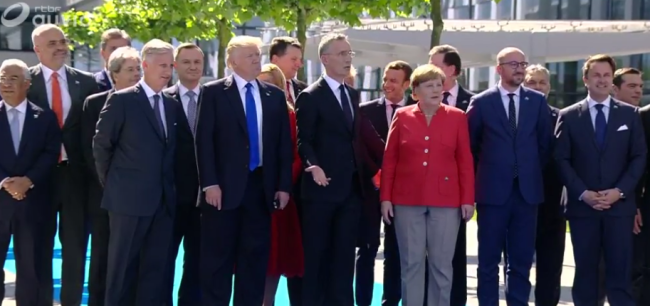
New Appointments Give Clues on Trump's European Policy: Wess Mitchell nominated for Assistant Secretary of State for European and Eurasian Affairs
Benjamin Haddad, research fellow at Hudson Institute in Washington D.C., reviews Wess Mitchell’s nomination for Assistant Secretary of State for European and Eurasian affairs. According to Haddad, as U.S. President Donald Trump struggles to appoint leaders to his administration, Wess Mitchell, who awaits the U.S. Senate’s confirmation, could be a wise choice.
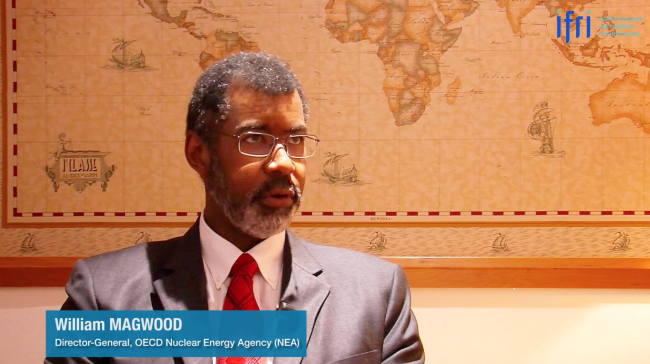
Nuclear Energy in the United States: an Appraisal
An interview with William D. Magwood, IV, Director-General of the OECD Agency for Nuclear Energy
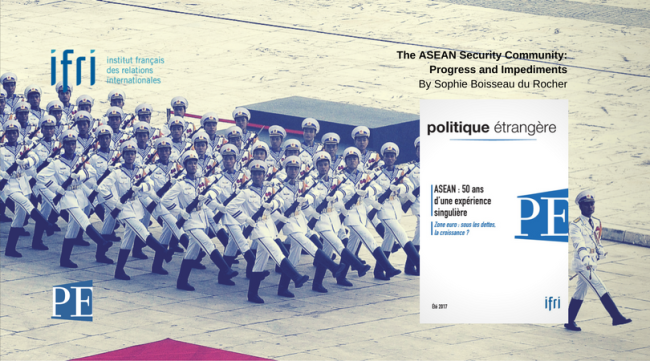
The ASEAN Security Community: Progress and Impediments
The Association of Southeast Asian Nations (ASEAN) strives to deal with security problems in an inclusive and flexible way. In 2003 it established a Security Community which has since expanded through several institutions and partnerships.
Donald Trump's challenge to American democracy and the western alliance
On April 27, 2017, Ifri hosted David FRUM (former speechwriter for President George W. Bush, senior editor for The Atlantic magazine) to discuss Donald Trump's challenge to American democracy and the western alliance.
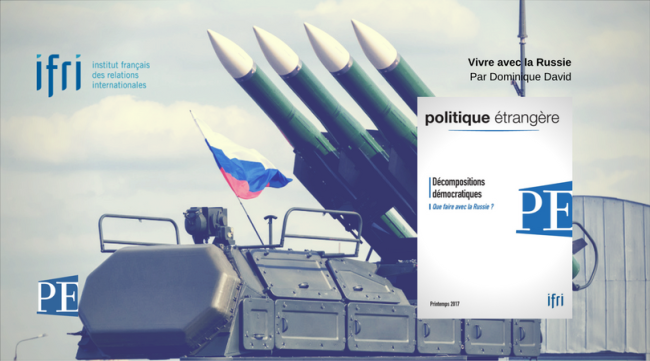
Living with Russia
Russia’s power comes, in part, from the West’s errors and illusions in the wake of the Cold War.

Trump and the Crisis of American Democracy
Trump’s victory in the 2016 presidential election is an expression of the crisis of American democracy.
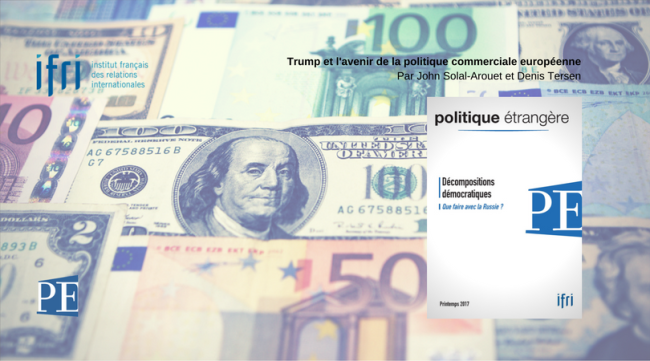
With Trump, Time to Reinvent the European Trade Policy
The new American administration’s protectionist tendencies need to be taken seriously.
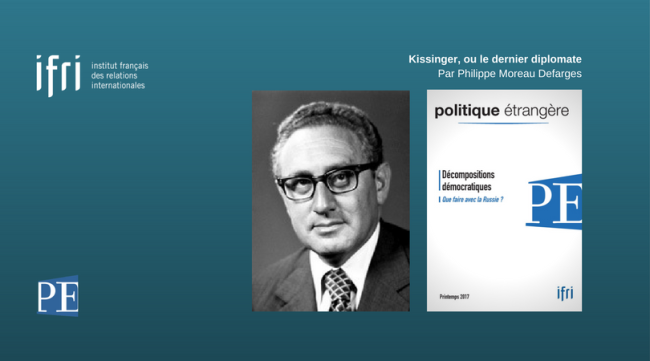
Kissinger, or the Last Diplomat
In the second half of the 20th century, Kissinger evokes the fundamental choices underpinning American diplomacy.

Allies Fear Trump Is Eroding America’s Moral Authority
PARIS — When the State Department released its annual human rights report last week, it contained many of the usual tough American judgments of other countries. Iran was criticized for restricting freedom of religion and the media; Russia for discriminating against minorities; Eritrea for using torture; Bulgaria for violence against migrants and asylum seekers. The list went on.
Ifri, a foundation recognized as being of public utility, relies largely on private donors – companies and individuals – to guarantee its sustainability and intellectual independence. Through their funding, donors help maintain the Institute's position among the world's leading think tanks. By benefiting from an internationally recognized network and expertise, donors refine their understanding of geopolitical risk and its consequences on global politics and the economy. In 2026, Ifri partners with over 90 French and international companies and organizations.

Ifri's work on the Americas region focuses mainly on the United States. Indeed, for more than 20 years, Ifri's Americas Program has provided keys to understanding American society and domestic policy while shedding light on developments in the country's foreign policy, including transatlantic relations and trade issues.
Since 2023, a specific axis on Latin America structures more actively Ifri's research on this region.
Ifri's Canada program was active in 2015 and 2016.