




United States of America
Despite polarized domestic politics and social tensions, the United States remains a major player in international relations, on the economic, military and diplomatic levels.
Related Subjects
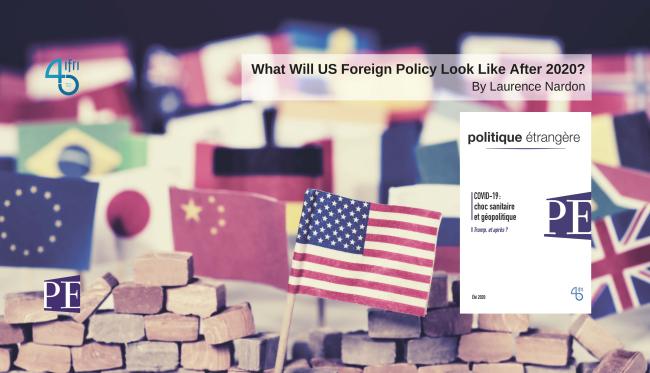
What Will US Foreign Policy Look Like After 2020?
The results of the US presidential election in November 2020 are very uncertain.
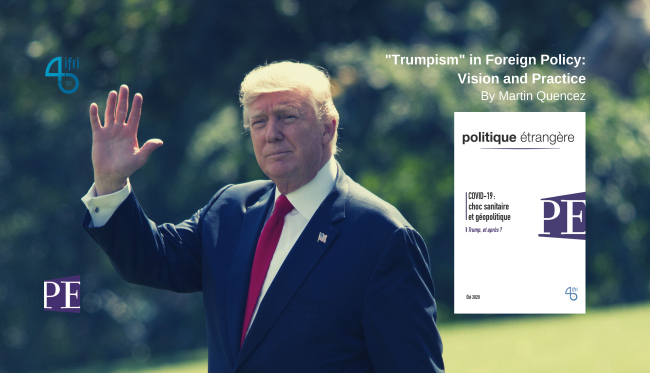
“Trumpism” in Foreign Policy: Vision and Practice
In 2016, Donald Trump ran as the candidate for change, and, once elected, he set about deconstructing the legacy of his predecessors.

COVID-19 and the End of Technological Innocence
COVID-19 acts as a catalyst in international relations.

COVID-19: A Public Health and Geopolitical Shock
The COVID-19 crisis has hit the countries of the European Union (EU) hard.

U.S. Allies Look on in Dismay While U.S. Rivals Rejoice
Trump’s failure to convene a G-7 meeting is only the latest blow to America’s crumbling prestige in the face of nationwide unrest. When German Chancellor Angela Merkel last week declined an invitation to join U.S. President Donald Trump in Washington for a star-crossed meeting of the G-7, and then British Prime Minister Boris Johnson rebuffed Trump’s plans to bring Russia back into the group, it underscored how profoundly U.S. allies and partners have soured on American leadership amid a mishandled pandemic and a violent crackdown on protesters.

U.S. Immigration Policy: The Making of a Crisis
Donald Trump’s election to the White House appeared to be the beginning of a profound change in the United States’ immigration policy. He reneged on bipartisan consensus that recognized the “positive contribution” of immigration to the country. This resulted in an increase in policies that affected all aspects of immigration. However, it is the most symbolic of Donald Trump’s goals: building a wall between the United States and Mexico that caused the longest government shutdown in American history.
What Can Europe Hope to Achieve in Tomorrow's World?
In this special issue of Politique étrangère devoted to the proceedings of the conference organized by Ifri on April 10, 2019, in the Grand Amphitheater of the Sorbonne, on the occasion of its fortieth anniversary, discover the debate moderated by Christine Ockrent between Franziska Brantner, Jean-Louis Boulanges, Bernardino Leon, and Igor Yurgens.
The Future of Europe in the Context of Sino-American Competition - Foreword
In this special issue of Politique étrangère devoted to the proceedings of the conference organized by Ifri on April 10, 2019, in the Grand Amphitheater of the Sorbonne, on the occasion of its fortieth anniversary, discover the speech by Bruno Le Maire, Minister of Economy and Finance.
The Future of Europe in the Context of Sino-American Competition - Conclusions
In this special issue of Politique étrangère devoted to the proceedings of the conference organized by Ifri on April 10, 2019, at the Grand Amphitheater of the Sorbonne, on the occasion of its 40th anniversary, read the speech by Jean-Yves Le Drian, French Minister of Europe and Foreign Affairs.
The Future of Europe from the US and Asian Point of View
In this special issue of Politique étrangère devoted to the proceedings of the conference organized by Ifri on April 10, 2019, in the Grand Amphitheater of the Sorbonne, on the occasion of its fortieth anniversary, discover the debate moderated by Sylvie Kauffmann between John Allen and Kishore Mahbubani.
The World of Yesterday and Tomorrow
In this special issue of Politique étrangère devoted to the proceedings of the conference organized by Ifri on April 10, 2019, in the Grand Amphitheater of the Sorbonne, on the occasion of its fortieth anniversary, discover the speech by Thierry de Montbrial, Founder and Executive Chairman of Ifri.
The Future of Europe in the Context of Sino-American Competition - Foreword
In this special issue of Politique étrangère devoted to the proceedings of the conference organized by Ifri on April 10, 2019, in the Grand Amphitheater of the Sorbonne, on the occasion of its fortieth anniversary, discover the speech by Bruno Le Maire, Minister of Economy and Finance.
The Future of Think Tanks
In this special issue of Politique étrangère devoted to the proceedings of the conference organized by Ifri on April 10, 2019, in the Grand Amphitheater of the Sorbonne, on the occasion of its fortieth anniversary, discover the debate moderated by Bassma Kodmani between Thomas Bagger, Thomas Gomart, Robin Niblett, and Daniela Schwarzer.
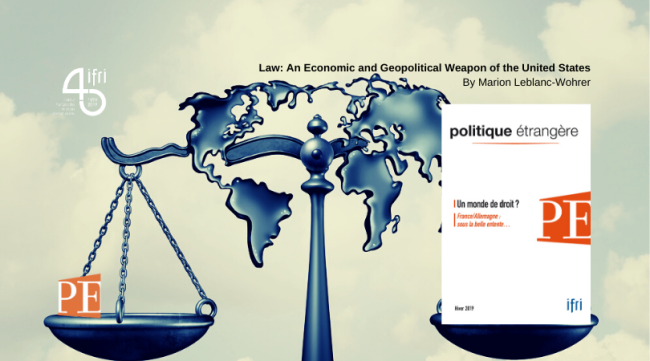
Law: An Economic and Geopolitical Weapon of the United States
From the 2000s, the United States has developed an extraterritorial legal policy that began with fighting corruption but has since broadened considerably.
U.S. public opinion and the 2020 campaign: an interview with John Zogby
John Zogby, Senior Partner, John Zogby Strategies LLC and Founder, The Zogby Poll speaks about U.S. public opinion and the 2020 campaign on the sidelines of Ifri's 18th annual U.S. conference held on December 6, 2019.
U.S. foreign policy and the World's new power balance: an interview with Gordon Adams
Gordon Adams, Professor Emeritus of International Relations, School of International Service, American University speaks about U.S. foreign policy and the World's new power balance on the sidelines of Ifri's 18th annual U.S. conference held on December 6, 2019.
The 2020 Campaign and the Impeachment Process. Conference video
The Democratic Party primary campaign is in full swing and the Impeachment inquiry against Donald Trump proceeds speedily. What is the state of American public opinion less than a year before the elections? How are conservative and progressive media lining up to cover the event?
Does the conservative media unanimously support Trump's 2020 bid?
From the 1920s to the 1980s, the American press followed strict discursive practices based on objectivity and fairness. Starting in the 1930s, the country's political center of gravity was on the liberal side and there were few overtly conservative media.

Rare earths: Beijing threatens a new front in the trade war
China believes its near-monopoly gives it leverage over the US but supply cuts would spur rival producers.
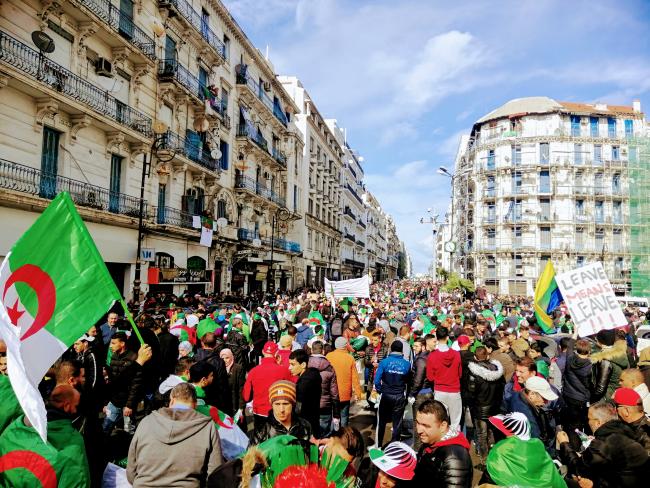
A Protest Made in Algeria
Since February 22, thousands and then millions of Algerians have taken to the streets every Friday to protest against the fifth term of their ailing eighty-two-year-old president, Abdelaziz Bouteflika.
Ifri, a foundation recognized as being of public utility, relies largely on private donors – companies and individuals – to guarantee its sustainability and intellectual independence. Through their funding, donors help maintain the Institute's position among the world's leading think tanks. By benefiting from an internationally recognized network and expertise, donors refine their understanding of geopolitical risk and its consequences on global politics and the economy. In 2026, Ifri partners with over 90 French and international companies and organizations.


Ifri's work on the Americas region focuses mainly on the United States. Indeed, for more than 20 years, Ifri's Americas Program has provided keys to understanding American society and domestic policy while shedding light on developments in the country's foreign policy, including transatlantic relations and trade issues.
Since 2023, a specific axis on Latin America structures more actively Ifri's research on this region.
Ifri's Canada program was active in 2015 and 2016.