




German Foreign Policy
Faced with a fragmentation of the established order and an increasing number of crises, Germany is tending to reassess its position in a changing world.
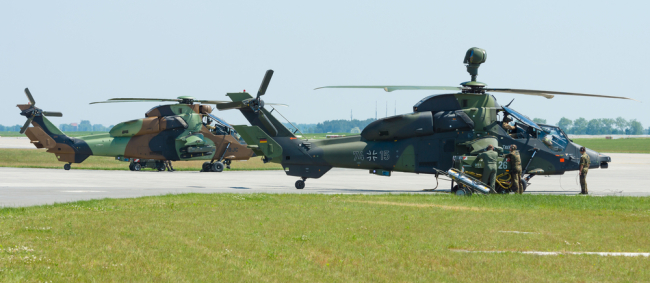
The Franco-German Armaments Cooperation. An Impossible Agreement?
In the Aachen Treaty in 2019, Germany and France agree to deepen their "common program in defense matters" and to pursue a common vision in terms of arms export. These are the preconditions that will help consolidate a culture of common armed forces, common interventions, and European defense industry.
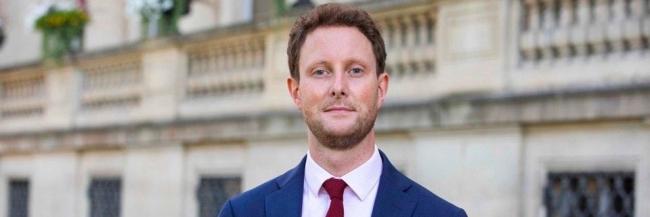
Europe beyond COVID-19
The recovery plan agreed upon by European Union leaders in July 2020 is unprecedented: for the first time, it creates a common debt that will help revive the economies impacted by the pandemic.
Bavaria and France. Preparing the Future together
France and Bavaria have a longstanding close and solid partnership. However, the relationship between France and Bavaria is not only marked by a common history and by the structures created over the decades.
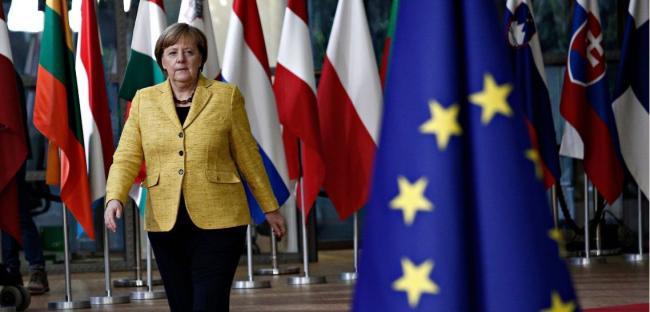
Captain in the Storm: Challenges and Opportunities for the German EU Council Presidency
The German Presidency of the Council of the European Union begins on July 1, 2020 at a time of acute crisis. It is facing unprecedented challenges and organizational constraints in a context marked by high expectations from its European partners.
Breakthrough for Decentralized Franco-German cooperation? Perspectives after the Aachen Treaty
The development of Franco-German cooperation can be described as an intergovernmental process. Depending on the perspective, the capacity for innovation of the relationship lies either with central decision-makers at the state level or with decentralized actors at the local level.
Coronavirus: Franco-German solidarity put to the test
While the coronavirus health crisis is currently intensifying in Europe, it does not seem to be affecting France and Germany at the same pace or with the same intensity. The crisis is putting both countries' respective hospital systems to the test in different ways. France and Germany's economies are being mobilized, and social cohesion is enhanced. The crisis also impacting Franco-German and European solidarity.
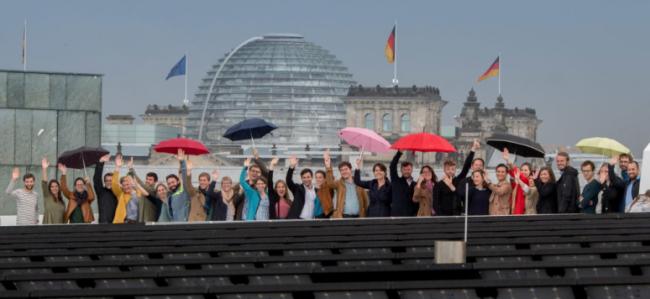
European Identity/ies
Europe is divided in many ways. Brexit and rising nationalism are striking examples of this existing fragmentation. But what unites us Europeans? The Franco-German Future Dialogue 2019 has met fellow Europeans in thirteen member states of the European Union to discuss questions of identity. Do farmers feel European? What role do languages play? Do European communities exist? Does the "Fridays for Future-Generation" feel European? How diverse are the institutions?
The Aachen Treaty: The Promise of Convergence for a Divided Couple
The numerous commitments made in the Aachen Treaty concealed a wide range of disagreements over defense, the future of the European Union, economic policies, relations with Russia, and so on.
Paris and Berlin: History and the Long Term
Historically, the Franco-German “couple” provided a justification for the European project, and for the Europe that emerged from the collapse of the bipolar order.
A World of Law? / France and Germany: What's Behind the Mask
What is the role of law in international relations today that increasingly seem to favour assertions of power?

Germany: The Power Out of Phase
Germany has enjoyed a decade of sustained economic growth, benefiting from a very low unemployment rate and considerable trade and budgetary surpluses. This phase is now coming to an end. Some even believe that the German economic model needs to be rethought.
Brexit pressures expose cracks in Franco-German relationship
Angela Merkel insists that the EU should avoid “putting pressure” on Britain when it comes to Brexit. After a wearying, six-hour EU summit in Brussels, the German chancellor said it was important to give the British “more space” to “make their own choices”. [...]
The Franco-German Tandem: Bridging the Gap on Nuclear Issues
The Franco-German couple has long been characterized by divergent trajectories on nuclear matters, and antagonist historical decisions still frame the current relationship.
The Treaty of Aachen. New Impetus for Franco-German Defense Cooperation?
On 22 January 2019, French President Emmanuel Macron and German Chancellor Angela Merkel sign the Treaty of Aachen on “Franco-German Cooperation and Integration.” The document is set to complement the original Elysée Treaty from 1963, signed by President Charles de Gaulle and Chancellor Konrad Adenauer.
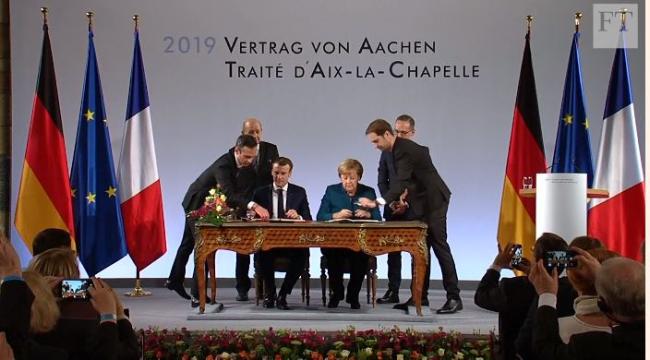
Merkel and Macron betray weakness with cautious Aachen treaty
When Angela Merkel and Emmanuel Macron sign a new Franco-German treaty in the historic city of Aachen on Tuesday, there will be much soaring rhetoric about the deepening ties between the two countries. To critics, though, the Treaty of Aachen is thin gruel. Anyone hoping for a new, tighter alliance between France and Germany, and for signs that the two countries might once again drive European integration, will be disappointed.
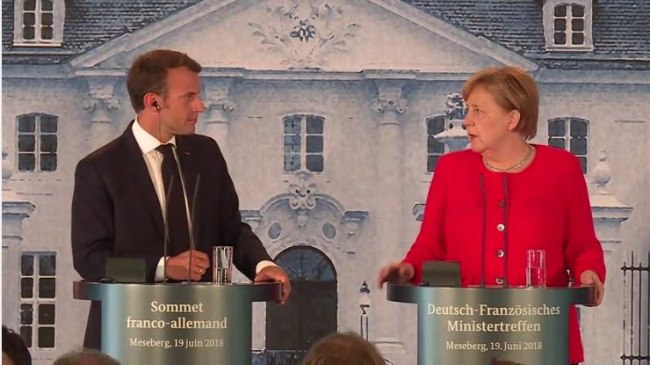
From Meseberg to Nowhere? A Franco-German Impetus for the Eurozone
This study analyses the joint efforts by France and Germany to bring about a comprehensive reform of the European currency union. These efforts culminated in the joint Meseberg Declaration adopted in June 2018. The article contextualises these efforts with respect to the reforms realised so far and the different reform options at hand. Besides questions of economic viability and institutional deficits, the article tackles issues of political feasibility.
The Wider Context: Germany's Baltic Engagement, the ‘Munich Consensus’ and the Future of European Security
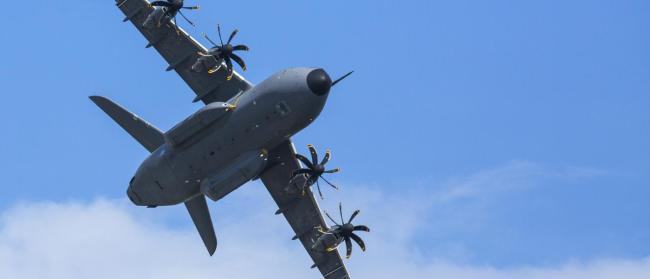
The Three Dimensions of Europe's Defense Debate
In light of transatlantic tensions and a deteriorated security environment, European security affairs are at the crossroads.
Mind the Gap: How France and Germany Can Spearhead Joint Foreign Policy Initiatives Now
In light of the current instability on Europe’s borders and uncertainties about the international role of the US under the administration of President Donald Trump, it is high time for Franco-German foreign policy initiatives. With the formation of a new German government, a window of opportunity opens for new joint action by the two countries at the core of the EU. At the same time, differences between France and Germany, both on policy issues and in terms of their strategic cultures, could impede any such cooperation.
France, Germany, and the Quest for European Strategic Autonomy: Franco-German Defence Cooperation in A New Era
How can France and Germany contribute to reaching the goal of European strategic autonomy? This key question has been guiding the work with the present report. In the light of a more demanding security environment, but also a rare momentum for further European integration, Berlin and Paris have to take their security and defense cooperation to the next level, bilaterally as well as in the EU.
Ifri, a foundation recognized as being of public utility, relies largely on private donors – companies and individuals – to guarantee its sustainability and intellectual independence. Through their funding, donors help maintain the Institute's position among the world's leading think tanks. By benefiting from an internationally recognized network and expertise, donors refine their understanding of geopolitical risk and its consequences on global politics and the economy. In 2026, Ifri partners with over 90 French and international companies and organizations.

The Study Committee on Franco-German Relations (Cerfa) was created in 1954 by an inter-governmental agreement between the Federal Republic of Germany and France, in order to raise awareness of Germany in France and analyze Franco-German relations, including in their European and international dimensions. In its conferences and seminars, which bring together experts, political leaders, senior decision-makers and representatives of civil society from both countries, Cerfa develops the Franco-German debate and stimulates political proposals. It regularly publishes studies through two collections: Cerfa notes and studies as well as Franco-German visions.
Cerfa maintains close relations with the network of German foundations and think tanks. In addition to its research and debate activities, Cerfa promotes the emergence of a new Franco-German generation through original cooperation programs. This is how in 2021-2022, Cerfa led a program on multilateralism with the Konrad Adenauer Foundation in Paris. This program is aimed at young professionals from both countries interested in the issues of multilateralism in the context of their activities. It covered a wide range of themes relating to multilateralism, such as international trade, health, human rights and migration, non-proliferation and disarmament. Previously, Cerfa had participated in the Franco-German future dialogue, co-led with the DGAP from 2007 to 2020, and supported by the Robert Bosch Foundation and the Daniel Vernet group (formerly the Franco-German Reflection Group) which was founded in 2014 upon the initiative of the Genshagen Foundation.