





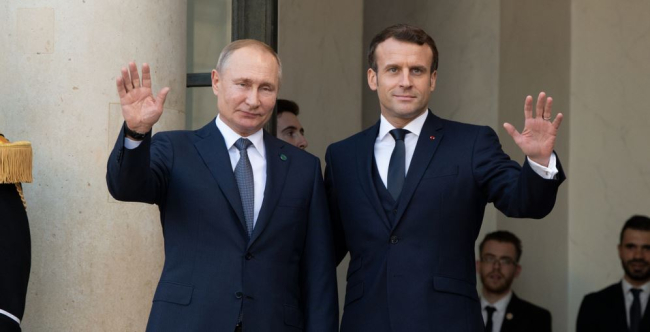
Macron’s rapprochement with Putin is not worth it
French president’s ‘trust-building’ with Russian leader has failed

Russian Private Military Contractors in Sub-Saharan Africa: Strengths, Limitations and Implications
Since 2014, Russia has notably intensified its policies in Africa, joining the race for local markets and opportunities presented by the rapidly growing and transforming continent.


Navalny poisoning shatters Macron's Russia reset dream
The poisoning of Russian opposition figure Alexei Navalny with the Novichok nerve agent has dealt a blow to French President Emmanuel Macron's strategy of rapprochement with Russia, which troubled some EU allies, analysts say.
Global Order in the Shadow of the Coronavirus: China, Russia and the West
The coronavirus pandemic has thrown a harsh spotlight on the state of global governance. Faced with the greatest emergency since the Second World War, nations have regressed into narrow self-interest. The concept of a rules-based international order has been stripped of meaning, while liberalism faces its greatest crisis in decades.
Russia and Latin America in the 21st Century: A Difficult Rapprochement
This article analyses Russia’s relations with Latin America in the first two decades of the 21st century in the light of global political and economic processes.
Transformation of Russian Strategic Culture: Impacts from Local Wars and Global Confrontation
Russian strategic culture is evolving fast, despite the consolidation of the ruling regime, which is maturing into a more rigid autocracy, whereby its ideological outlook becomes increasingly conservative.
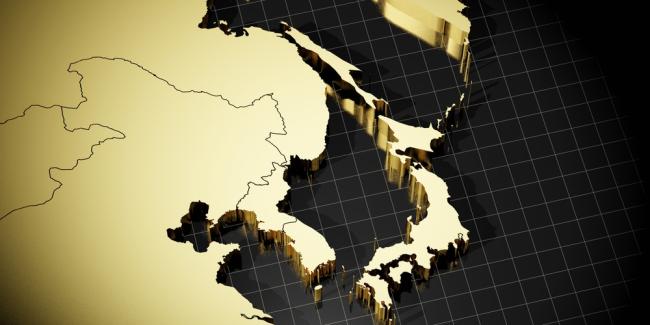
The Return: Russia and the Security Landscape of Northeast Asia
Northeast Asia has emerged as a critical theater of Russian foreign policy in recent years.
Moscow’s historical Westerncentrism is giving way to a new awareness about the vital importance of the region. The “turn to the East” now has genuine substance and impetus. Yet Russian policy is a work in progress, more opportunistic than strategic. The security landscape is complex and fluid, and Moscow has struggled to manage its contradictions.

Anna Myroniuk: Peace in Donbas can’t mean capitulating to Russia
Editor’s Note: This opinion piece was written based on the experience of Kyiv Post staff writer Anna Myroniuk, a native of Donetsk, on a trip to Paris at the invitation of the French Ministry of Foreign Affairs, which sponsored a visit by Ukrainian journalists in early February. In Paris, the reporters had a chance to speak with top-level decision-makers and hear their views on how to end Russia’s war in the Donbas.
The Future of Europe in the Context of Sino-American Competition - Conclusions
In this special issue of Politique étrangère devoted to the proceedings of the conference organized by Ifri on April 10, 2019, at the Grand Amphitheater of the Sorbonne, on the occasion of its 40th anniversary, read the speech by Jean-Yves Le Drian, French Minister of Europe and Foreign Affairs.
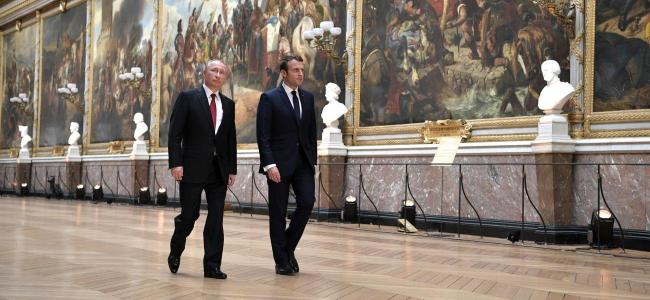
Is a 'Reset' Between France and Russia Needed and, If So, Is It Possible?
As Emmanuel Macron hosts Angela Merkel, Vladimir Zelenskiy, and Vladimir Putin for a summit aimed at resolving the Ukraine conflict, it is worth taking stock of the French leader’s Russia policy to try to discern what Paris’s policy toward Moscow can and cannot achieve.
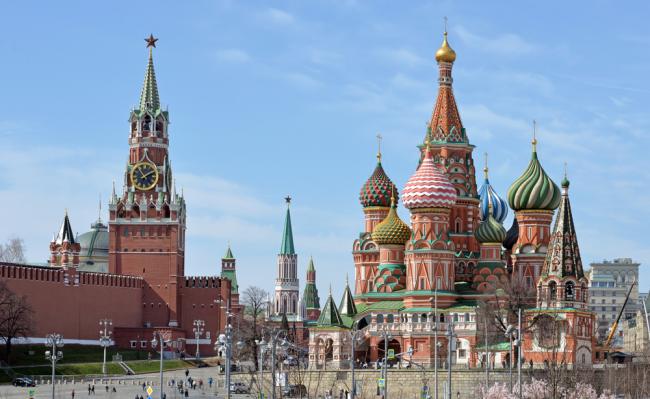
Between Attraction and Repulsion: Strengths and Weaknesses of Russia’s Image Abroad
In search of a better image, Russia has created a whole arsenal of soft power since the mid-2000s according to a Western model.
Friends in Need: Whither the Russia-India Strategic Partnership?
This paper explores the latest developments in key spheres of the Russia-India relationship in order to identify the state of bilateral ties at a time when South Asia has turned into an area of geopolitical contest of both global and regional powers.
France pushes risky bet on detente with Moscow
Paris (AFP) - French President Emmanuel Macron senses an opportunity to bring Russia's Vladimir Putin back in from the cold and potentially help usher in peace in Ukraine, an ambitious -- and risky -- undertaking that Western allies might not welcome.
Russian Nuclear Modernization and Putin’s Wonder-Missiles: Real Issues and False Posturing
The near imminent breakdown of the INF Treaty (1987) has strongly intensified political and public concerns about the failure of traditional arms control and the escalation of a new nuclear arms race.
Greater Eurasia: The Emperor’s New Clothes or an Idea whose Time Has Come?
The Greater Eurasia project has emerged as the poster-child of Vladimir Putin’s foreign policy, symbolic of a resurgent and self-confident Russia.
Russia’s "Great Return" to Africa?
Russia’s comeback to Africa has been widely discussed since 2017.
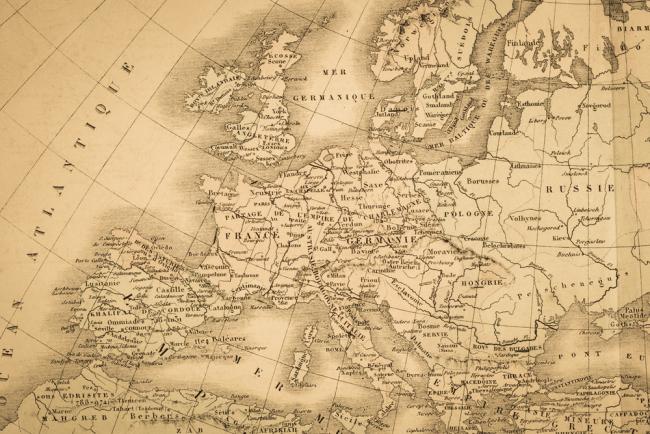
Imagined Geographies of Central and Eastern Europe: The Concept of Intermarium
Like the proverbial cat, some concepts have several lives. Or, like the mythological phoenix, they can be reborn from the ashes. This is certainly the case of the Intermarium, a geopolitical concept that envisaged an alliance of countries reaching from the Baltic Sea over the Black Sea to the Aegean Sea that would serve as a third power bloc between Germany and Russia.
Russia’s Relations with Southeast Asia
In recent years, Russia has focused on developing its relations with Southeast Asia, particularly in the areas of economic ties and arms sales.
Northern Europe’s Strategic Challenge from Russia: What Political and Military Responses?
The return of more conflictual relations between Russia and the West following Russia’s intervention in Eastern Ukraine and its annexation of Crimea has led to a deterioration in the strategic environment for Northern European countries, particularly in the Baltic Sea Region and the Arctic.
Making Sense of Russia’s Policy in Afghanistan
For some time, Western sources have been accusing Moscow of backing the Taliban regime in Afghanistan.
Ifri, a foundation recognized as being of public utility, relies largely on private donors – companies and individuals – to guarantee its sustainability and intellectual independence. Through their funding, donors help maintain the Institute's position among the world's leading think tanks. By benefiting from an internationally recognized network and expertise, donors refine their understanding of geopolitical risk and its consequences on global politics and the economy. In 2026, Ifri partners with over 90 French and international companies and organizations.
