





Is Putin’s System Built to Last?
The annexation of Crimea and the Ukraine crisis have enabled Vladimir Putin once again to put on a display of Russian dominance, uniting the nation around core conservative values.
Vladimir Putin’s Non-Economic Logic
Russia’s economic crisis was not caused by decisions taken by the West following the Russia-Ukraine conflict. It was predicted and widely mediatized.
The Jewish Diaspora and the Russo-Ukrainian Crisis
Two questions arise when the role of a diaspora in crisis is considered. Do diasporas embody an internal threat to the security of the nation state? And why do some efforts to use diasporas as a tool of international politics succeed while others fail? In this paper, the Ukrainian 2014-2015 crisis involving Russia is analyzed in order to suggest answers to these questions. The author examines the political reactions of a specific diaspora group: the Jews in Ukraine and Russia.
Russia and Global Climate Politics
Russia, as the fourth largest greenhouse-gas emitter in the world, and a major supplier of fossil fuels causing these emissions, played a decisive role in the enforcement of the Kyoto Protocol, the main instrument of global climate policy so far.
"Green Economy": Opportunities and Constraints for Russian Companies
The article explores the importance of a transition to a “green economy” for Russia, as well as the potential opportunities and constraints for its national businesses.
Isolating, Not Taming: What's Behind the Impetus to "Digital Sovereignty" in Russia?
April 2014 was a particularly bitter month for Russian internet users and the local internet industry. President Vladimir Putin unsurprisingly made headlines when, at the Media Forum in St. Petersburg, he publicly labeled the internet as a “CIA project” and launched an attack against Russian internet businesses. Putin particularly expressed reservations about the successful Russian search engine Yandex, as it is registered in the Netherlands for, as Putin stated, “not only… taxation purposes but for other reasons, as well.” A week earlier, during his annual call-in TV show, Putin also referenced the internet when, responding to a question from Edward Snowden, he rejected any mass surveillance of the network by Russian law enforcement agencies.
Russia's Academy of Sciences' Reform: Causes and Consequences for Russian Science
This paper analyzes the origins and causes of the radical reforms undertaken in Russia’s academic sciences sector, which resulted in the fusion of three state academies in 2013.
Russia: Youth and Politics
Young people are the most politically active and impulsive part of any society.
The Influence of the State on Expanding Russian MNEs: Advantage or Handicap?
Government influence is crucial for the international operations of firms in emerging economies. However, these firms have varied experience of government interventions: some benefit more, some less, while the government roles vary among countries and industries.
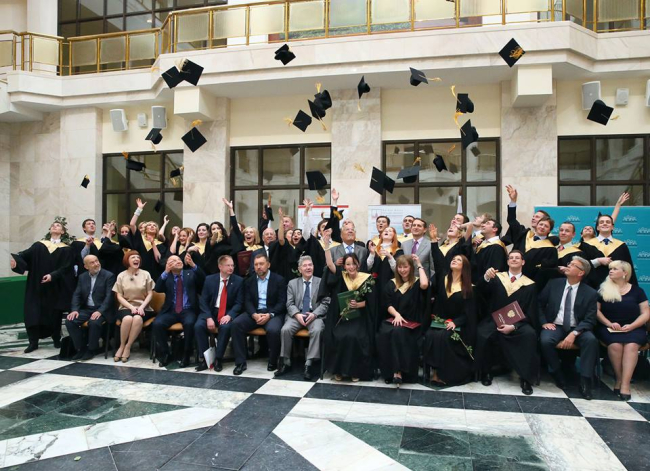
Russian Universities, Competitive or not?
Russian universities today face many difficult challenges. At the national level, schools must provide highly qualified personnel for the national economy, but also have a new mission: to become active actors in the diversification of the economy and the creation of innovation.
The Russian Internet Economy
The Russian Internet economy is demonstrating a substantial rate of growth, one that is significantly outperforming the rest of the domestic economy. According to joint research by the Higher School of Economics and the Russian Association of Electronic Communications, while in 2011 the Internet economy accounted for just 1% of Russia’s GDP, it was expected to grow at a rate of about 30% in 2012. According to BCG reports, the Internet contributed to 1.9% of Russian GDP in 2010, and is expected to grow by up to 2.8% by 2016. E-commerce, which combines retail and electronic payment systems, accounts for the large majority of the Internet economy, but other segments are also growing. Advertising is the fastest growing part of the Russian Internet economy, growing at a rate of 50% annually.
The WTO and the Customs Union: What Consequences for the Russian Banking Sector?
Russia is now a member of World Trade Organization (WTO) and of the Eurasian Customs Union between Russia, Belarus and Kazakhstan. Questions remain over how this new global and regional integration will affect the competitive environment of the Russian banking services industry.
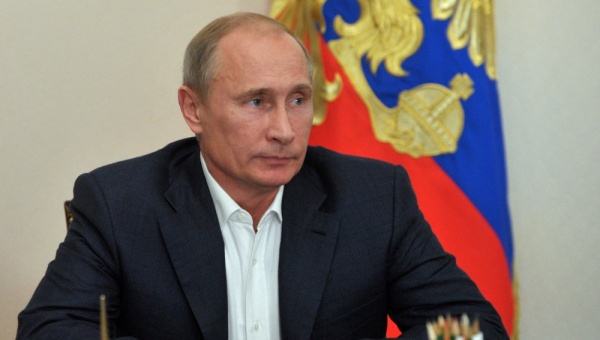
Vladimir Putin turns 60
What are, in your opinion, his main successes during these 60 years?
- Vladimir Putin’s main success is his ability to be elected the President of Russia for two times; he is certainly a leader with a prominent standing in the Russian history. However, the question of whether the third presidency can be regarded as a success or an achievement is still open. The conditions under which the elections were held, especially the political opposition will be a political problem for him and for Russia for the next 6 years. My answer is that the first two elections were definite successes, but I wonder about the third one.
Russian internet demonstrates high level of political maturity
How do you assess the Russian internet, in general? Is it different from the English web or not, in political terms?
- First of all, we should make a distinction between the official position on the internet as a political issue for the Russian government, and what happens in domestic terms. In the first case, it's very interesting to observe the desire by the Russian state to get back on the web.
Ukraine at the Crossroads: Between the EU DCFTA and Customs Union
After serious decline in the 1990s, Ukraine's economy finally started its recovery and systemic reform in early 2000. While the economy rapidly grew by 2008, its transformation remained unfinished. Ukraine has three possible roads to development.
Decoding Russia's WTO Accession
As Moscow and the WTO Member States have finally established terms on which Russia will accede to the organization, thoughts turn to the impact of this historic event and the potential for it to play a role in the modernization of the country’s economy. The process has been long, with Russia having to negotiate bilateral accession protocols with the more than fifty WTO member states.
Russia's virtual: the new reality?
Russia's blogosphere has until recently been largely written off as a politically blunt parallel space. The Facebook mobilisation of 50,000 protestors has challenged such assumptions, writes Julien Nocetti.
Ifri, a foundation recognized as being of public utility, relies largely on private donors – companies and individuals – to guarantee its sustainability and intellectual independence. Through their funding, donors help maintain the Institute's position among the world's leading think tanks. By benefiting from an internationally recognized network and expertise, donors refine their understanding of geopolitical risk and its consequences on global politics and the economy. In 2026, Ifri partners with over 90 French and international companies and organizations.
