







3452 publications

Foreword
In this special issue of Politique étrangère devoted to the proceedings of the conference organized by Ifri on April 10, 2019, in the Grand Amphitheater of the Sorbonne, on the occasion of its fortieth anniversary, read the foreword by Thierry de Montbrial, founder and president of Ifri.

Armed Violence in the Sahara. Are We Moving From Jihadism to Insurgency?
While everyone is questioning the effectiveness of the anti-terrorist response in the Sahel, the first challenge is to ensure that the jihadist phenomenon in the Sahel is fully understood.
Japan’s Indo-Pacific Strategy: Shaping a Hybrid Regional Order
What does Japan want in the Indo-Pacific? It can be tough to tell, because at the moment, Tokyo seems to be pursuing incompatible aims.
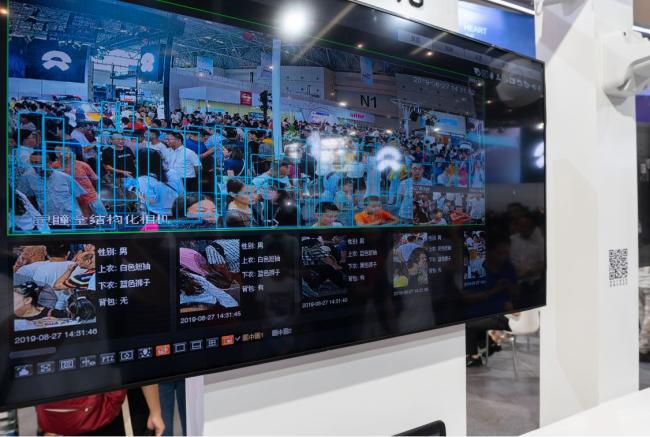
China’s Smart Cities: The New Geopolitical Battleground
“Smart city” development has become a fashionable policy and research topic. A growing number of central and local governments in Europe, Asia, Africa and Latin America, in partnership with companies from diverse sectors (construction, transport, energy, water, etc), consulting firms, NGOs and experts, are now developing smart-city-related projects.
The Right-wing Extremism in Germany. An Underestimated Threat?
In 2018, the Federal Office for the Protection of the Constitution classified 24,100 people in Germany as right-wing extremists. More than one out of two right-wing extremists is described as “violence-oriented”. These figures demonstrate the high level of threat in the German constitutional democracy, which has already manifested itself in the form of various terrorist attacks against foreigners, religious communities and more recently politicians.
India’s Space Program - International Competition and Evolution
India’s space program has grown and evolved significantly in the last five decades. The program originally focused on developing space assets that provided direct developmental benefits, for example telecommunications and remote sensing satellites that helped both in improving communication facilities and giving direct assistance to India’s farmers. But over time, India has shifted a part of its focus towards space exploration and other high-profile missions that do not have as clear a developmental purpose as earlier. This includes, for example, India’s Mars and Moon exploratory missions. Overall, India has been fairly successful in these efforts and its space program has become a comprehensive one that includes not only a robust launch capacity and very large remote sensing satellite systems, but also a very well rounded scientific and deep space exploratory program.
France’s Indo-Pacific strategy: inclusive and principled
France’s recently launched Indo-Pacific strategy has attracted many critical and sarcastic comments.
Japan in South East Asia: Looking for a Balanced Indo-Pacific
South East Asia is an area of utmost importance for Japan’s economic, political and security interests, amounting to “a core strategic interest” for Tokyo.