





Economic Sectors
The main economic sectors are agriculture, industry and services. Growth trajectories and the dynamics of globalization are redefining the balance between these sectors.
Related Subjects

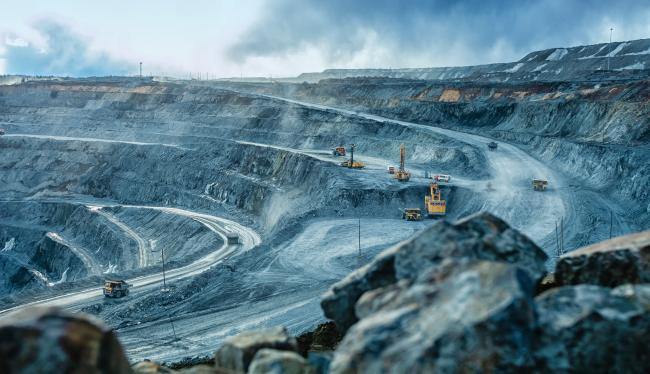
Russia’s Mining Strategy: Geopolitical Ambitions and Industrial Challenges
In addition to being a leading gas and oil power, Russia also possesses vast geological resources that place it among the world’s leading mining countries.

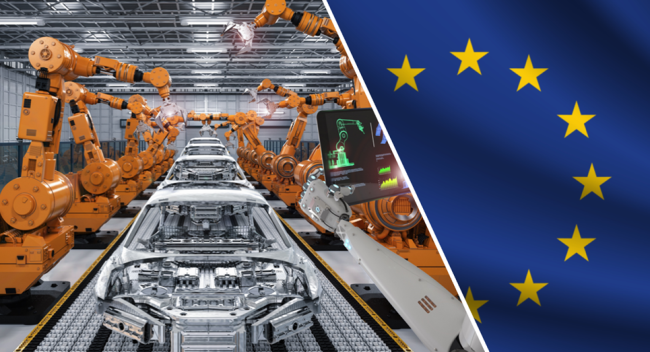
The European Union Industrial Strategy: Reconciling Competition and Geoeconomic Challenges
The EU’s basic assumptions, on which it grounds its economic and trade power, are being steadily cast into doubt. The EU’s main trade partners, the US and China, increasingly set their sights on securing their supply chains, which may further a potential decoupling.
Critical technologies and industrial capabilities: National definitions and implications. The French case.
France has historically paid significant attention to strategic technologies and industries, whether they were strictly defence- and nuclear deterrence related, or considered as vectors of national independence and security, more broadly.

France: 'Precarious' employment conditions for refugees
Around 42% of refugees settled in France manage to find a job within a year of obtaining official status. But the jobs they find are often far below their skill levels, resulting in a "professional downgrade" that leads to discontent and exhaustion.
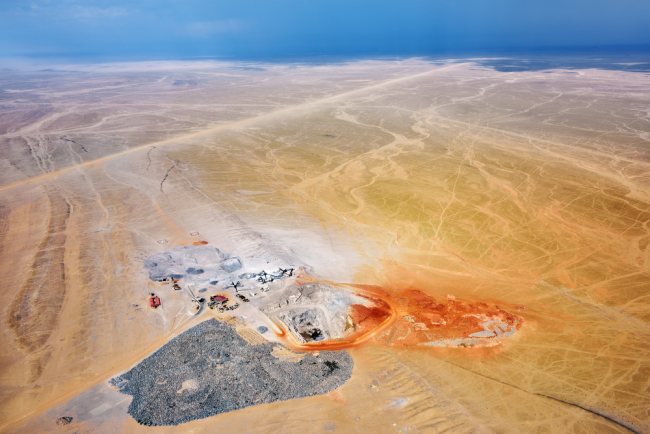
Uranium in Namibia: Yellowcake Fever
Mineral revenues are the driving force behind Namibia’s economic performance. Namibia is rich in mineral resources which include uranium, diamond, copper, gold, lead, lithium and zinc. However, these mineral riches are not always allocated and utilized in a transparent manner and seem to benefit disproportionately a small number of wealthy elites, many of them affiliated with the ruling party SWAPO.

The Dilemma of Middle Powers: How AUKUS Has Reshaped the Potential for E3 Cooperation in the Indo-Pacific
The Indo-Pacific region is increasingly becoming the center of gravity of economy and geopolitics. It covers 60% of the world’s population, triggers 30% of international trade and drains 60% of global gross domestic product (GDP).
Is Europe a “Digital Colony” of the United States?
Edward Snowden’s revelations, the Cambridge Analytica affair and the digital transformation accelerated by the Covid-19 crisis have all shown Europe's technological dependence on foreign powers.
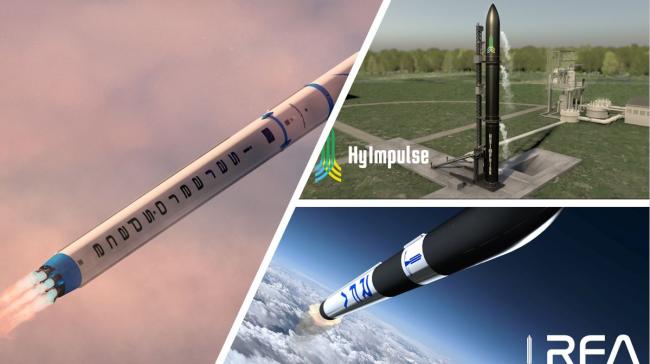
Commercial Space in Europe: A Balancing Act between Physics, Politics and Profession
Satellite constellations have become core elements of the digital transition. Over the next decade, several thousand satellites will have to be launched, to build these constellations. For positioning satellites, preferably in Low Earth Orbit (LEO), reliable and affordable launch services are essential.
From the Digital Levy to the Taxation of Multinationals: Joe Biden's Tax Revolution
The Organisation for Economic Co-operation and Development (OECD) is conducting important negotiations this spring to reform international taxation.
Minnesota: understanding national issues through a territorial lens
Located in the heart of a mostly Republican Midwest, Minnesota stood out in the 2016 presidential election, with Democratic candidate Hillary Clinton winning 46.5 % of the vote, in keeping with the State’s Democratic tradition. In the 2020 presidential campaign Minnesota has been a battleground state, as President Trump and Joe Biden are both intent on winning its 10 votes in the Electoral College.
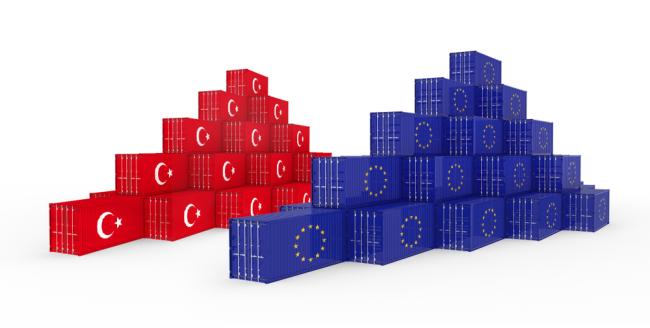
France and the Modernization of the EU-Turkey Customs Union: Interests and Obstacles
This report is part of a joint endeavor of the Centre for Applied Turkey Studies (CATS) at Stiftung Wissenschaft und Politik (SWP), along with Elcano Royal Institute (ELCANO, Madrid), The Polish Institute of International Affairs (PISM, Warsaw), Istituto Affari Internazionali (IAI, Rome) and the Hellenic Foundation for European and Foreign Policy (ELIAMEP, Athens), to open perspectives for the modernization of the European Union-Turkey Customs Union (EU-Turkey CU).

Emirates Airline, Etihad Airways and Qatar Airways: Global Airline Companies Promoting the International Position and Reputation of Dubai, Abu Dhabi and Qatar
Airports in the Gulf emirates are major transit hubs in global airline networks today. Apart from their “advantageous” geographical location, their development results primarily from the ambitions of political actors seeking to maintain their power. This has led especially to the creation of the “Gulf companies”, namely Emirates Airline (Dubai), Etihad Airways (Abu Dhabi) and Qatar Airways (Doha). However, the three emirates are not following identical strategies. Within the unstable context of the Middle East, it is important to look at the development dynamics of these companies which symbolize the global reach of small but powerful political entities on the international stage.
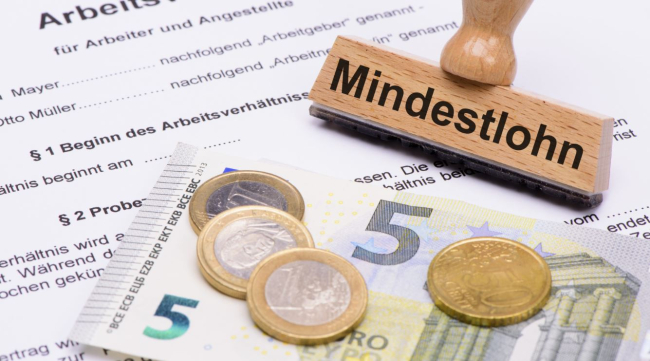
The introduction of the minimum wage in Germany: a first assessment
Germany introduced a minimum wage on January 1st, 2015 – a first in a country that had hitherto left it to the social partners to agree on salaries. This introduction came after vivid debates between those who fought against ever deeper inequalities and those who defended the nation’s competitiveness.
Not Dazzling But Not Invisible : The Ugandan Middle Classes as "Somewhere in Between"
In January 2016, the Kenyan supermarket chain Uchumi has filed bankruptcy for its Ugandan subsidiaries, due to perpetual losses. And they are not alone: companies like Nestlé, Coca Cola or Barclays are slowly pulling out of Africa and recent reports – such as the Global Wealth Databook from Credit Suisse or from the Pew Research Center – suggest that the size of the African middle class may be much smaller than previously thought. So was the hype in recent years about “Africa rising” (Mahajan, 2009) and the African middle class just a bubble? In order to better comprehend the social and economic transformations taking place on the continent, it can prove helpful to look beyond the dazzling facade of economies such as Kenya or South Africa, and into those countries experiencing steady growth, but nevertheless far from including a well established middle class. Their middle classes are not shopping in big malls, driving cars and going on holidays. Rather, these groups are characterized by the improvement of their livelihoods compared to their parents’ generation, in terms of education, income and housing, but they still feel strongly vulnerable, and do not take their new benefits for granted. This has an important effect on their consumption patterns, and may not turn them into the promising new consumers, as they have sometimes been praised to be.
The Country Risk Concept
The expression “country risk” emerged in the United States in the 1960s. Its meaning has evolved over time, without any definition ever really being settled on.
Kazakhstan and Eurasian Economic Integration: Quick Start, Mixed Results and Uncertain Future
Kazakhstan's economic integration with Russia and Belarus has been advancing at break-neck speed.
Globalization of Japanese firms: Long-run Trends, Cross-sectional Variations, and Policy Implications
Japanese firms are increasingly involved in various global business operations - not only in traditional international trade in goods, but also in offshore production and the new mode of globalization: offshore outsourcing.
Ukraine at the Crossroads: Between the EU DCFTA and Customs Union
After serious decline in the 1990s, Ukraine's economy finally started its recovery and systemic reform in early 2000. While the economy rapidly grew by 2008, its transformation remained unfinished. Ukraine has three possible roads to development.
The Economic Opportunities and Constraints of Green Growth: The Case of South Korea

Manufacturing Risk: Geopolitical Doxa and the Corporate World
The evolving power dynamics between the United States, China, and Russia are creating new geopolitical realities that businesses can no longer evade. Geopolitical risk has become unavoidable, yet many companies remain unprepared to navigate its complexities. Corporate leaders can no longer afford to overlook its implications.

How Geopolitical Tensions Reshape Trade Patterns: Geoeconomic Fragmentation, or China’s Big Manufacturing Push?
A data-based analysis shows that widespread geoeconomic fragmentation of world trade is not visible, at least so far. In contrast, the geopolitically-motivated challenges to international coordination are striking, notably in relation with China's surging surplus in manufactured goods trade.

Groundbreaking Chip Sovereignty: Europe’s Strategic Push in the Semiconductor Race
The EU Chips Act’s enactment in September 2023 marks a major policy shift that revitalizes industrial policy in Europe. By allowing state subsidies for semiconductor projects, it has the potential to secure Europe’s supply chain security and technological autonomy in an industry dominated by the US and East Asia.
EU-Mercosur: An Unsolvable Trilemma Between Competition Rules, Normative Ambitions and Supply Chain Diversification
The EU-Mercosur trade deal was believed to be heading toward the finish. The election of Luiz Inácio Lula da Silva as the president of Brazil, as successor to the right-wing populist Jair Bolsonaro, and the Spanish presidency of the European Union (EU), raised hopes for its conclusion. But the reservations expressed by several EU member states and some Latin American countries have dashed hopes.
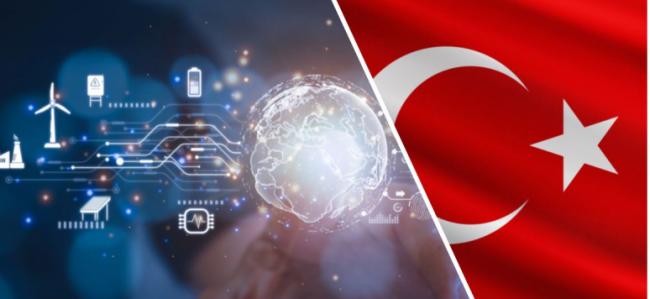
Balancing Security and Innovation: Opposition's View on Turkey's Digital Policies
The upcoming presidential and parliamentary elections in Turkey on May 14, 2023, are expected to be closely contested. Polls suggest that the ruling AK Party-led People’s Alliance will lose its majority in parliament, resulting in a hung lower house.
Critical technologies and industrial capabilities: National definitions and implications. The French case.
France has historically paid significant attention to strategic technologies and industries, whether they were strictly defence- and nuclear deterrence related, or considered as vectors of national independence and security, more broadly.
Not Dazzling But Not Invisible : The Ugandan Middle Classes as "Somewhere in Between"
In January 2016, the Kenyan supermarket chain Uchumi has filed bankruptcy for its Ugandan subsidiaries, due to perpetual losses. And they are not alone: companies like Nestlé, Coca Cola or Barclays are slowly pulling out of Africa and recent reports – such as the Global Wealth Databook from Credit Suisse or from the Pew Research Center – suggest that the size of the African middle class may be much smaller than previously thought. So was the hype in recent years about “Africa rising” (Mahajan, 2009) and the African middle class just a bubble? In order to better comprehend the social and economic transformations taking place on the continent, it can prove helpful to look beyond the dazzling facade of economies such as Kenya or South Africa, and into those countries experiencing steady growth, but nevertheless far from including a well established middle class. Their middle classes are not shopping in big malls, driving cars and going on holidays. Rather, these groups are characterized by the improvement of their livelihoods compared to their parents’ generation, in terms of education, income and housing, but they still feel strongly vulnerable, and do not take their new benefits for granted. This has an important effect on their consumption patterns, and may not turn them into the promising new consumers, as they have sometimes been praised to be.
Kazakhstan and Eurasian Economic Integration: Quick Start, Mixed Results and Uncertain Future
Kazakhstan's economic integration with Russia and Belarus has been advancing at break-neck speed.
Globalization of Japanese firms: Long-run Trends, Cross-sectional Variations, and Policy Implications
Japanese firms are increasingly involved in various global business operations - not only in traditional international trade in goods, but also in offshore production and the new mode of globalization: offshore outsourcing.
Ukraine at the Crossroads: Between the EU DCFTA and Customs Union
After serious decline in the 1990s, Ukraine's economy finally started its recovery and systemic reform in early 2000. While the economy rapidly grew by 2008, its transformation remained unfinished. Ukraine has three possible roads to development.
Ifri, a foundation recognized as being of public utility, relies largely on private donors – companies and individuals – to guarantee its sustainability and intellectual independence. Through their funding, donors help maintain the Institute's position among the world's leading think tanks. By benefiting from an internationally recognized network and expertise, donors refine their understanding of geopolitical risk and its consequences on global politics and the economy. In 2026, Ifri partners with over 90 French and international companies and organizations.


To analyze the impact of power rivalries and tensions on globalization, this initiative combines economic and political expertise. In the face of growing geopolitical risk, the goal is to decipher the dynamics of reconfiguration: protectionist pressures, sanctions, restrictions, industrial policies, and economic security concerns are redefining the rules of international trade. These tensions are also transforming international financial relations by undermining the foundations of trust and reshaping the global monetary system. They raise questions about the role of several key players: sovereign wealth funds, central banks, digital platforms, multilateral institutions, and financial infrastructure operators. In a context of profound disruption, simply refining existing approaches is no longer sufficient. The initiative is designed as a flexible model, drawing on diverse expertise to offer both broad overviews and targeted analyses. It also provides a platform for stakeholders and experts from various backgrounds to debate these issues freely.