




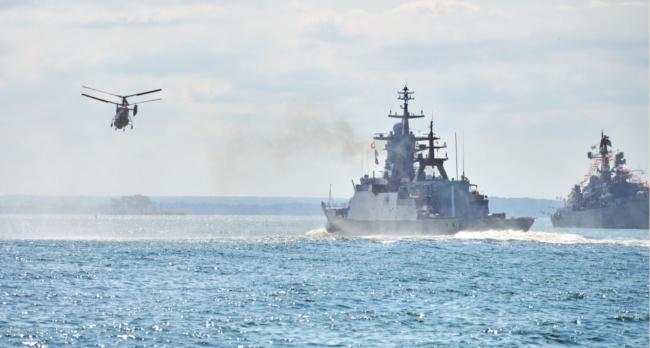
Russia’s New Challenges in the Baltic/Northern European Theater
The long war in Ukraine has brought a drastic geopolitical reconfiguration of the Baltic theater and a deep shift in the military balance between Russia and the North Atlantic Treaty Organization (NATO).
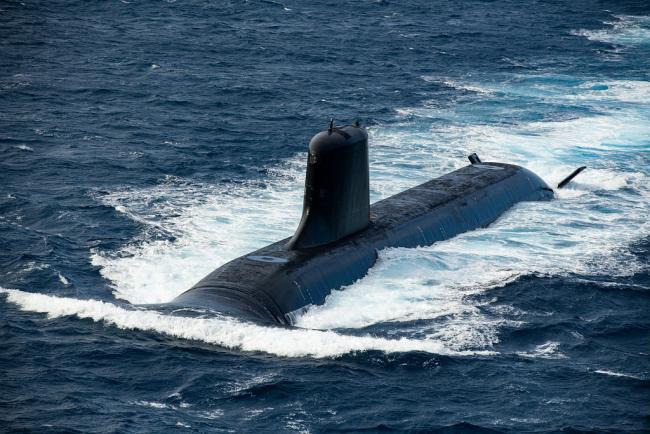
Naval Nuclear Propulsion: The Technical and Strategic Challenges of a Restricted Technology
The technical and operational capabilities of naval nuclear propulsion - discretion, power, autonomy and manoeuvrability - make this technology a strategic asset for nuclear deterrence.

France in the Indo-Pacific: The Need for a Pragmatic Strategic Posture
As US-China rivalry reaches its peak and the likelihood of a high-intensity conflict in the region seems greater than ever, this report advocates for a pragmatic recalibration of France’s strategic posture in the Indo-Pacific. This adjustment should be grounded in a realistic reframing of ambitions and an analysis of France’s core interests and the threats it faces.
The Ambitions of the Islamic Republic of Iran in the Pacific
In January 2023, the Iranian Navy staged a show of force near the Australian Exclusive Economic Zone (EEZ) amid growing tensions between Tehran and Canberra.
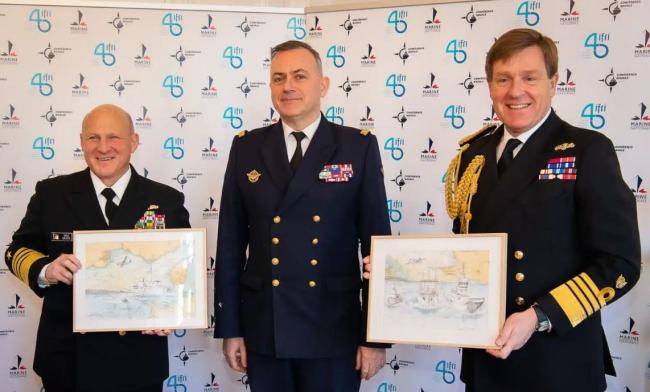
US Navy, French Navy And Royal Navy See Eye To Eye On Interoperability
The heads of the three leading NATO navies, the Chief of Naval Operations (CNO), Admiral Mike Gilday, First Sea Lord, Admiral Ben Key, and the Chief of Staff of the French Navy, Admiral Pierre Vandier, met last week in France for the first ever "Paris Naval Conference".


CNO Delivers Remarks at Paris Naval Conference
CNO Delivers Remarks at Paris Naval Conference
Below is a transcript of the remarks as delivered:
THOMAS GOMART: Just a quick announcement before starting. If you don't want to practice your French you can use receptors which are with this gentleman over there or at the table, because I will speak French and switch to English for the session.
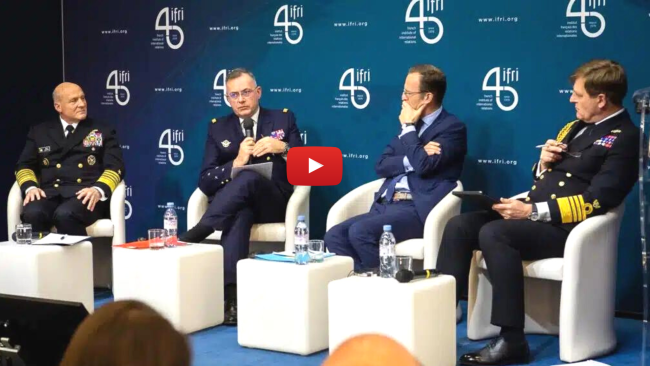
(Replay) Conférence navale de Paris : the return of naval combat
A conference organized by Ifri and the French Navy with British, French and American speakers to reflect on the evolution of naval strategy and the impact of new technologies on navies.
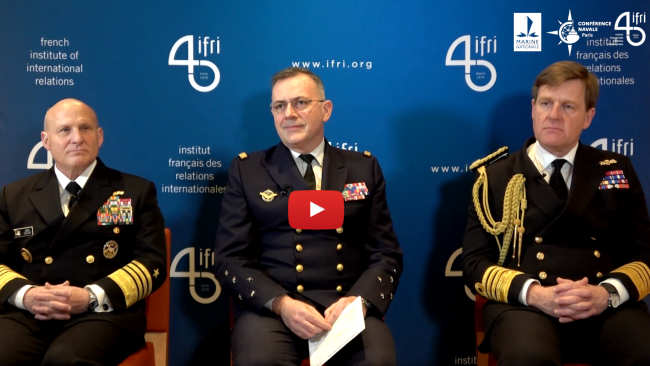
Interview - Conférence navale de Paris: The Return Of Naval Combat
An interview with the chiefs of staff of the French, American, and British navies.
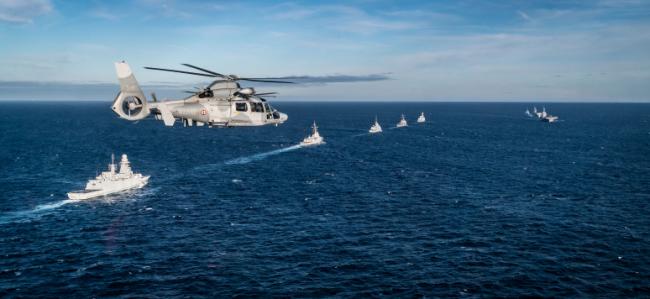
Naval Combat Redux: A Renewed Challenge for Western Navies
Our world is becoming increasingly contested and unpredictable and we are trending towards a return of great power strategic competition, characterized by more frequent challenges to the established rules-based international order. As a consequence, the risk of interstate conflict continues to rise. This regressive evolution is most readily apparent in the maritime domain, where the concomitant impacts on the free flow of international trade and the control of illegal and unregulated fishing are interlaced with the prescient, yet growing challenge of environmental security.
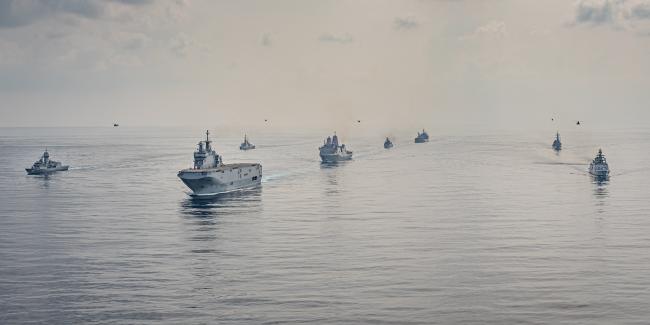
France and AUKUS: Bouncing Back to Live up to Pacific Challenges
Back in September 2021, the announcement of AUKUS – the defense partnership between Australia, the United Kingdom (UK) and the United States (US) was a shock to Paris.

French Navy bets on electronic warfare to counter anti-ship threats
With 2,000 miles of direct coastline and more than a dozen overseas territories, France’s naval vessels maintain a continuous presence in multiple maritime zones — from the North Sea to the Caribbean, and from the Indian Ocean to the Pacific.
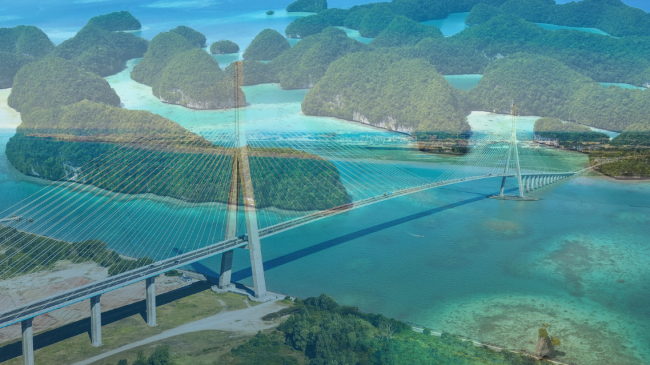
Building Bridges over the Blue Pacific. Beyond Marine Protected Areas – A Europe-Oceania Cooperation
The “new scramble for the Pacific” is characterized by a race for the control of maritime space and resources, oscillating between ocean grabbing and ocean commoning.

French "State Action at Sea" as a Model for SE Asian Coast Guards
South-East Asian countries like Philippines and Indonesia have to cope with an increasing number of maritime issues in order to exert their sovereign rights over their territorial waters, archipelagic waters and exclusive economic zones (EEZ). In the midst of a tense geostrategic environment, the security of maritime areas and, more broadly, security in the high seas, are subject to major threats and illegal activities as recently summarized in the last Information Fusion Centre (IFC) annual report: piracy and sea robbery, maritime terrorism, cyber-attacks and AIS spoofing, trafficking of all kinds, illegal fishing activities and maritime pollution.

Tensions at Sea in East Asia: A Japanese View on Chinese Lawfare Practices
Tensions at sea are growing and multiplying both in the East and the South China Seas.

Mavi Vatan, the "Blue Homeland": the Origins, Influences and Limits of an Ambitious Doctrine for Turkey
Turkey’s activism in the Eastern Mediterranean now appears to be guided by an ambitious legal and geopolitical doctrine, based on the claim of a vast maritime domain – the “Blue Homeland” or Mavi Vatan in Turkish.
France’s Indo-Pacific Strategy and the Quad Plus
In France, the launch of the Quad Plus raised little attention.
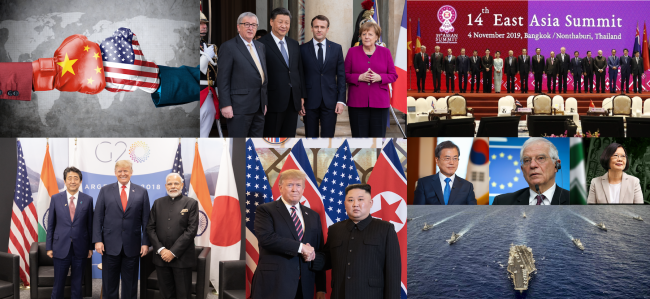
East Asia Security in Flux. What Regional Order Ahead?
In February 2020, the Ifri Center for Asian Studies and the Research Institute for Peace and Security (RIPS) held a conference on the Asian security environment.
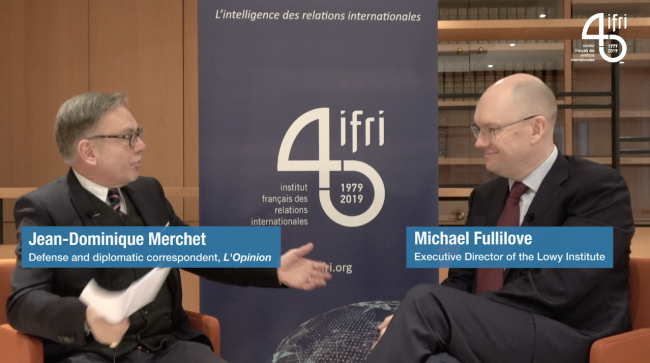
The Indo-Pacific: a View from France and Australia
An interview with Michael Fullilove, Executive Director of the Lowy Institute, by Jean-Dominique Merchet, Defense and Diplomatic Correspondent, L'Opinion.
France and Japan: The Indo-Pacific as a Springboard for a Strategic Partnership
For decades, the Franco-Japanese partnership has essentially been characterised by a vibrant cultural exchange as well as by sound economic relations. Today Japan is France’s second-largest trading partner in Asia (after China) and its leading Asian investor.
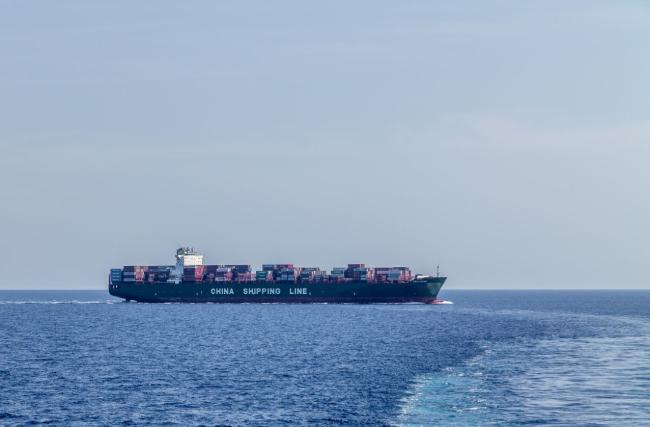
China in the Mediterranean: An Emerging Presence
The Chinese presence in the Mediterranean is raising new questions among the diplomatic services of the Maghreb countries, as well as those of southern Europe. Indeed, over the past five years, China has been translating its national priorities with increasing activism in the Mediterranean.
Ifri, a foundation recognized as being of public utility, relies largely on private donors – companies and individuals – to guarantee its sustainability and intellectual independence. Through their funding, donors help maintain the Institute's position among the world's leading think tanks. By benefiting from an internationally recognized network and expertise, donors refine their understanding of geopolitical risk and its consequences on global politics and the economy. In 2026, Ifri partners with over 90 French and international companies and organizations.
