




Economic Development
Economic development includes not only the idea of growth and enrichment, but also that of an improved quality of life.
Related Subjects

Rethinking Global Imbalances
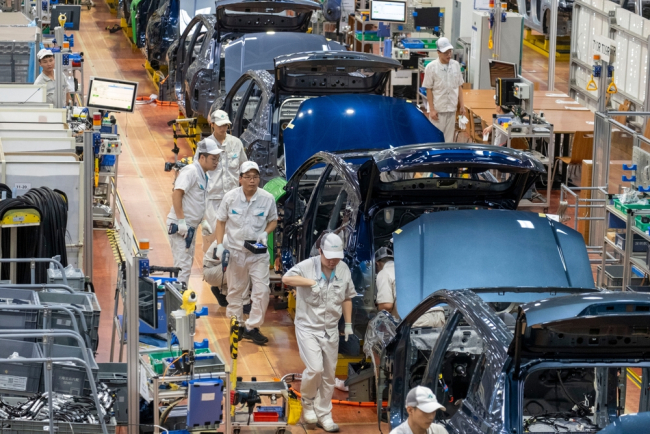
Today’s global imbalances, starting with China's massive trade surplus, are not simply the result of poor macroeconomic coordination. Rather, they reflect long-term strategic thinking and a departure from the bias toward openness on which the postwar trade order was built.

The Transfer Paradox. Rethinking Global Imbalances
Global imbalances have come back to the top of the policy agenda. Many analyses and reports have been produced over recent months. The standard prescription involves better coordination of macroeconomic policies, with three familiar recommendations: higher consumption in China, higher investment in Europe, and fiscal consolidation in the United States.
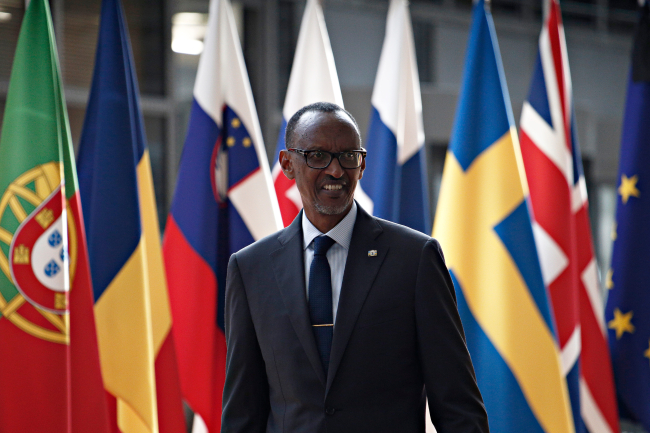
The Vectors and Means of Rwanda’s Growing External Influence under Paul Kagame
For three decades, Paul Kagame’s Rwanda has pursued a foreign policy aimed at increasing investment in the national economy, maximizing military cooperation and intelligence sharing, and promoting a model of post-genocide state reconstruction.

Democratic Anchor, Pragmatic Reach
Despite facing their own democratic challenges, including political fragmentation, rising populism, and electoral uncertainty, European countries retain valuable experience in democratic resilience.

What Do Companies Fear? The New Geography of Geopolitical Risk
Geopolitical risk has established itself, within the space of a few years, as a central variable in corporate strategy.

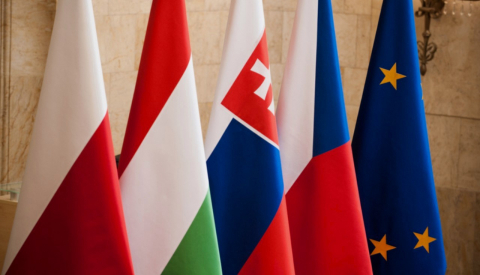
How smaller EU states are reshaping Europe’s power structure
Changing economic and trans-Atlantic conditions have led to power restructuring in the 27-nation European Union, opening doors for more negotiating power for many smaller central and former Eastern European nations such as Hungary.

Global imbalances, industrial policies, and the challenge of surging Chinese trade surpluses
The analysis of global imbalances faces a paradox: while the analytical focus has for decades been on the sustainability of current account deficits, out of concerns about their financial consequences, international political tensions stem mainly from enduring trade surpluses and their industrial impacts. Beyond President Trump’s outbursts, fears about the consequences of China’s trade surpluses are increasingly widespread.
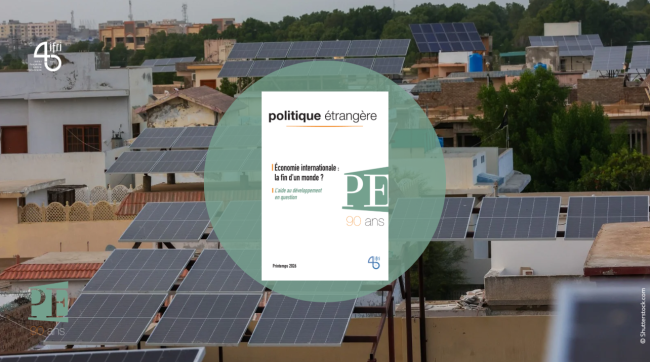
Official Development Assistance in the Age of Deglobalization
Official development assistance has collapsed since 2023, both in Europe and in the United States. This decline has affected both developing and industrialized countries. Under fire in the Global North and South, the goals and methods of development assistance must be redefined if it is to adapt to an international landscape in which the principal actors—the United States, the European Union, China, the Arab countries—are adopting new stances.
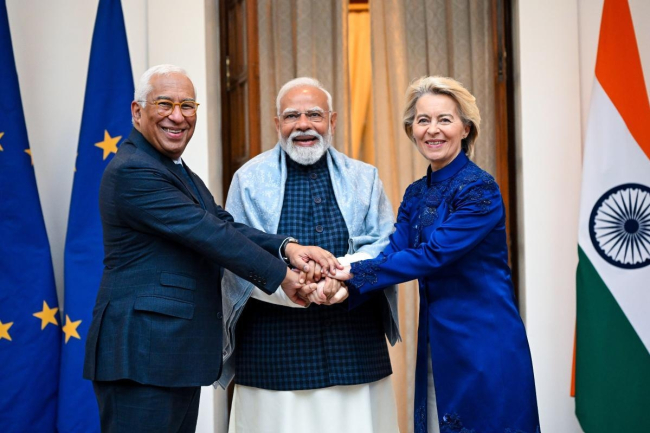
European Union-India: Lasting Rapprochement or Partnership of Convenience?
The partnership between the European Union (EU) and India has long been limited to economic exchanges. Its political dimension has gradually developed, culminating in its elevation to the status of a “strategic partnership” in 2004. However, the failure of negotiations for a free-trade agreement in 2013 slowed this momentum. Since the early 2020s, in an uncertain geopolitical context, bilateral rapprochement has gained new momentum.
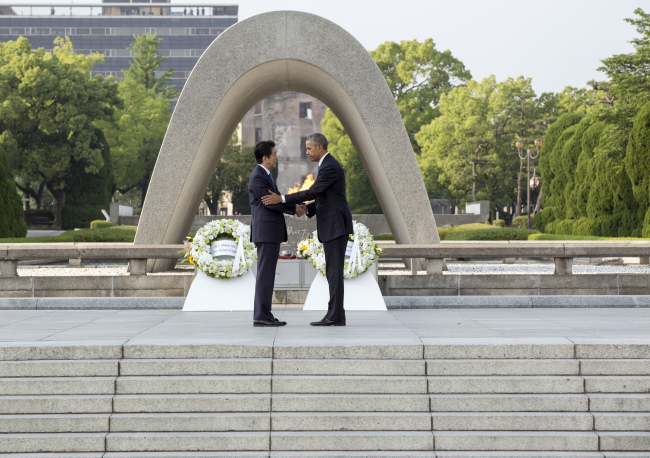
Japan’s Takaichi Landslide: A New Face of Power
Prime Minister Sanae Takaichi has turned her exceptional popularity into a historic political victory. The snap elections of February 8 delivered an overwhelming majority for the Liberal Democratic Party (LDP), driven by strong support from young voters, drawn to her iconoclastic and dynamic image, and from conservative voters reassured by her vision of national assertiveness. This popularity lays the foundation for an ambitious strategy on both the domestic and international fronts.
New Cold War? What New Cold War? Confronting the Geoeconomic Fragmentation Narrative with the Data
It has become widely accepted that the world economy should be seen as increasingly shaped by forces of fragmentation, resulting from geopolitical tensions. This article takes another look at this narrative, using international trade data. While an aggregate analysis is consistent with a new Cold War narrative, whereby international trade is increasingly seen as split into two blocs, this is only a mix of very different outcomes. Far from being a widespread trend, geoeconomic fragmentation of trade flows is only significant in “hotspots”: Russia's foreign trade and China-US bilateral exchanges, and the impact is massive in these cases. Outside these “hotspots”, there is no tangible sign that geopolitical tensions have been shaping international trade patterns in terms of blocs, nor is there any hint of a trend toward nearshoring – to the contrary, in fact.
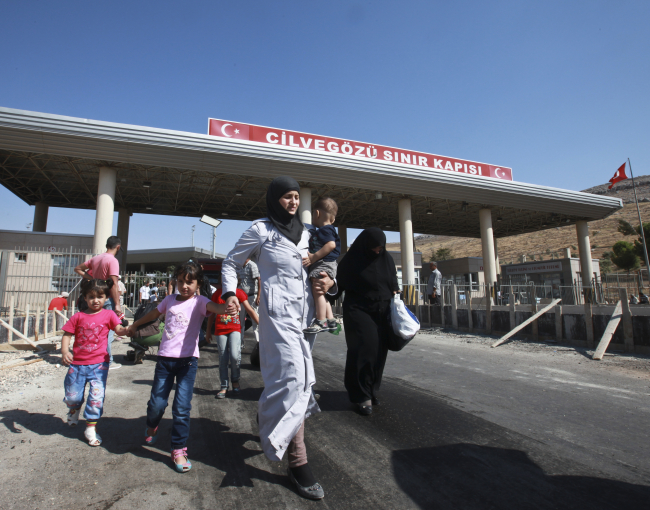
How to Jumpstart Economic Recovery in Syria? The role of syrian entrepreneurs in Turkey
This report examines the potential role of Syrian-partnered companies operating in Türkiye in supporting economic recovery and reconstruction efforts in Syria. Based on data collected through field research and surveys conducted by the Economic Policy Research Foundation of Türkiye (TEPAV), the report provides an overview of the business characteristics, sectoral distribution, and cross-border economic activities of Syrian entrepreneurs. The report explores how this business activity could contribute to restoring supply chains, stimulating local production, and generating employment.
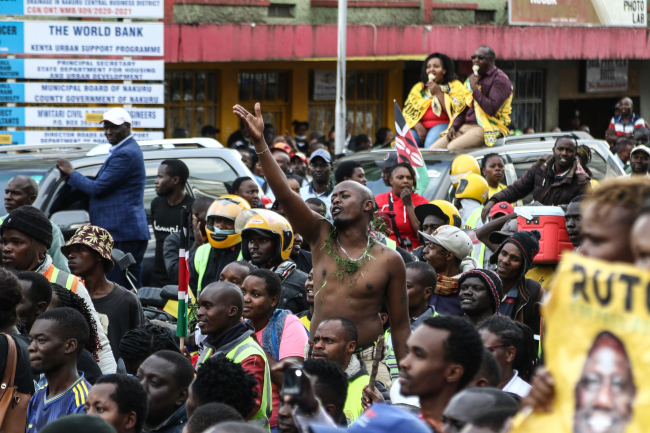
Claiming "The People": Youth Booms, Ailing Authoritarians and "Populist" Politics in Kenya, Uganda, and Tanzania
This study analyses the emergence of so-called “populist” political tendencies in three East African countries: Kenya, Uganda and Tanzania. It builds its analysis on a wider discussion of the term “populism”, its use and applicability in (eastern) African settings before going on to examine the drivers of three cases of populism: William Ruto’s 2022 election victory in Kenya and the “Hustler Nation”; Bobi Wine’s opposition to Yoweri Museveni in Uganda; and John Magufuli highly personal style of government in Tanzania.
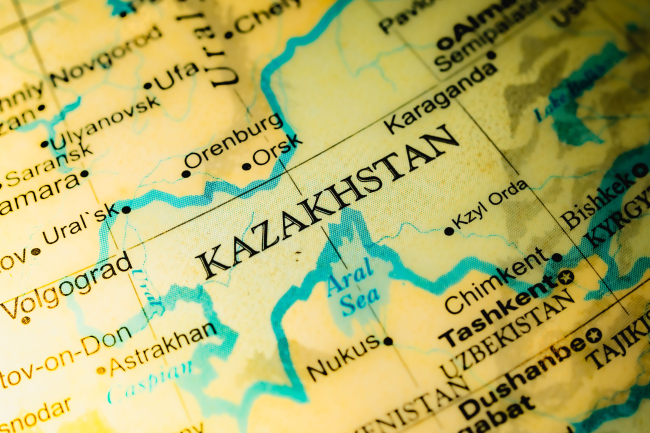
Kazakhstan After the Double Shock of 2022: Political, Economic and Military Consequences
The year 2022 represented a dual shock for Kazakhstan. In January, the country faced its most severe political crisis since independence, followed in February by Russia’s full-scale invasion of Ukraine, which cast uncertainty over the borders of post-Soviet states. These consecutive crises profoundly shaped Kazakhstan’s domestic and foreign policy.
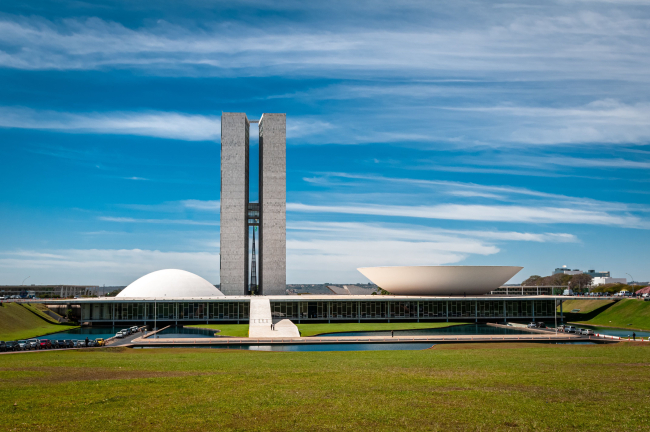
Brazil One Year Away from the October 2026 General Elections
Brazil’s general elections will be held on October 4, 2026, to elect the president, vice-president, members of the National Congress, governors, deputy governors and state legislative assemblies. For the presidential and gubernatorial elections, a second round will be held on October 25 if no candidate obtains a majority of the votes in the first round.

The Strategic Dimension of Skills in the Clean Industrial Deal
In the competitiveness and energy transition battles, the European Union (EU) must master a determinant factor: skills.

“Although mining is a long-term business, very few companies do prospective studies”
As global demand for critical minerals accelerates, Central Africa finds itself once again at the heart of an extractive race—this time driven by the energy transition. Thierry Vircoulon, Associate Research Fellow at Ifri's Sub-Saharan Africa Center, and Coordinator of its Observatory of Central and Southern Africa, shares a sharp and sobering perspective. Speaking ahead of the ESSEC Institute for Geopolitics & Business webinar “Securing Critical Minerals” (2 July), he explores the paradoxes of resource governance, the rise of China, and why “clean energy” still runs on dirty politics. A must-read for those navigating the fault lines of global supply chains.

European Startups and Generative AI: Overcoming Big Tech Dominance
Europe is at a crossroads. Faced with the domination of American Big Tech across the entire generative Artificial Intelligence (AI) value chain, from foundation models to cloud infrastructure, distribution channels, and open source, it risks long-term technological and economic decline. Yet generative AI also represents a major opportunity for economic transformation, with a potential value estimated at 1.5 times France’s gross domestic product (GDP). To turn it into a driver of renewal, Europe must move beyond the illusion of total technological independence and instead build an ecosystem that leverages Big Tech resources while strengthening its own innovation capabilities.

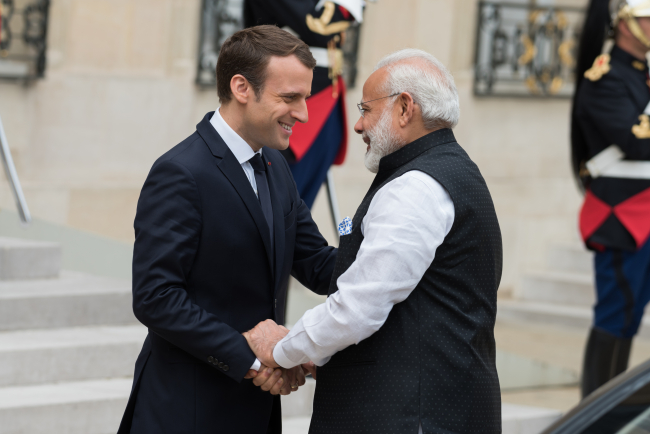
India's Modi heads to Paris as co-chair of AI summit
Indian Prime Minister Narendra Modi is visiting France from Monday as co-chair of an international summit on artificial intelligence in Paris that is expected to be attended by industry leaders, including executives from OpenAI and DeepSeek.

Out of Thin Air but More than a Mirage: The Politics of Saudi Arabia's Nascent Music Industry
This study critically examines Saudi Arabia’s nascent music industry, which is promoted as a key element of Vision 2030, Crown Prince Mohammed bin Salman’s strategic framework to diversify the kingdom’s economy. It explores how state-led investments in music and entertainment intersect with authoritarian governance. The author neither dismisses these investments as conspicuous spending nor reproduces an alarmist narrative of impending cultural imperialism. The article takes a political sociology approach to understand how Saudi entertainment plans consolidate domestic power and reshape regional cultural landscapes.
The Transfer Paradox. Rethinking Global Imbalances
Global imbalances have come back to the top of the policy agenda. Many analyses and reports have been produced over recent months. The standard prescription involves better coordination of macroeconomic policies, with three familiar recommendations: higher consumption in China, higher investment in Europe, and fiscal consolidation in the United States.
The Vectors and Means of Rwanda’s Growing External Influence under Paul Kagame
For three decades, Paul Kagame’s Rwanda has pursued a foreign policy aimed at increasing investment in the national economy, maximizing military cooperation and intelligence sharing, and promoting a model of post-genocide state reconstruction.
What Do Companies Fear? The New Geography of Geopolitical Risk
Geopolitical risk has established itself, within the space of a few years, as a central variable in corporate strategy.
Global imbalances, industrial policies, and the challenge of surging Chinese trade surpluses
The analysis of global imbalances faces a paradox: while the analytical focus has for decades been on the sustainability of current account deficits, out of concerns about their financial consequences, international political tensions stem mainly from enduring trade surpluses and their industrial impacts. Beyond President Trump’s outbursts, fears about the consequences of China’s trade surpluses are increasingly widespread.
Official Development Assistance in the Age of Deglobalization
Official development assistance has collapsed since 2023, both in Europe and in the United States. This decline has affected both developing and industrialized countries. Under fire in the Global North and South, the goals and methods of development assistance must be redefined if it is to adapt to an international landscape in which the principal actors—the United States, the European Union, China, the Arab countries—are adopting new stances.
European Union-India: Lasting Rapprochement or Partnership of Convenience?
The partnership between the European Union (EU) and India has long been limited to economic exchanges. Its political dimension has gradually developed, culminating in its elevation to the status of a “strategic partnership” in 2004. However, the failure of negotiations for a free-trade agreement in 2013 slowed this momentum. Since the early 2020s, in an uncertain geopolitical context, bilateral rapprochement has gained new momentum.
Japan’s Takaichi Landslide: A New Face of Power
Prime Minister Sanae Takaichi has turned her exceptional popularity into a historic political victory. The snap elections of February 8 delivered an overwhelming majority for the Liberal Democratic Party (LDP), driven by strong support from young voters, drawn to her iconoclastic and dynamic image, and from conservative voters reassured by her vision of national assertiveness. This popularity lays the foundation for an ambitious strategy on both the domestic and international fronts.
New Cold War? What New Cold War? Confronting the Geoeconomic Fragmentation Narrative with the Data
It has become widely accepted that the world economy should be seen as increasingly shaped by forces of fragmentation, resulting from geopolitical tensions. This article takes another look at this narrative, using international trade data. While an aggregate analysis is consistent with a new Cold War narrative, whereby international trade is increasingly seen as split into two blocs, this is only a mix of very different outcomes. Far from being a widespread trend, geoeconomic fragmentation of trade flows is only significant in “hotspots”: Russia's foreign trade and China-US bilateral exchanges, and the impact is massive in these cases. Outside these “hotspots”, there is no tangible sign that geopolitical tensions have been shaping international trade patterns in terms of blocs, nor is there any hint of a trend toward nearshoring – to the contrary, in fact.
How to Jumpstart Economic Recovery in Syria? The role of syrian entrepreneurs in Turkey
This report examines the potential role of Syrian-partnered companies operating in Türkiye in supporting economic recovery and reconstruction efforts in Syria. Based on data collected through field research and surveys conducted by the Economic Policy Research Foundation of Türkiye (TEPAV), the report provides an overview of the business characteristics, sectoral distribution, and cross-border economic activities of Syrian entrepreneurs. The report explores how this business activity could contribute to restoring supply chains, stimulating local production, and generating employment.
Claiming "The People": Youth Booms, Ailing Authoritarians and "Populist" Politics in Kenya, Uganda, and Tanzania
This study analyses the emergence of so-called “populist” political tendencies in three East African countries: Kenya, Uganda and Tanzania. It builds its analysis on a wider discussion of the term “populism”, its use and applicability in (eastern) African settings before going on to examine the drivers of three cases of populism: William Ruto’s 2022 election victory in Kenya and the “Hustler Nation”; Bobi Wine’s opposition to Yoweri Museveni in Uganda; and John Magufuli highly personal style of government in Tanzania.
Rethinking Global Imbalances
Today’s global imbalances, starting with China's massive trade surplus, are not simply the result of poor macroeconomic coordination. Rather, they reflect long-term strategic thinking and a departure from the bias toward openness on which the postwar trade order was built.
Democratic Anchor, Pragmatic Reach
Despite facing their own democratic challenges, including political fragmentation, rising populism, and electoral uncertainty, European countries retain valuable experience in democratic resilience.
How smaller EU states are reshaping Europe’s power structure
Changing economic and trans-Atlantic conditions have led to power restructuring in the 27-nation European Union, opening doors for more negotiating power for many smaller central and former Eastern European nations such as Hungary.
“Although mining is a long-term business, very few companies do prospective studies”
As global demand for critical minerals accelerates, Central Africa finds itself once again at the heart of an extractive race—this time driven by the energy transition. Thierry Vircoulon, Associate Research Fellow at Ifri's Sub-Saharan Africa Center, and Coordinator of its Observatory of Central and Southern Africa, shares a sharp and sobering perspective. Speaking ahead of the ESSEC Institute for Geopolitics & Business webinar “Securing Critical Minerals” (2 July), he explores the paradoxes of resource governance, the rise of China, and why “clean energy” still runs on dirty politics. A must-read for those navigating the fault lines of global supply chains.
India's Modi heads to Paris as co-chair of AI summit
Indian Prime Minister Narendra Modi is visiting France from Monday as co-chair of an international summit on artificial intelligence in Paris that is expected to be attended by industry leaders, including executives from OpenAI and DeepSeek.

As China’s Pacific influence grows, Japan eyes deeper ties with island nations amid their domestic woes
Japan has supported the region by setting up hospitals, building roads and bridges, and assisting in climate change mitigation and disaster relief. Tokyo’s renewed focus on Pacific nations comes amid regional concern over Fukushima waste water discharge and as Chinese influence grows.
De-globalization or Re-globalization? (World Policy Conference 2024 - Plenary Session)
Saturday, December 14, 2024 - 17th edition of the World Policy Conference in Abu Dhabi, United Arab Emirates. Plenary session 3: De-globalization or Re-globalization?
Ifri, a foundation recognized as being of public utility, relies largely on private donors – companies and individuals – to guarantee its sustainability and intellectual independence. Through their funding, donors help maintain the Institute's position among the world's leading think tanks. By benefiting from an internationally recognized network and expertise, donors refine their understanding of geopolitical risk and its consequences on global politics and the economy. In 2026, Ifri partners with over 90 French and international companies and organizations.


To analyze the impact of power rivalries and tensions on globalization, this initiative combines economic and political expertise. In the face of growing geopolitical risk, the goal is to decipher the dynamics of reconfiguration: protectionist pressures, sanctions, restrictions, industrial policies, and economic security concerns are redefining the rules of international trade. These tensions are also transforming international financial relations by undermining the foundations of trust and reshaping the global monetary system. They raise questions about the role of several key players: sovereign wealth funds, central banks, digital platforms, multilateral institutions, and financial infrastructure operators. In a context of profound disruption, simply refining existing approaches is no longer sufficient. The initiative is designed as a flexible model, drawing on diverse expertise to offer both broad overviews and targeted analyses. It also provides a platform for stakeholders and experts from various backgrounds to debate these issues freely.