






Governability, Inequality, and the Welfare State
Economic insecurity and inequality make the governance of political societies and the international order more complex. Reallocating spending from the social commitments of the welfare state to the military budget is thus inadvisable over the long term. Instead, the welfare state should be oriented toward protecting production capacity, especially at a time when the means of production are potentially going to be revolutionized by the emergence of new technologies such as artificial intelligence.
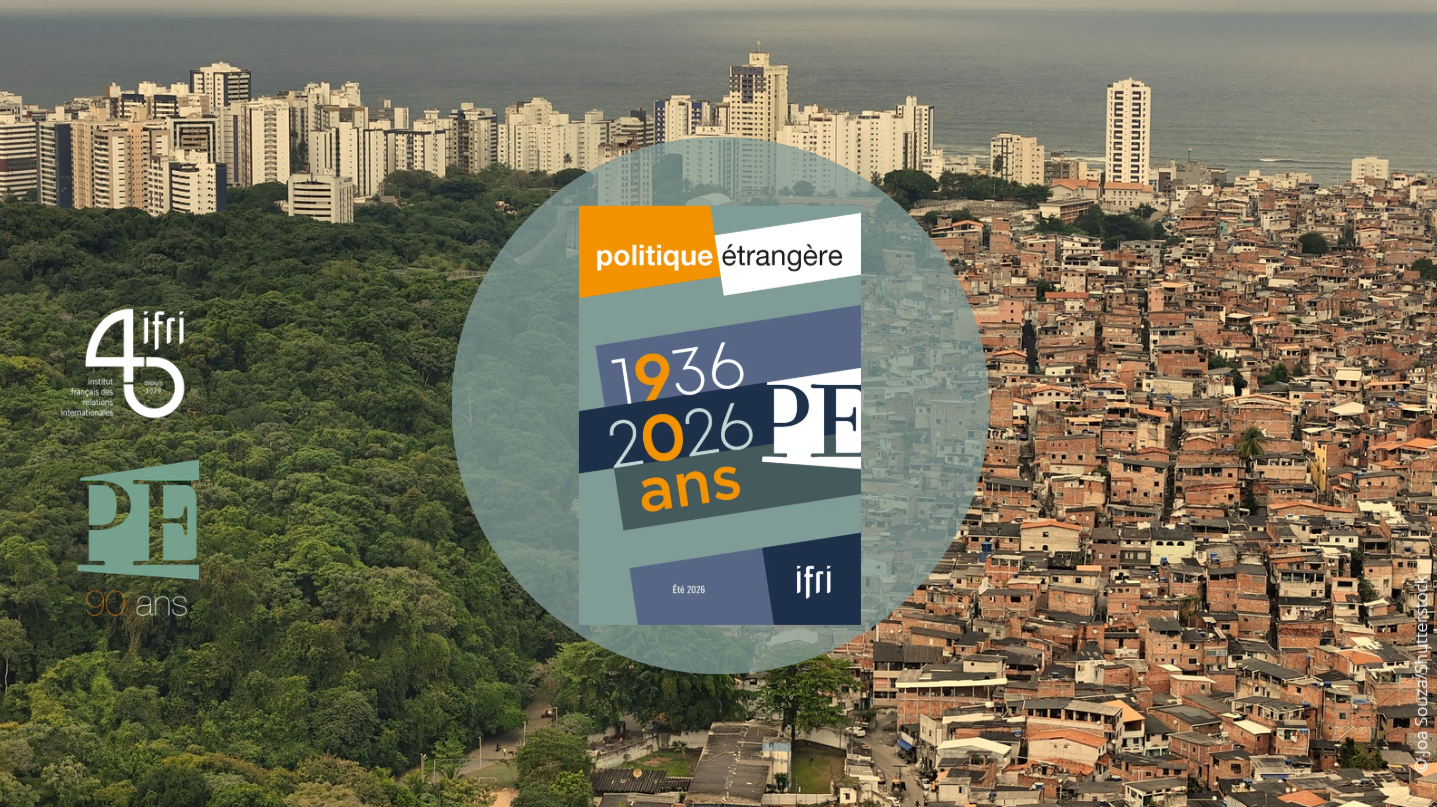
The hard-right repositioning of the current United States (U.S.) administration under Donald Trump, including recent military threats against North Atlantic Treaty Organization allies, has demonstrated beyond reasonable doubt that the rule-based liberal international order is in deep crisis. The response in Europe revolves around two competing views. On the one hand, there is the opinion that higher defense spending comes at the expense of generous welfare provision that most Europeans hold dear, from public education, healthcare, unemployment insurance, and pensions. On the other hand, there are those who staunchly continue to privilege welfare outlays over military spending. On this side, there is the argument that military might easily triggers armed conflict. A few, such as the Italian minister of interior Matteo Salvini, opportunistically side with the pacifists by professing a hitherto unsuspected support for the welfare state and “peace”, even though they make no secret of their admiration for President Vladimir Putin.
Whilst drawing opposite conclusions, neither side of the argument seems to question the existence of a welfare versus warfare trade-off: both take for granted that choosing one over the other is inescapable in the new context of geopolitical strife. This surely begs the question of how domestic welfare provision and the global order are interlinked. Our argument is that economic insecurity and social inequalities make governance of national territories and of the international order indeed more difficult. However, there is no simple relationship between inequality, welfare provision, and governability–if governing means to uphold a social and political order without having to suppress civil unrest. Some of the most unequal countries in the world, for instance the Middle Eastern Organization of Petroleum Exporting Countries, are firmly governed by illiberalism. Others, such as the Council for Mutual Economic Assistance (Comecon) countries of Central and Eastern Europe in the past have broken down even though socio-economic inequalities were comparatively low and welfare provision quite universal. [...]
Article Outline
- Inequality in the Liberal International Order
- Governability and the Welfare State
- Supporting Governability through Redistribution
- Going Forward
Anton Hemerijck is a professor of political science and sociology at the European University Institute (Fiesole, Italy).
Waltraud Schelkle is the director of the Chair of European Public Policy at the European University Institute.
Article published in Politique étrangère, Vol. 91, No. 2, 2026.

Available in:
Themes and regions
Share
This page contains only a summary of our work. If you would like to have access to all the information from our research on the subject, you can download the full version in PDF format.
Governability, Inequality, and the Welfare State
Iran: Anatomy of a Power at War
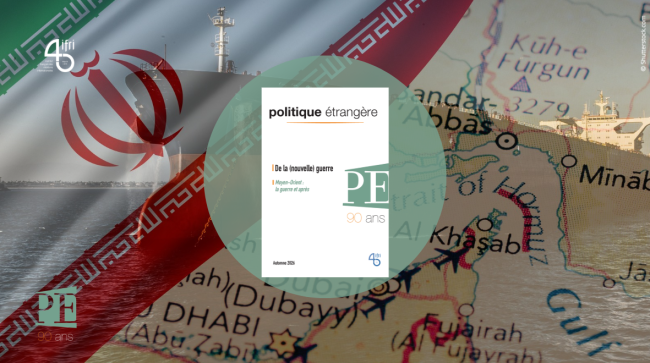
The elimination of Supreme Leader Ali Khamenei and several high-ranking officials at the outset of the 2026 American-Israeli operation did not succeed in bringing down the Iranian regime. The regime had prepared for such a scenario, notably by decentralizing its structures. Moreover, it continues to adapt to war. The power of the Islamic Revolutionary Guard Corps is growing at the expense of the Shiite clergy. The security apparatus defends the country’s sovereignty and justifies its actions in the name of raison d’état.
“Remodeling” the Middle East?
Chaos continues to spread, seemingly without end, across the Middle East. The Israeli-American attack on Iran has resulted in a clear military and diplomatic failure, but it is paving the way for a regional realignment, the consequences of which remain uncertain. New regional groupings are taking shape, either centered around Israel or built on the prospect of coexistence with Tehran, alongside a decline in American influence and the marginalization of Europe, while China maintains a low-key presence.
Silicon Valley and War: Lessons from Ukraine
Over the course of international conflicts, and particularly in Ukraine, major tech companies have emerged as central actors. Initially subject to wartime maneuvering, they have since become decisive actors in their own right, privatizing a significant share of wartime exchanges, shaping the information flows of societies, and presenting themselves as providers of security. This situation raises important questions about states’ autonomy in making decisions and taking action.
Does Artificial Intelligence Change the Nature of War?
From Gaza to Ukraine and Iran, current conflicts are being shaped by the arrival of artificial intelligence and robots on the battlefield. The changes under way are so profound that humans risk rapidly losing control over entire aspects of the conduct of military operations. While these technological developments are altering the character of war, their impact on the very nature of war itself remains a matter of debate.