

The World of Yesterday and Tomorrow
In this special issue of Foreign Policy devoted to the proceedings of the conference organized by Ifri on April 10, 2019, in the Grand Amphitheater of the Sorbonne, on the occasion of its fortieth anniversary, discover the speech by Thierry de Montbrial, Founder and Executive Chairman of Ifri.
On 17 October 1989, Ifri celebrated its 10th anniversary in the Grand Ampithéâtre de la Sorbonne, where we are gathered thirty years later. The year 1989 is the most important year in the second half of the 20th century, even more important for changing the world than September 11, 2001, which was an indirect consequence of it.
The shock of 1989
In April 1989, the crackdown on protests in Tiananmen Square in Beijing ended the “Roaring Twenties” following the fall of the Gang of Four, and the illusion maintained by Western ideologues, who believed in the spontaneous generation of what was not yet called liberal democracy.
However, the crackdown at Tiananmen did not stop China's rise –on the contrary – and, in France, we remembered the phrase attributed by Alain Peyrefitte to Napoleon: “When China wakes, it will shake the world”. I mention in passing that, according to Jean Tulard, no specialist of the emperor has ever found any sign of such a sentence, which makes it no less accurate.
However, if I had to pick only one day in 1989, it would be easy to agree on November 9, that of the opening-up of the Berlin Wall, the symbolic beginning of a sequence whose completion would come in December 1991 with the fall of the USSR.
In summary, the end of the communist Soviet system was the manifestation of two major trends: the fall of the last empire of the 20th century, after that of the Ottoman and Austro-Hungarian empires in the aftermath of the First World War, and that – much slower – of the European colonial empires after the Second World War. Unlike the others, the fall of the Russian empire was sudden, and initially surprisingly peaceful. However, you would have to be devoid of historical awareness to imagine that such a collapse would not have multiple consequences, deferred over decades.
The second major trend is the spread of the information technology revolution, the most fundamental cause of the USSR's collapse, along with the spread of globalization.
For Westerners, the question then arose of the future of the Euro-Atlantic institutions. In this expression, proponents of the Atlantist ideology take two complementary bodies as a single entity: first, the North Atlantic Treaty, which was just 40 years old at the time, and its organization, NATO; and secondly, the European Economic Community, then 33 years old.
Both were complementary, but distinct, because of the failure of the European Defense Community in 1954, and, much more fundamentally, because of the balance of power with the United States. Clearly maintaining the distinction between the two was one of the pillars of General de Gaulle's politics. [...]
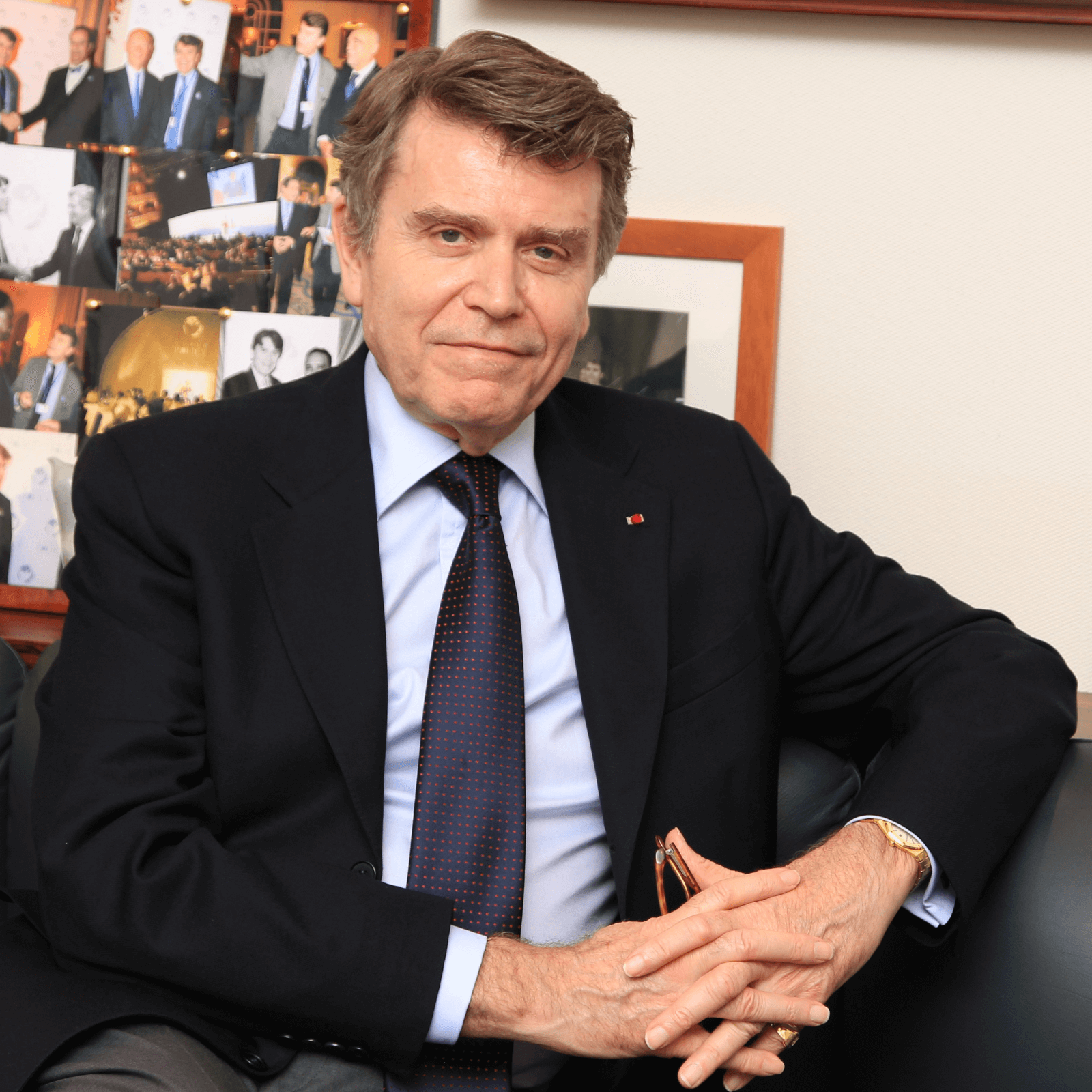
Thierry de Montbrial is the Founder and Executive Chairman of Ifri.

Available in:
Themes and regions
Share
Download the full analysis
This page contains only a summary of our work. If you would like to have access to all the information from our research on the subject, you can download the full version in PDF format.
The World of Yesterday and Tomorrow

Author(s)
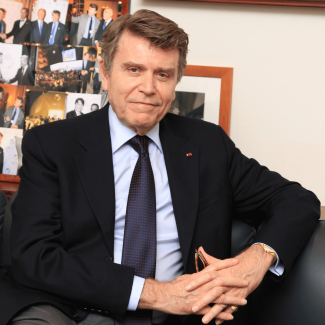
Thierry de MONTBRIAL
Founder and Executive Chairman of Ifri - Member of the Institut de France (Académie des Sciences morales et politiques)
Find out more
Discover all our analyses
Foreword
In this special issue of Foreign Policy devoted to the proceedings of the conference organized by Ifri on April 10, 2019, in the Grand Amphitheater of the Sorbonne, on the occasion of its fortieth anniversary, read the foreword by Thierry de Montbrial, founder and president of Ifri.
Conclusions
In this special issue of Politique étrangère devoted to the proceedings of the conference organized by Ifri on April 10, 2019, at the Grand Amphitheater of the Sorbonne, on the occasion of its 40th anniversary, read the speech by Jean-Yves Le Drian, French Minister of Europe and Foreign Affairs.
New Global Challenges and European Security
In this special issue of Politique étrangère devoted to the proceedings of the conference organized by Ifri on April 10, 2019, in the Grand Amphitheater of the Sorbonne, on the occasion of its fortieth anniversary, discover the debate moderated by Nicole Gnesotto between Julian King, Jean-Marie Guéhenno, Wolfgang Ischinger, Nathalie Tocci, Hubert Védrine.
Industry Response to New Protectionism
In this special issue of Politique étrangère devoted to the proceedings of the conference organized by Ifri on April 10, 2019, in the Grand Amphitheater of the Sorbonne, on the occasion of its fortieth anniversary, discover the debate moderated by Thierry de Montbrial between Jean-Paul Agon and Patrick Pouyané.