





Industry Response to New Protectionism

In this special issue of Politique étrangère devoted to the proceedings of the conference organized by Ifri on April 10, 2019, in the Grand Amphitheater of the Sorbonne, on the occasion of its fortieth anniversary, discover the debate moderated by Thierry de Montbrial between Jean-Paul Agon and Patrick Pouyané.
Thierry de Montbrial
Is Total a French company? Is L'Oréal a French or Swiss company? In this session, we would like to see how two large international companies are affected by what geopoliticians or geoeconomists perceive as the major uncertainties for the future. Their operations are indeed geopolitical by nature.
Total's and L'Oréal's market capitalization as at April 3, 2019 is very close; L'Oréal prevails with 134.6 billion euros, ahead of Total at 132.1. When we look at turnover, it is 177 billion for Total and 27 billion for L'Oréal. As for operating profit, it is 13.6 billion euros for Total and 4.9 for L'Oréal; the net result is 11.5 for Total and 3.9 billion for L'Oréal. Cash flow is 10.3 for Total and 3.9 for L'Oréal, and investments are 10.5% for Total and 1.4% for L'Oréal. In terms of staff, Total has 104,000 and L'Oréal 86,000. How is it that the market capitalization is the same, with such different figures? How is it that Total's market capitalization is not markedly higher than L'Oréal's? Could there not be explanations related to geopolitical uncertainties behind this?
Oil and gas: specific geopolitics
Patrick Pouyanné
All of this raises the question of the future of large oil and gas companies. We are in a world where energy transition is gaining a foothold. This is why Total is implementing not only an oil and gas strategy, but also an electricity one. The question is, really: what will the future of our companies be? Of course, the framework of our thinking is geopolitical. Our largest competitors are “Anglo-Saxon”, the major global shareholders are American and British, and as always, they prefer to invest in companies in their country rather than those in a Europe, whose geopolitical future seems uncertain. Many US oil companies are just about 1.5 times larger than mine.
I would like to recall some characteristics specific to the world of energy.
It is a very capital-intensive industry. Companies like ours must develop resources in many countries that lack the financial means to do so themselves. It is a long-term industry (we invest in projects over 20 or 30 years); an industry that implements a lot of technical skills (engineering) – we have to provide a strong innovative capacity: you do not improvise as a geologist or driller... Finally, this industry affects states' national sovereignty. Our profession is to develop the natural resources of the countries we work in, and these natural resources generate significant tax revenue. Therefore, we are a key partner of the states involved. [...]
Jean-Paul Agon is Chairman and CEO of ‘L’Oréal.
Patrick Pouyanné is Chaiman and CEO of Total.
Thierry de Montbrial is Founder and Executive Chairman of Ifri.

Available in:
Themes and regions
Share
This page contains only a summary of our work. If you would like to have access to all the information from our research on the subject, you can download the full version in PDF format.
Industry Response to New Protectionism

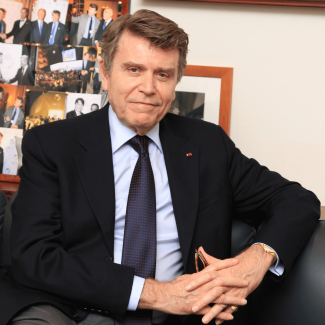
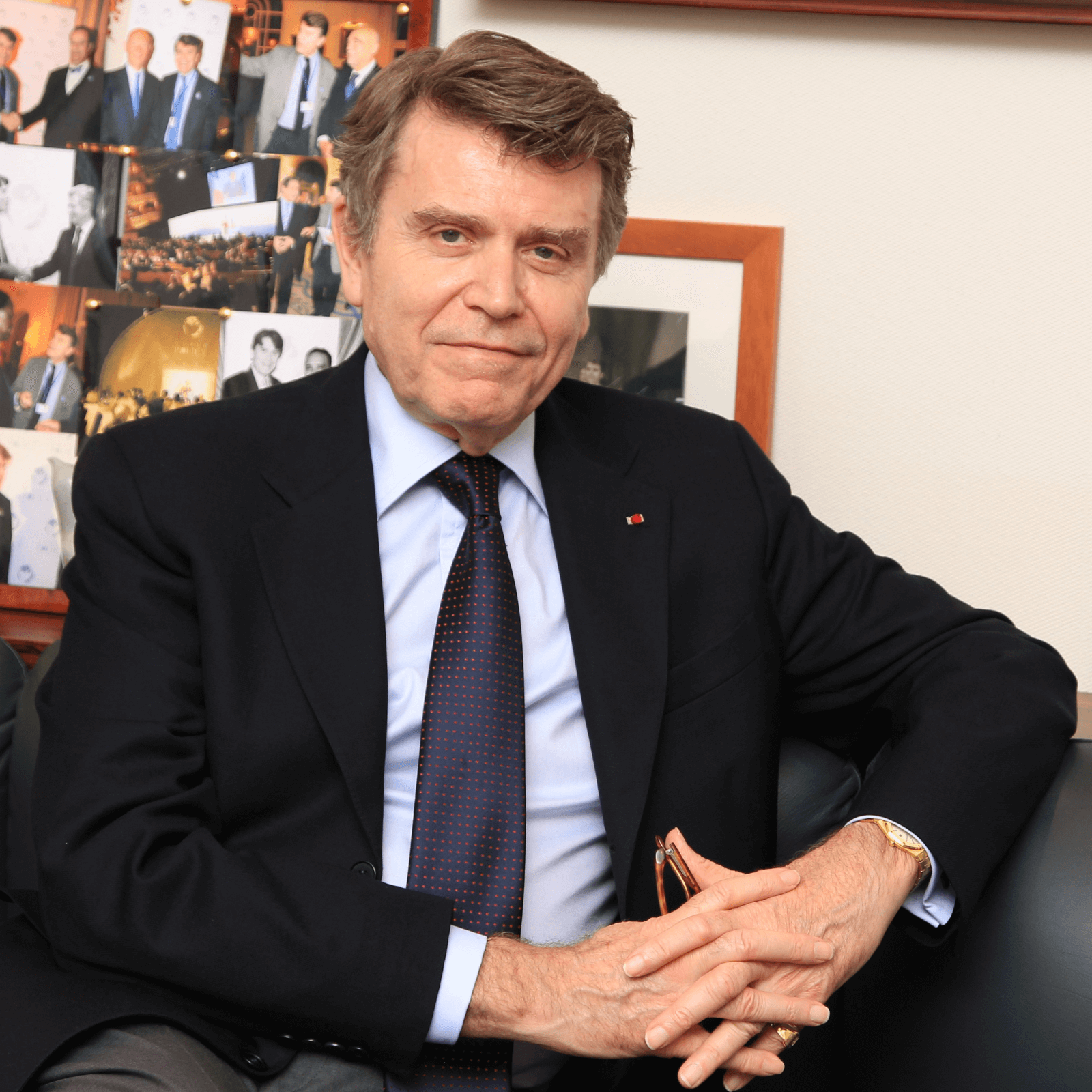
Thierry de MONTBRIAL
Founder and Executive Chairman of Ifri - Member of the Institut de France (Académie des Sciences morales et politiques)
Iran: Anatomy of a Power at War
The elimination of Supreme Leader Ali Khamenei and several high-ranking officials at the outset of the 2026 American-Israeli operation did not succeed in bringing down the Iranian regime. The regime had prepared for such a scenario, notably by decentralizing its structures. Moreover, it continues to adapt to war. The power of the Islamic Revolutionary Guard Corps is growing at the expense of the Shiite clergy. The security apparatus defends the country’s sovereignty and justifies its actions in the name of raison d’état.
“Remodeling” the Middle East?
Chaos continues to spread, seemingly without end, across the Middle East. The Israeli-American attack on Iran has resulted in a clear military and diplomatic failure, but it is paving the way for a regional realignment, the consequences of which remain uncertain. New regional groupings are taking shape, either centered around Israel or built on the prospect of coexistence with Tehran, alongside a decline in American influence and the marginalization of Europe, while China maintains a low-key presence.
Silicon Valley and War: Lessons from Ukraine
Over the course of international conflicts, and particularly in Ukraine, major tech companies have emerged as central actors. Initially subject to wartime maneuvering, they have since become decisive actors in their own right, privatizing a significant share of wartime exchanges, shaping the information flows of societies, and presenting themselves as providers of security. This situation raises important questions about states’ autonomy in making decisions and taking action.
Does Artificial Intelligence Change the Nature of War?
From Gaza to Ukraine and Iran, current conflicts are being shaped by the arrival of artificial intelligence and robots on the battlefield. The changes under way are so profound that humans risk rapidly losing control over entire aspects of the conduct of military operations. While these technological developments are altering the character of war, their impact on the very nature of war itself remains a matter of debate.