





The 4th TICAD: acceleration of Japan-Africa cooperation
On 28-30th May 2008, the fourth Tokyo International Conference on African Development (TICAD) was held in Yokohama. This initiative, co-organized by UN, UNDP and the World Bank, was set up in 1993 and takes place every five years, aims to develop dialogue between African and Japanese leaders but also countries and International organizations involved in Aid. This fourth conference brought together delegations from 51 African countries including 40 Heads of States and Governments. The scale of the conference and the importance of the announcements made there illustrate the continuing Japanese interest towards Africa.
Since 1993, the successive TICADs proposed a global framework for co-operation between African countries and their Aid partners. The three former conferences allowed Japan to build stronger relationships with African countries. To improve these links, Tokyo has developed its own approach towards Sub-saharan Africa, which is different from other Western powers and based on the fact that Japan previously received Aid and also on the experience of its successful Aid policy towards Asia. The Japanese Aid policy insists on economic growth and involves the receiver around the " appropriation of Development " [1] concept. This policy has seduced numerous African states. However, Tokyo is facing aggressive Chinese competition when it comes to Aid and African strategy.
This last TICAD was the opportunity for Japan to reinforce its links with Africa and to resume the initiative. In its opening speech, the Japanese PM Yasuo Fukuda announced a doubling of Japan's Public Aid towards Africa in the next five years. He also announced the disposal of a 4 billion dollar loan, in the next five years, to develop infrastructures and the Japanese Bank for International Cooperation (JBIC) set up a 2.5 billion dollars Aid fund for investment in Africa in the next five years. This financial support should allow the doubling of private Japanese investment in Africa by 2012. In addition, technical co-operation in the agricultural and the sanitary sector is going to be reinforced.
These announcements are in line with the policy initiated in 2005 by the former PM Junichiro Koizumi who promised to double Japanese Aid towards Africa in 3 years. The increase in Japanese Aid towards Africa is quite significant if you compare with the larger context which has seen Japan downsizing its worldwide Aid since 2000 (except 2005 and 2006 when Japan cancelled debts from a certain number of countries). This general cut relegated Japan to the fifth rank of World Aid donors in 2007.
This effort towards Africa illustrates Japan's will to reinforce its position at a moment in history when this continent is arousing worldwide powers' Interests, notably China.
From the economical point of view, perspectives offered by the continent are quite encouraging. The average growth was 5.7% in 2007. Despite massive differences in development, the emergence of a middle class in some countries could offer a new markets to Japanese firms. But it is mostly for its natural resources that the continent must be addressed. The rise in natural resource prices has caused concern for the World's second economic power. It needs to assure new supplies, notably from Africa. Especially since the West and China have taken the lead on this issue.
Indeed, TICAD is an opportunity for Japan to make up for its lateness in launching a " natural resources diplomacy [2] ". On this point, TICAD, even if it was older, are now among the last Chinese or Indian initiatives such as the 2006 Africa-China Forum or the April 2008 India-China Forum. If the government seems to have succeeded in equaling or even in exceeding the 2006 Beijing performance[3], it still has to do huge efforts to make up for the Chinese economic breakthrough on the continent. Thus, China-Africa trade has risen to 73 billion dollars in 2007 while Japan-Africa trade has only risen 26 billion dollars. Nowadays, Beijing is one of the main Aid donors in Africa but also insists on the " unconditionality " of its Aid. In view of this new external Chinese strategy, Japan, like other European States, is on the defensive.The stakes are not only economic. Japan's political ambitions on the international scene depend on support from African States. To succeed in its race to obtain a permanent UN Security Council seat requires huge support. Finally, Japanese investment in developing Sub-saharan Africa can only help to reinforce the image of a responsible actor listening to the needs of the International Community at a moment when it is trying to normalize its strategic position.
The increasing Japanese interest towards Africa is good news for African States. If Japan's Aid is taking into account African characteristics, it could be as beneficial for Africa than it was for Asia. Combined with larger private investments, it could play an important role in developing the continent. Indeed, It seems that there are African and Japanese interests favorable to set up " mutual beneficial relationships " [4], according to a principle that Japanese Diplomacy holds dear.
[1] 'Kaihatsu no ônâshippu'
[2] Mainichi Shimbun, 29 mai 2008 'Shigen gaikou ni seifu yakki'
[3] The November 2006 Africa-China Forum was attended by 48 delegations including 41 Heads of States and Governments.
[4] 'Gokei kankei'

Center for Asian Studies
Asia is a nerve center for multiple global economic, political and security challenges. The Center for Asian Studies provides documented expertise and a platform for discussion on Asian issues to accompany decision makers and explain and contextualize developments in the region for the sake of a larger public dialogue.
The Center's research is organized along two major axes: relations between Asia's major powers and the rest of the world; and internal economic and social dynamics of Asian countries. The Center's research focuses primarily on China, Japan, India, Taiwan and the Indo-Pacific, but also covers Southeast Asia, the Korean peninsula and the Pacific Islands.
The Centre for Asian Studies maintains close institutional links with counterpart research institutes in Europe and Asia, and its researchers regularly carry out fieldwork in the region.
The Center organizes closed-door roundtables, expert-level seminars and a number of public events, including an Annual Conference, that welcome experts from Asia, Europe and the United States. The work of Center’s researchers, as well as that of their partners, is regularly published in the Center’s electronic journal Asie.Visions.
The Oceania Factor in France’s Evolving Indo-Pacific Strategy
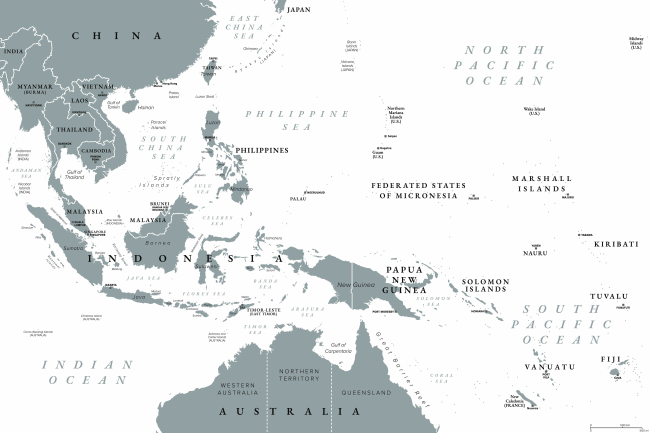
This paper examines the two-way relationship between France’s Indo-Pacific strategy and developments in Oceania. Oceania was not a priority in the initial years of France’s Indo-Pacific strategy, as the region was largely treated as secondary to major strategic hotspots and key partnerships, while overseas territories were primarily handled as domestic issues and recipients of a top-down strategy.

France’s View: From Diplomacy to Public-Private Action
France has emerged as the EU’s IMEC forerunner, combining port infrastructure, diplomatic alliances and public-private cooperation. With Marseille Fos at its core, the country brings a strategic hub for logistics, energy and digital connectivity to the corridor.
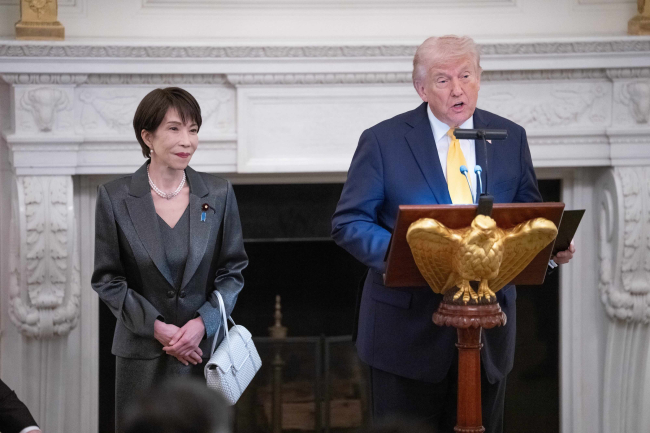
Trump II, the Crisis of the Rules-Based Order and Europe’s Indo-Pacific Strategy
This article examines the implications of Trump II for Europe’s engagement in the Indo-Pacific. The piece contends that Trump II is accelerating the erosion of the rules-based order and undermining the relevance of the Free and Open Indo-Pacific (FOIP) concept, while forcing Europe to refocus on its own continental security amid US retrenchment. Paradoxically, these very constraints create conditions for a more autonomous, pragmatic, and explicitly interest-driven European engagement in the Indo-Pacific, rather than outright withdrawal.
China and Trade in Critical Raw Materials (CRMs)
Critical raw materials (CRMs) have become central features of a new dynamic in global power politics, with China now wielding considerable leverage. Amid rising regional and global uncertainty, resource security is back in the spotlight as a key determinant of sovereignty and national security for Europe, its allies and its partners. The very survival of key, even vital industries, from automotive to aerospace to health to energy to defense, is at stake.