Germany, France and the United States: Towards a Renewed Transatlantic Dialog
Practical information
Themes and regions
Related centers and programs
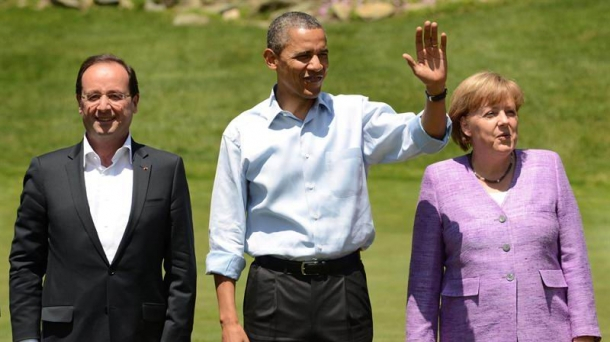
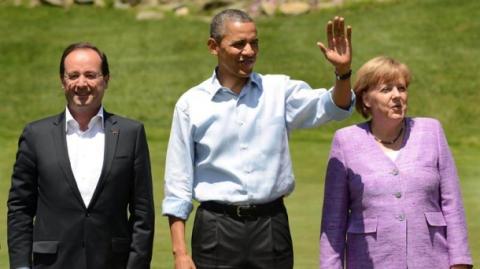
The Study Committee on Franco-German Relations (Cerfa) in partnership with the Russia Center/NEI, Center for Security Studies, United States Program and the Energy Center organized a closed seminar to discuss the renewed transatlantic dialog.
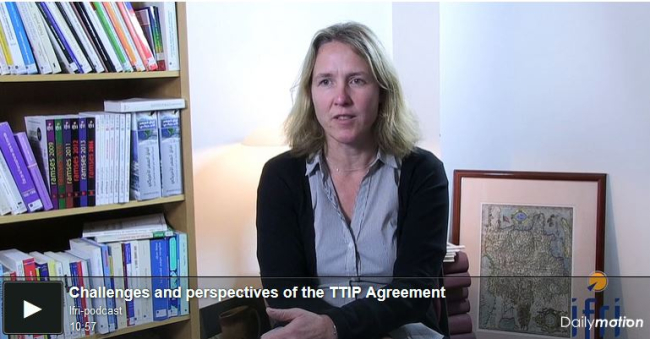
Challenges and perspectives of the TTIP Agreement
Sébastien Jean (Centre d’Etudes Prospectives et d’Informations Internationales)
Claudia Schmucker (German Council of Foreign Relations)
Jeffrey J. Schott (Peterson Institute for International Economics)
US and Russia-EU Energy Interdependence
Frank Umbach (European Centre for Energy and Resource Security, King’s College London)
NATO after the Wales Summit
Christopher S. Chivvis (RAND International Security and Defense Policy Center)
Patrick Keller (Konrad-Adenauer-Stiftung)
The "Russian question": back on the agenda?
Thomas Graham (Jackson Institute for Global Affairs, Yale University)
Fyodor Lukyanov (Russia in Global Affairs)
Find out more

Related Subjects
Other events
From Ambition to Action: Exploring Technological Partnerships with India
The 16th EU-India Summit, held on January 27th in New Delhi with European leaders António Costa, Ursula von der Leyen, and Prime Minister Narendra Modi, marks a significant milestone in deepening EU-India relations. At the same time, official bilateral visits from EU member states are on the rise, including that of the French President, who visited India in February to participate in the Artificial Intelligence Summit. As India asserts its technological ambitions and seeks to reduce its dependence on China, Europe is stepping up its efforts to diversify its strategic partnerships.
The Enlargement of the European Union: A Strategic Choice? France, the Western Balkans and the EU in an Uncertain Geopolitical Context
Russia’s war against Ukraine has brought the enlargement of the European Union back to the centre of European strategic debates. In this context, the Western Balkans have regained heightened visibility in discussions on the continent’s security, at a time when the international environment is marked by a growing number of destabilising factors.