



Germany: populists weaken Angela Merkel
The party Alternative für Deutschland founded only three years ago against the Euro unites Germans against Berlin's open-door policy. And on the eve of new elections, more and more of those that normally don't vote are joining them.
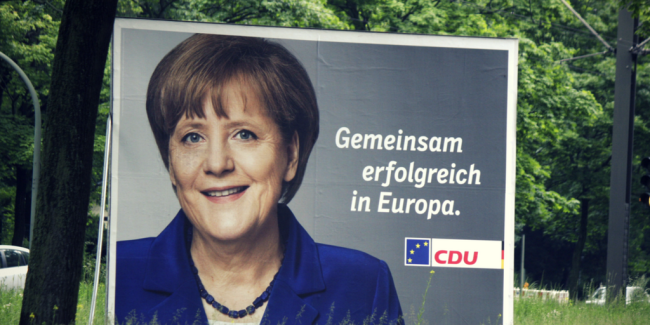
"Angela Merkel betrayed German traditional values according to some conservatives"
Will Angela Merkel still be chancellor in a years' time? Hans Stark gives an overview over the German political landscape. According to him, the rise of the right wing populists and eurosceptics will continue, but won’t hinder the forming of a government coalition.
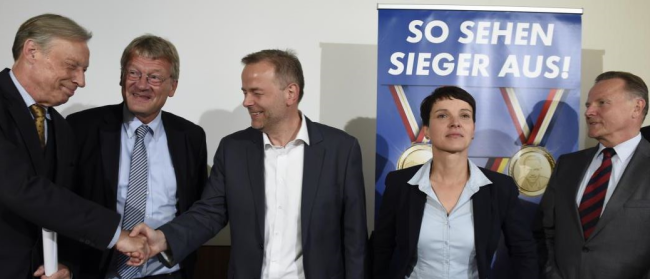
German elections: the AfD becomes “increasingly nationalist and right-wing populist”
On Sunday Angela Merkel experienced yet another electoral setback in the regional elections. In Mecklenburg-Western Pomerania, the chancellor’s conservative party was overtaken by the AfD.

Is Germany becoming just like the other European countries?
After the recent electoral setbacks for Angela Merkel which saw the party Alternative for Germany (AfD) enter yet another two regional parliaments (Berlin and Mecklenburg-Western Pomerania), is there a possiblity for Germany to become just like the other European countries?

German agriculture: structural changes
German agriculture is characterized by regionally different farm structures but in the midst of a transformation process. Rapid structural change is seen especially in animal production. Total production increased during the past decade due to intensification but the number of labour force decreased. Increasing land prices are an indicator for the sectoral growth. The situation has changed at the moment. Farm income has decreased rapidly due to very low producer prices.
German public investment policy: between debt cap and increasing investment backlog
The German debate about public investment policyfaces a dilemma. The deficits in public infrastructure have grown considerably due to comparatively low investments in recent years. In addition, substantial investments for promising mega-projects, such as the energy transition (“Energiewende”) and broadband expansion are indispensable in a foreseeable future.
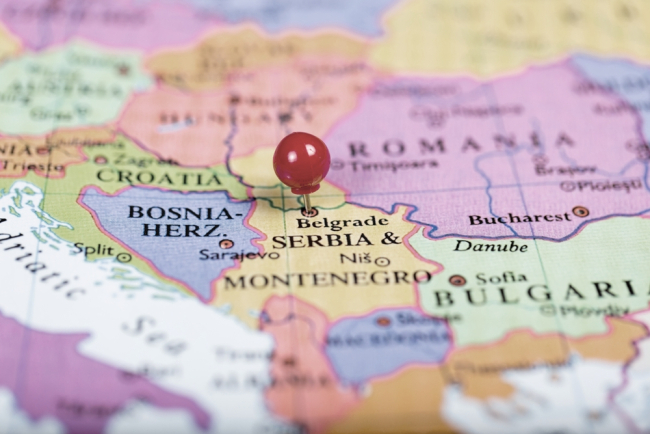
The Western Balkans : a touchstone for German and European foreign policy
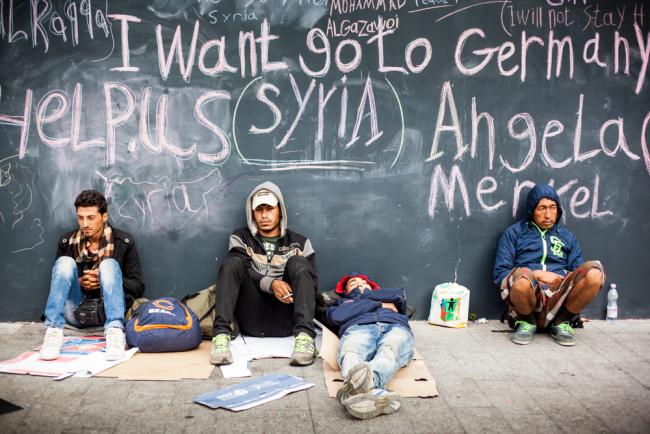
Humanitarian exploit or failure? The refugee crisis in Germany and Europe
Between crisis and responsibility: a first assessment of the new German defense policy
Since the speeches delivered by President Joachim Gauck, Minister of Foreign Affairs Frank-Walter Steinmeier and Minister of Defence Ursula von der Leyen at the 2014 Munich Security Conference, Germany has seen a debate on new responsibilities in its foreign and security policy.
Support independent French research
Ifri, a foundation recognized as being of public utility, relies largely on private donors – companies and individuals – to guarantee its sustainability and intellectual independence. Through their funding, donors help maintain the Institute's position among the world's leading think tanks. By benefiting from an internationally recognized network and expertise, donors refine their understanding of geopolitical risk and its consequences on global politics and the economy. In 2026, Ifri partners with over 90 French and international companies and organizations.
