





Confronting Russia’s High-Velocity Arsenal: European Challenges and Solutions
Since February 2022, Russian missile and long-range drone strikes against Ukraine have served as near-daily reminders of what European states could face in a war with Russia. The same weapon systems battering Ukrainian infrastructure and population centers would be directed against European military and civilian targets in any confrontation between Russia and NATO. As Russian missile production expands and its arsenal diversifies, Europe must confront an uncomfortable question: how to deter, and if push comes to shove, fight Russia's long-range strike arsenal?
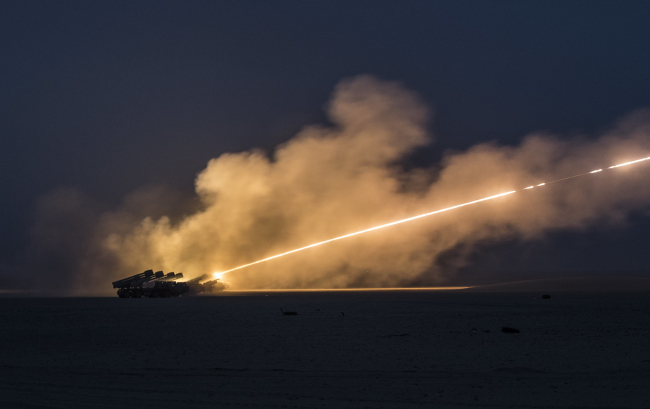
Deep Precision Strikes: A New Tool for Strategic Competition?
Reaching deep into the enemy’s system to weaken it and facilitate the achievement of operational or strategic objectives is a key goal for armed forces. What capabilities are required to conduct deep strikes in the dual context of high-intensity conflict and strengthened enemy defenses?
Confronting Russia’s High-Velocity Arsenal: European Challenges and Solutions
Since February 2022, Russian missile and long-range drone strikes against Ukraine have served as near-daily reminders of what European states could face in a war with Russia. The same weapon systems battering Ukrainian infrastructure and population centers would be directed against European military and civilian targets in any confrontation between Russia and NATO. As Russian missile production expands and its arsenal diversifies, Europe must confront an uncomfortable question: how to deter, and if push comes to shove, fight Russia's long-range strike arsenal?
Deep Precision Strikes: A New Tool for Strategic Competition?
Reaching deep into the enemy’s system to weaken it and facilitate the achievement of operational or strategic objectives is a key goal for armed forces. What capabilities are required to conduct deep strikes in the dual context of high-intensity conflict and strengthened enemy defenses?
Ifri, a foundation recognized as being of public utility, relies largely on private donors – companies and individuals – to guarantee its sustainability and intellectual independence. Through their funding, donors help maintain the Institute's position among the world's leading think tanks. By benefiting from an internationally recognized network and expertise, donors refine their understanding of geopolitical risk and its consequences on global politics and the economy. In 2026, Ifri partners with over 90 French and international companies and organizations.
