





Confronting Russia’s High-Velocity Arsenal: European Challenges and Solutions
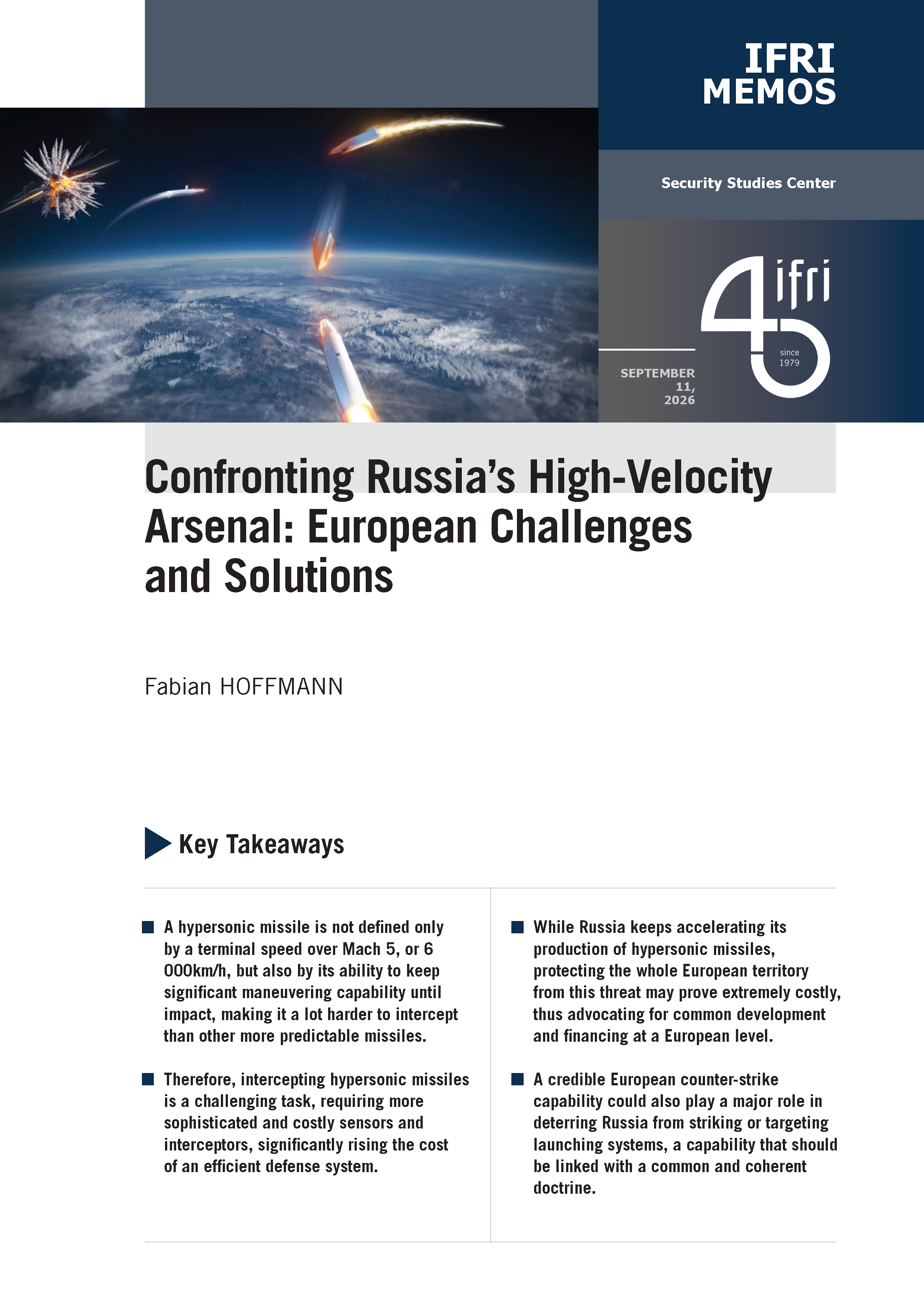
Since February 2022, Russian missile and long-range drone strikes against Ukraine have served as near-daily reminders of what European states could face in a war with Russia. The same weapon systems battering Ukrainian infrastructure and population centers would be directed against European military and civilian targets in any confrontation between Russia and NATO. As Russian missile production expands and its arsenal diversifies, Europe must confront an uncomfortable question: how to deter, and if push comes to shove, fight Russia's long-range strike arsenal?
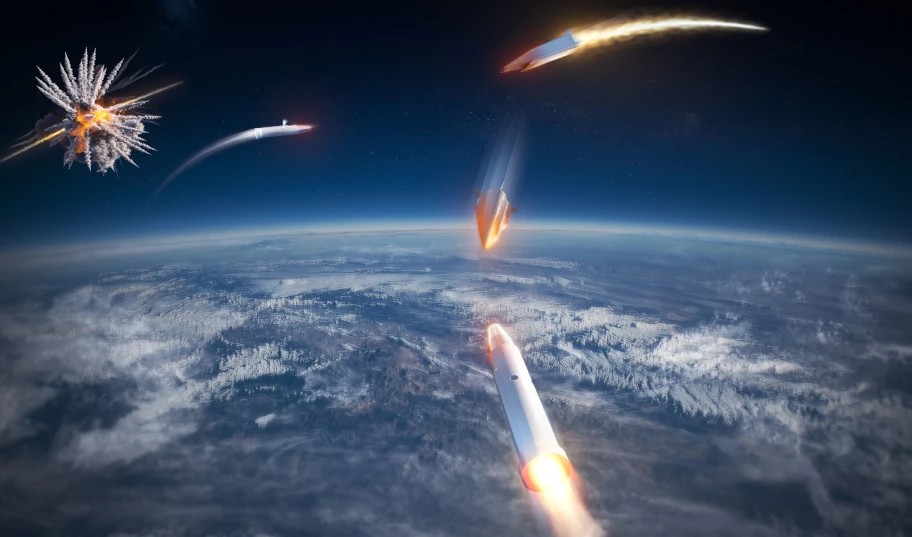
Russia’s long-range strike arsenal includes different types of missile systems, ranging from long-range one-way attack drones like the Geran series to cruise missiles like the Kh-101 and Kalibr, to ballistic missiles like the Kh-47 Kinzhal or the 9M723 used on the Iskander system. While each missile type presents its own challenges, this memo focuses specifically on Russia’s high-velocity missile arsenal, that is, its ballistic and hypersonic missiles. In many ways, these systems have proved most difficult for Ukraine to deal with, and European states could be expected to face similar challenges.
Ballistic missiles are rocket-boosted systems whose flight, after the boost phase, is determined primarily by ballistic physics: they arc toward their targets along largely predictable trajectories, even if greater maneuverability has become an increasingly important feature of modern ballistic missiles. Several types of ballistic missiles reach hypersonic velocity (at or above Mach 5) during descent, especially those that leave and subsequently re-enter the atmosphere. The German V-2, the world’s first operational ballistic missile, reached hypersonic velocity in 1944, as have a large number of ballistic missiles developed since. A hypersonic missile is therefore not defined by hypersonic speed alone, but by its ability to combine sustained hypersonic speed with significant maneuverability during the midcourse and terminal phase of flight. In this regard, maneuverability governs the missile’s trajectory rather than merely modulating it. Three missile system types meet this standard: hypersonic boost-glide vehicles (HGVs), hypersonic cruise missiles, and some types of longer-range aeroballistic missiles. Unlike ballistic missiles on a traditional parabolic trajectory driven by gravity, aeroballistic missiles follow a depressed flight path that keeps them within the atmosphere for most or all of their flight. Sustained atmospheric flight provides aerodynamic control authority during the midcourse and terminal stages, enabling better course correction ability throughout flight and evasive maneuvers in the endgame.
This memo considers what European states’ response to the high-velocity missile threat can and should look like, particularly as it emerges from Russia. China fields a comparable and in parts more advanced high-velocity missile arsenal. However, because the Russian threat remains the most immediate for European defense planning, this memo focuses on missile systems on the European continent. The argument centers on two points. First, missile defense remains indispensable, and efforts to deploy a sovereign and cost-efficient ballistic and hypersonic missile defense capability should remain a top European priority. Second, interceptor scarcity, cost asymmetries, and difficulties with establishing comprehensive territorial coverage mean that a posture built on defense alone will fail against an adversary able to generate mass in the high-velocity missile domain. Europe therefore requires a complementary conventional counterstrike capability that credibly threatens calibrated retaliation.

Available in:
Themes and regions
ISBN / ISSN
Share
This page contains only a summary of our work. If you would like to have access to all the information from our research on the subject, you can download the full version in PDF format.
Confronting Russia’s High-Velocity Arsenal: European Challenges and Solutions

Defense Research Unit
The Defense Research Unit is a program that aims at stimulating the strategic debate by dealing with subjects at the junction of the “technico-operational” and the “political-strategic”. A unique structure in France, it brings together civilian researchers and “military fellows” from each of the three armies to produce work on defense policies, the capability and strategic adaptation of armies, and foresight on tomorrow's conflicts.
Security Studies Center
Heir to a tradition dating back to the founding of Ifri, the Security Studies Center provides public and private decision-makers as well as the general public with the keys to understanding power relations and contemporary modes of conflict as well as those to come. Through its positioning at the juncture of politics and operations, the credibility of its civil-military team and the wide distribution of its publications in French and English, the Center for Security Studies constitutes in the French landscape of think tanks a unique center of research and influence on the national and international defense debate.
Toward Space-Based Intelligence for All? The Case of the Spring 2026 Iranian Strikes
The conflict in the Middle East has highlighted the effectiveness of Iranian strikes in identifying targets and conducting precision strikes. This raises the question: which capabilities enabled the Islamic Revolutionary Guard Corps (IRGC) to achieve these results?
Framework Nation: A European Challenge and French Ambition
First appearing in the early 2000s, the framework nation concept follows several distinct rationales, whether it refers to a country assuming the leadership of a military operation, directing a multinational capability project, or commanding a permanent force structure. In every case, the country that takes on this role fully intends to derive from it additional politico-military influence.
Autonomous Systems in the Underwater Domain: A Limitless Revolution?
One of the decisive strategic factors in the ongoing Russo-Ukrainian war is the mass use of aerial, maritime, and terrestrial autonomous capabilities, which are transforming the face of the battlefield. Nevertheless, many of these drones are still remotely piloted, operated, or supervised, testifying to the fact that the autonomization of military capabilities is still at an embryonic stage.
"Iron Swords" A Military Analysis of Israel's War in Gaza
On October 7, 2023, Hamas' attack, dubbed “Al-Aqsa Flood,” caused a major shock and led Israel to launch the longest war in its history. Operation “Iron Swords” was notable for its unprecedented intensity, both in terms of the massive ground forces deployed and the firepower used.