France and Japan hedge against rising threats with strategic autonomy push
As French President Emmanuel Macron arrived in Japan this week for his first visit to the country since 2023, international attention was largely centered on the ongoing Middle East conflict.
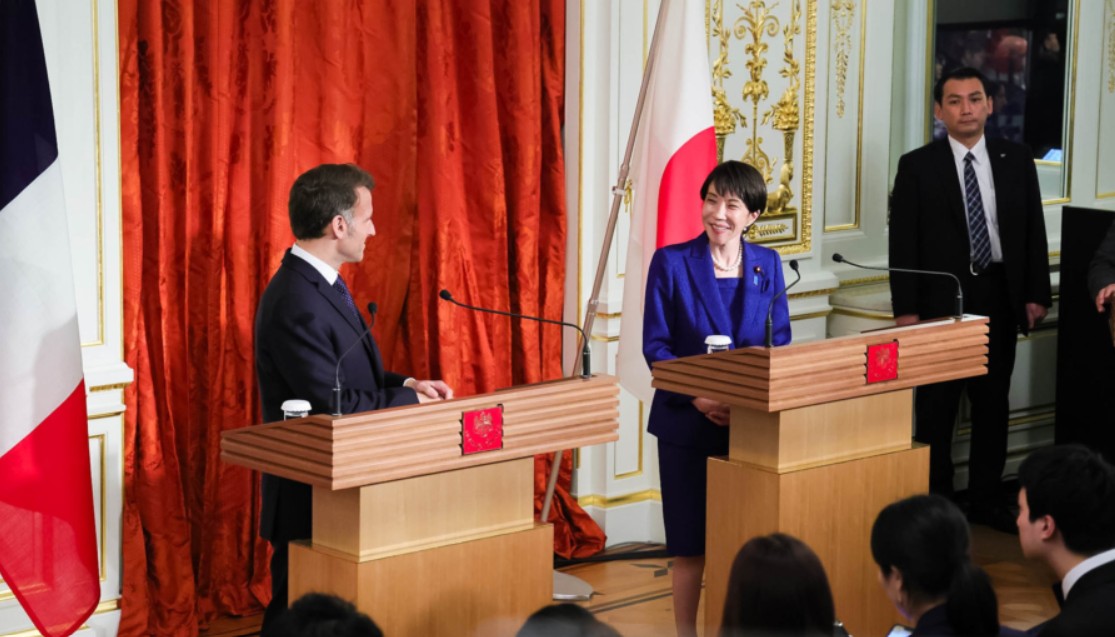
But while the energy crisis featured prominently during his summit Wednesday with Prime Minister Sanae Takaichi, both nations also signed a series of agreements designed to outlast the current geopolitical turmoil and strengthen their strategic autonomy in an increasingly fragmented world order.
From cooperating on modular reactors to jointly procuring rare earths and deepening space-defense collaboration, Macron’s summit with Takaichi delivered a number of tangible initiatives spanning artificial intelligence, nuclear energy, economic security and military ties as the two countries took their “exceptional partnership” to new heights.
In this “troubled world,” Tokyo and Paris “can form the core axis of a coalition of independents” that share the same values: freedom, democracy, human rights and an international order based on rule of law and multilateralism, said Macron, in Tokyo for his fourth trip to Japan as French president.
[...]
Cooperation in key areas such as space situational awareness, civil nuclear energy, AI and critical minerals serves a clear goal: strengthening strategic autonomy in sectors where both countries have comparative advantages, said Celine Pajon, head of Japan and Indo-Pacific research at the French Institute of International Relations.
“The trip’s agenda reflected a shared view of the linkage between the Euro-Atlantic and Indo-Pacific theaters,” the analyst said. It also aligned with Macron’s plans to work alongside like-minded partners, she added, noting that his call for a “coalition of independents” echoes Japan’s own efforts to diversify its strategic partnerships.
Pajon pointed out, however, that the relationship remains limited by the lack of flagship defense-industrial cooperation and by what she called “persistent misperceptions.”
In Japan, she said, France’s pursuit of strategic autonomy is often misunderstood as signaling a potential rupture with Washington and undue leniency toward China. Conversely, in France, Japan is sometimes seen as overly aligned with Washington and inclined to encourage a harder line on China.
“Bridging these perception gaps is key,” the expert said, as, in practice, both countries pursue forms of strategic autonomy: Japan without openly speaking about it, and France within NATO and the U.S. alliance. This makes their positions closer than is often assumed.
Ultimately, she added, Paris and Tokyo share the same ambition: to act as pivotal actors in shaping the emerging international order.
>> Read the entire article on the website of The Japan Times

Media:

Reporter(s):
Format
Share
Authors

Céline PAJON
Research Fellow, Head of Japan and Indo-Pacific Research, Center for Asian Studies, Ifri