'With the withdrawal of US troops from Germany, Berlin is facing a historic dilemma'
Donald Trump's announcement of the withdrawal of US troops is forcing Berlin to confront the long-standing taboo on its own defense, explains Paul Maurice, a specialist in Franco-German relations at the Study Committee on Franco-German Relations (Cerfa) at French Institute of International Relations.
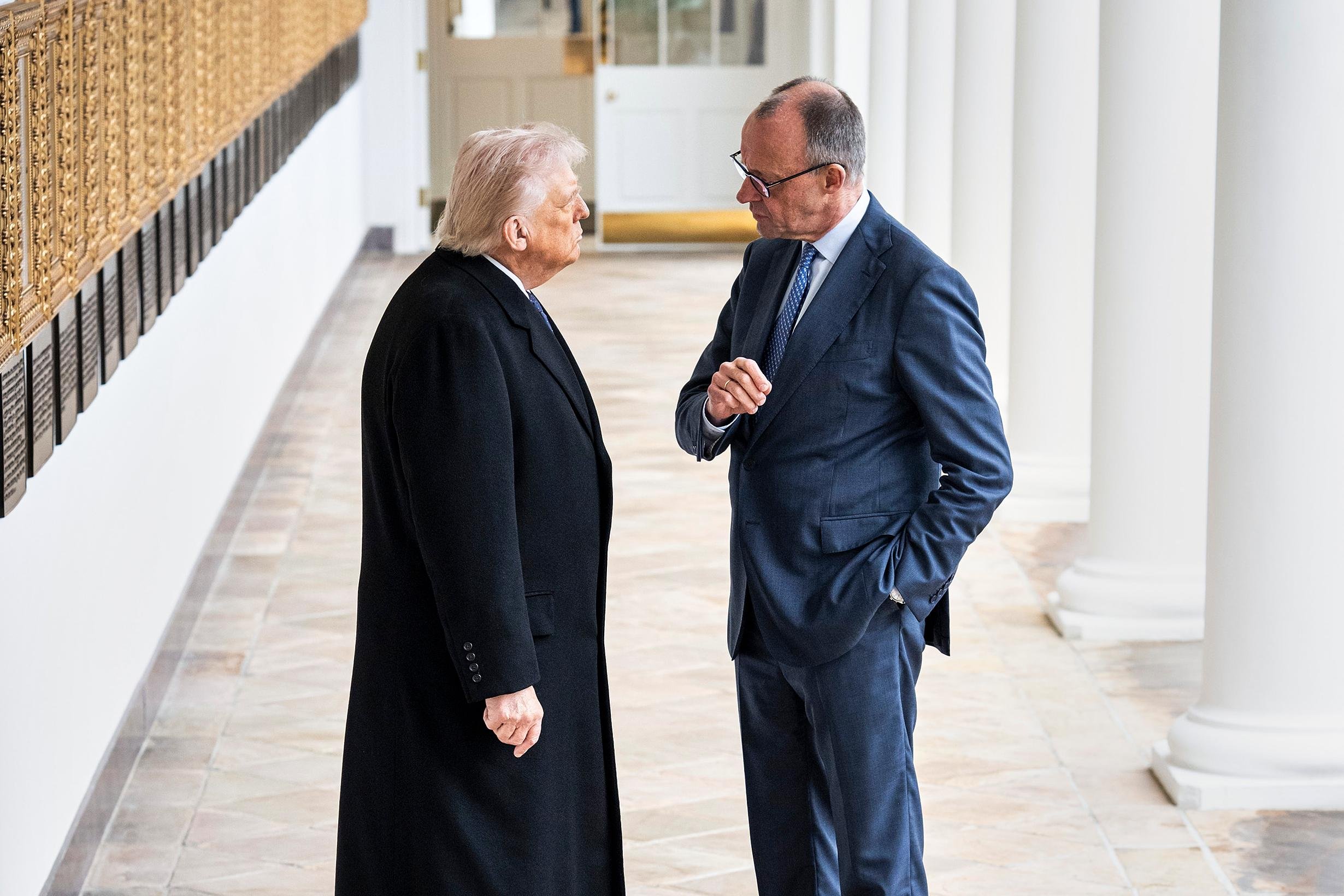
Donald Trump's announcement to withdraw 5,000 US soldiers stationed in Germany is not just another episode of transatlantic tensions; it acts as a harsh wake-up call to Germany's vulnerabilities. Since the end of the Cold War, the US military presence in Germany has not only served as a strategic guarantee but also provided a psychological foundation for the country's security. By deciding to scale it back just weeks before decisive regional elections in eastern Germany, the US president has intervened, deliberately or not, in an already tense domestic political sequence.
For a long time, Germany lived under the comfort of the "American umbrella." Yet the invasion of Ukraine in February 2022 had already shattered this illusion. The Zeitenwende ["turning point"] speech delivered by then-chancellor Olaf Scholz just days after the Russian invasion of Ukraine promised change: rearmament, increased military spending and a redefinition of Germany's strategic role. But that transformation remains incomplete, despite new announcements from Chancellor Friedrich Merz to make the Bundeswehr "the most powerful conventional army in Europe." The German army continues to suffer from structural shortcomings and public opinion remains divided over the military role the country should assume. But the transatlantic bond was still perceived as unbreakable, despite its ups and downs and Trump's 2020 threat to sharply reduce the American military presence in Germany.
Now, this American decision strikes at this final taboo, reminding Germans that the American guarantee is no longer automatic; it can become transactional, subject to immediate political interests or bilateral power dynamics. For Berlin, the shock is all the greater because the US bases on German soil are not merely military infrastructure – for decades, they have embodied the Federal Republic's anchoring in the Western world.
[...]
> Read the full op-ed on the Le Monde website

Media:
Format
Share
Authors

Paul MAURICE
Secretary General of the Study Committee on Franco-German Relations (Cerfa), Ifri