


The Major Challenges of Ahmed Bola Tinubu's Nigerian Administration
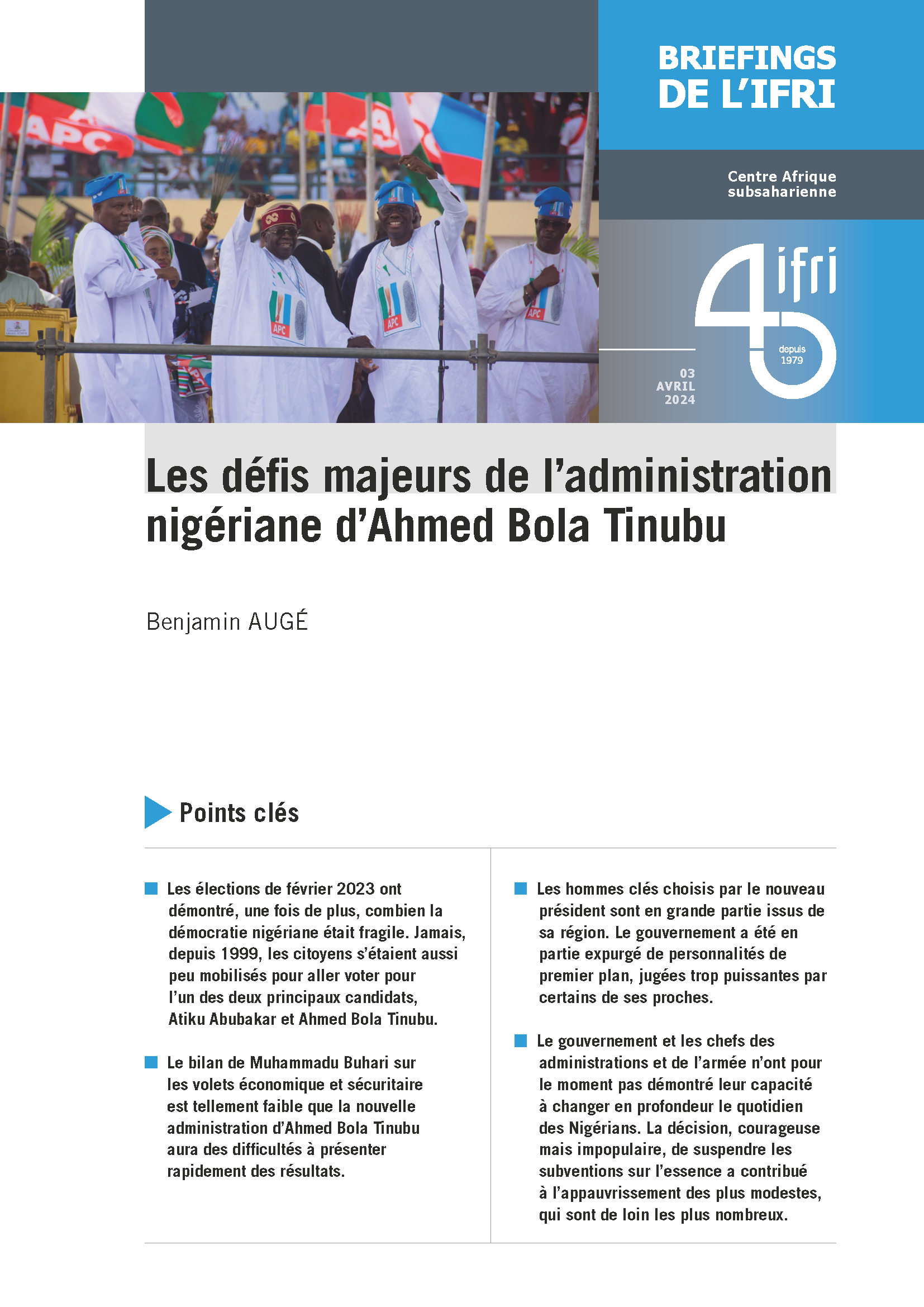
Voter turnout for Nigeria's presidential elections in February-March 2023 has never been so low since the country's return to democracy in 1999. Nigeria's new president, Ahmed Bola Tinubu, must now reassure voters that Africa's leading economy is capable of putting the lie to a persistent image of a country in decline.

Economic growth of 3.3% in 2022 (compared with 3.6% in 2021 and -1.8% in 2020) will benefit only a minority, while a growing majority of the population (63% in 2023) will be living in poverty. This difficult economic and social climate is taking place against a backdrop of steadily declining oil production (from 2.3 million barrels per day to 1.3 million barrels per day between 2003 and 2022). With oil sales financing almost two-thirds of the federal budget, this decline further reduces the federal government's scope for investment and limits financial transfers to the 36 federated states and 774 local governments.
As far as security is concerned, much of Nigeria is still affected by various forms of violence. In the Niger delta, mafias continue to plunder crude oil and reign terror, notably by increasing the number of kidnappings; in the central region, violence between herders and farmers has not ceased. In the north-west, gangsterism is taking on critical proportions in the states of Sokoto (the poorest in the country, with 91% of the population living below the poverty line), Katsina and Zamfara. Finally, the north-east region continues to suffer the convulsions of groups that have emerged from the Boko Haram split.
President Ahmed Bola Tinubu, a member of the All Progressive Congress (APC) - victorious in February 2023 over Atiku Abubakar's People's Democratic Party (PDP) and Peter Obi's Labour Party (LP) –, is well aware that the vast majority of the population, very disappointed by Muhammadu Buhari's two terms in office (2015-2023), expect him to focus particularly on economic and security issues. These eight years were perceived as a period of deterioration in the standard of living of a very large proportion of the population, due in particular to an unreadable monetary policy and insecurity that now extended to most of the federation's 36 states.
This publication is available in French: Les défis majeurs de l’administration nigériane d’Ahmed Bola Tinubu.


Benjamin AUGÉ
Associate Research Fellow, Sub-Saharan Africa Center, Ifri

Sub-Saharan Africa Center
Founded in 2007, Ifri's Sub-Saharan Africa center produces an in-depth analysis of the African continent and its security, geopolitical, political and socio-economic dynamics (in particular the phenomenon of urbanization). The Center aims to be both, through various publications and conferences, a space for disseminating analyzes intended for the media and the public but also a decision-making tool for political and economic actors with regard to the continent.
The center produces analyses for various organizations such as the Ministry of the Armed Forces, the Ministry of Europe and Foreign Affairs, the Organization for Economic Cooperation and Development (OECD), the French Development Agency (AFD) and even for various private supports. Its researchers are regularly interviewed by parliamentary committees.
The organization of events of various formats complements the production of analyzes by bringing the different spheres of the public space (academic, political, media, economic and civil society) to meet and exchange analytical tools and visions of the continent. The Sub-Saharan Africa Center regularly welcomes political leaders from different sub-Saharan African countries.
From Africa to Ukraine: An Investigation into African Prisoners of War
When T. W. received an invitation letter to travel to Russia in November 2025, he could hardly believe it. Two months earlier, he had met a young Russian woman who was ill at the hospital in Kampala where he worked as a nurse. After she returned to Russia, they had kept in touch through social media. Much to his surprise, she invited him to come and study and work in her country, even offering to pay for his plane ticket. Delighted by the opportunity, T. W. left without informing either his family or his employer.
Russia’s Policy of Recruiting Fighters and Female Workers in Sub-Saharan Africa
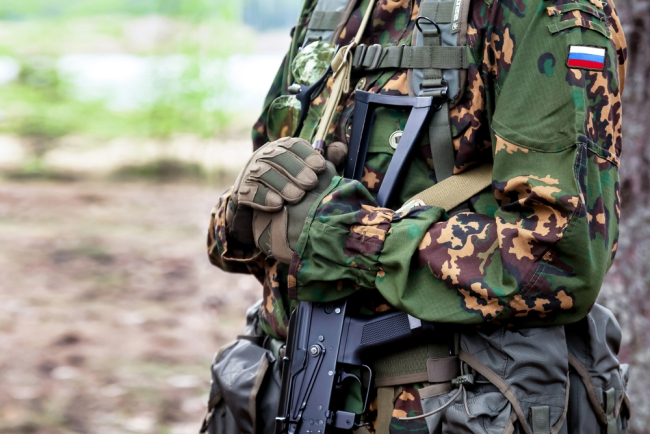
The Russo-Ukrainian war, which began on February 24, 2022, quickly became internationalized. Russia and Ukraine were both quick to mobilize their allies in order to secure political and diplomatic support, as well as military and economic resources. But both belligerents also sought to recruit foreigners on a private basis to support their respective war efforts. This policy is global, extending from Latin America to the Far East. Sub-Saharan Africa, in this landscape, is of particular interest because it constitutes a vast and easily accessible recruitment pool, owing to high poverty rates in most countries of the region combined with a strong desire to emigrate.
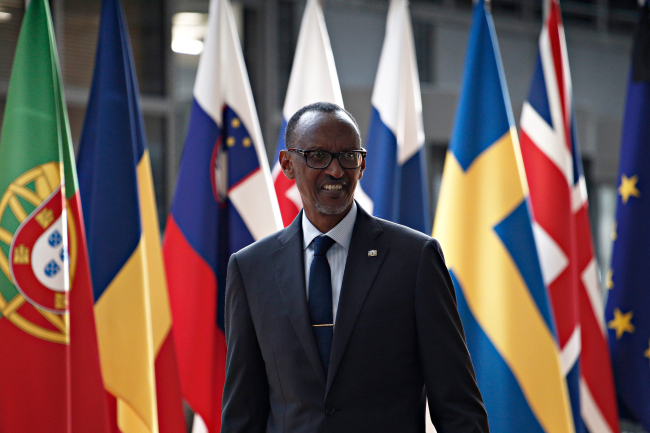
The Vectors and Means of Rwanda’s Growing External Influence under Paul Kagame
For three decades, Paul Kagame’s Rwanda has pursued a foreign policy aimed at increasing investment in the national economy, maximizing military cooperation and intelligence sharing, and promoting a model of post-genocide state reconstruction.
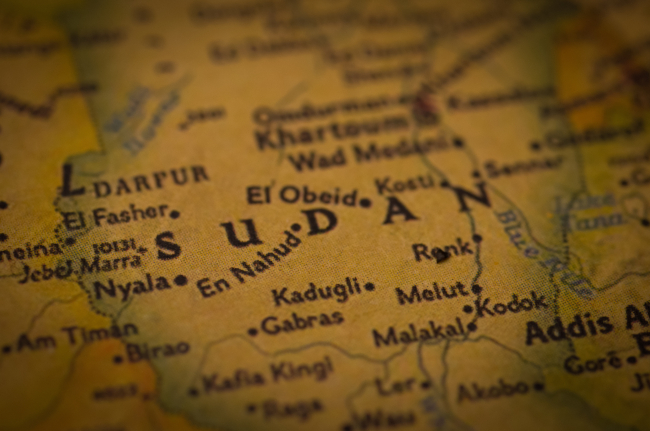
Sudan Wartime Online Propaganda
In the Sudan conflict, the propaganda battle between the Sudan Armed Forces (SAF) and the Rapid Support Forces (RSF) on mainstream and social media makes it hard to distinguish real, false, and manipulated information. Furthermore, the lack of field press coverage allows fake and misleading news to spread more easily. Although the SAF and RSF work hard to shape the war narrative by building large supporter networks and using various methods such as disinformation and censorship, it is clear they no longer fully control the flow of information. Social media analysis shows that Sudanese politicians, military figures, influencers, and followers weave a tangled web of exchanges filled with rivalries, lies, and propaganda.