


From Africa to Ukraine: An Investigation into African Prisoners of War
When T. W. received an invitation letter to travel to Russia in November 2025, he could hardly believe it. Two months earlier, he had met a young Russian woman who was ill at the hospital in Kampala where he worked as a nurse. After she returned to Russia, they had kept in touch through social media. Much to his surprise, she invited him to come and study and work in her country, even offering to pay for his plane ticket. Delighted by the opportunity, T. W. left without informing either his family or his employer.
Titre
The key findings of this research are as follows:
The Russian authorities are conducting a campaign to recruit non-professional combatants in sub-Saharan Africa, frequently employing deception (false job offers) and coercion.
Foreign recruits are used as “cannon fodder”; they are not trained for this war, and their experience at the front is extremely brutal.
African fighters held in Ukraine are not included in prisoner exchanges between Kyiv and Moscow, and—with few exceptions—their own governments are not motivated to get them released. Their future is therefore highly uncertain.
In general, African governments that wish to put an end to Russian recruitment efforts do not speak out publicly but instead favor discreet contacts with Moscow.
The Russian authorities’ stance on these recruitments is inconsistent, and contrary to their claims, they do not appear to have put an end to them.
The Ukrainian authorities are relying on cooperation with African governments to reduce recruitment by Russia.
In some African countries, Russian recruitment efforts are becoming a political issue, with either favorable or unfavorable consequences for the incumbent governments
African states have a range of police and judicial measures at their disposal to combat such recruitment, and they could ask for the repatriation of their citizens who are prisoners in Ukraine in order to try them.
He obtained his visa in just three days and arrived in Russia on December 7. But instead of the young woman he was expecting, a man met him at the airport and took him directly to a Russian army recruitment office. On January 4, 2026, he was deployed to the front as part of a group of five fighters. On January 8, he was wounded by a drone and left for dead on the battlefield. Together with a fellow Ugandan, he went into hiding and wandered until they reached an unfamiliar village. It turned out to be a Ukrainian village, where both men were taken prisoner on January 14. T. W. had spent just ten days on the front line.
On October 28-29, 2026, Moscow will host the third Russia–Africa Summit, following those held in Sochi in 2019 and St. Petersburg in 2023. The summit will once again celebrate Russian-African friendship and cooperation. Yet, although Russia’s policy of recruiting Africans to fight in Ukraine will not feature on the official agenda, the issue will cast a shadow over the gathering. It is likely to be raised behind closed doors by some African representatives. Indeed, after being carefully concealed, Russia’s recruitment of Africans for the war in Ukraine is now extensively documented and widely reported in the media. Journalistic investigations and statements from African officials, recruits and their families have become so numerous that the Russian authorities have been forced to acknowledge the presence of African fighters in their armed forces.
In December 2025, the French Institute of International Relations (Ifri) published a Paper examining Russia’s recruitment policy in Africa, covering both combatants and young women recruited to work in arms factories in the Alabuga industrial zone. The analysis was based primarily on interviews, notably with Africans serving in the Russian armed forces, their family members and prospective recruits. Building on that earlier research, this new study focuses exclusively on combatants and draws on a new set of sources: African fighters captured and held as prisoners of war in Ukraine.
The testimonies of African prisoners of war held in Ukraine are the starting point of this study. They illustrate the predicament faced by Africans who have become involved, voluntarily or otherwise, in a war in Europe. Indeed, the recruitment of foreign fighters, most of them civilians, into the Russian armed forces is far from a marginal or isolated phenomenon. On the one hand, the number of recruits is estimated to be in the tens of thousands; on the other, this recruitment policy has both a visible dimension (the recruitment of volunteers) and a hidden one (recruitment through deception and coercion). This form of internationalization of the conflict is particularly problematic. It differs from conventional mercenary recruitment and raises unprecedented and complex issues at the intersection of
international law and politics.
This Paper confirms the main findings of the previous study on Russia’s recruitment policy (I), examines the diplomatic, political and humanitarian challenges arising from this policy (II), and concludes with an assessment of how Russia’s recruitment of foreign nationals may evolve and how African states may respond to the issue.
This study is based on fourteen interviews conducted at a prisoner-of-war detention facility in Ukraine in June 2026. Having arrived in Russia in 2024 and 2025, most of those interviewed were captured on the front line during the winter of 2025-26. These interviews, facilitated by the Ukrainian authorities, took place in the presence of a representative of Ukraine’s Coordination Headquarters for the Treatment of Prisoners of War.
The interviews were conducted in accordance with the rights of prisoners of war as established under the 1949 Geneva Convention relative to the Treatment of Prisoners of War.
Before being asked for their consent, interviewees were informed of the conditions and purpose of the interviews. Participation was voluntary: some declined to be interviewed, while all those who agreed requested anonymity.
The author and Ifri would like to thank everyone who contributed, directly or indirectly, to this study.

Available in:
Themes and regions
ISBN / ISSN
Share
This page contains only a summary of our work. If you would like to have access to all the information from our research on the subject, you can download the full version in PDF format.
From Africa to Ukraine: An Investigation into African Prisoners of War

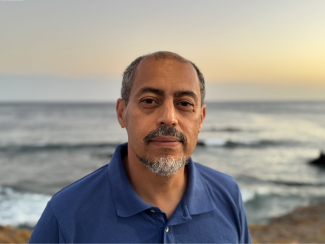
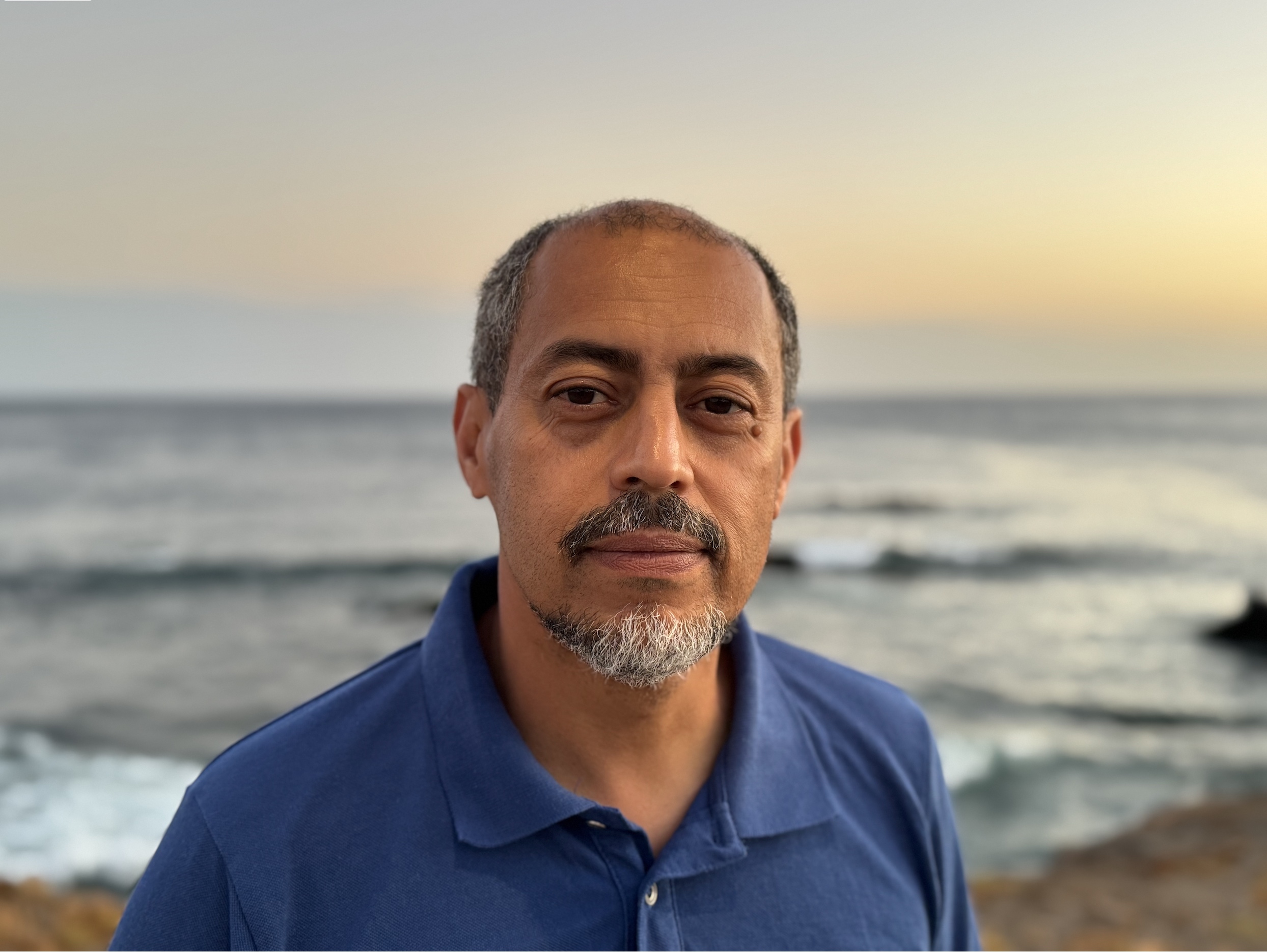
Thierry VIRCOULON
Associate Research Fellow, Coordinator of the Observatory of Central and Southern Africa, Sub-Saharan Africa Center, Ifri
Sub-Saharan Africa Center
Founded in 2007, Ifri's Sub-Saharan Africa center produces an in-depth analysis of the African continent and its security, geopolitical, political and socio-economic dynamics (in particular the phenomenon of urbanization). The Center aims to be both, through various publications and conferences, a space for disseminating analyzes intended for the media and the public but also a decision-making tool for political and economic actors with regard to the continent.
The center produces analyses for various organizations such as the Ministry of the Armed Forces, the Ministry of Europe and Foreign Affairs, the Organization for Economic Cooperation and Development (OECD), the French Development Agency (AFD) and even for various private supports. Its researchers are regularly interviewed by parliamentary committees.
The organization of events of various formats complements the production of analyzes by bringing the different spheres of the public space (academic, political, media, economic and civil society) to meet and exchange analytical tools and visions of the continent. The Sub-Saharan Africa Center regularly welcomes political leaders from different sub-Saharan African countries.
Russia/Eurasia Center
Founded in 2005 within Ifri, the Russia/Eurasia Center conducts research and organizes debates on Russia, Eastern Europe, Central Asia, and the South Caucasus. Its goal is to understand and anticipate the evolution of this complex and rapidly changing geographical area in order to enrich public discourse in France and Europe and to assist in strategic, political, and economic decision-making.
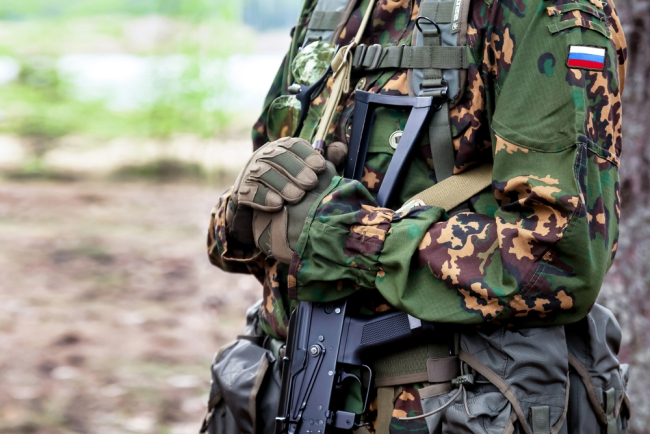
Russia’s Policy of Recruiting Fighters and Female Workers in Sub-Saharan Africa
The Russo-Ukrainian war, which began on February 24, 2022, quickly became internationalized. Russia and Ukraine were both quick to mobilize their allies in order to secure political and diplomatic support, as well as military and economic resources. But both belligerents also sought to recruit foreigners on a private basis to support their respective war efforts. This policy is global, extending from Latin America to the Far East. Sub-Saharan Africa, in this landscape, is of particular interest because it constitutes a vast and easily accessible recruitment pool, owing to high poverty rates in most countries of the region combined with a strong desire to emigrate.
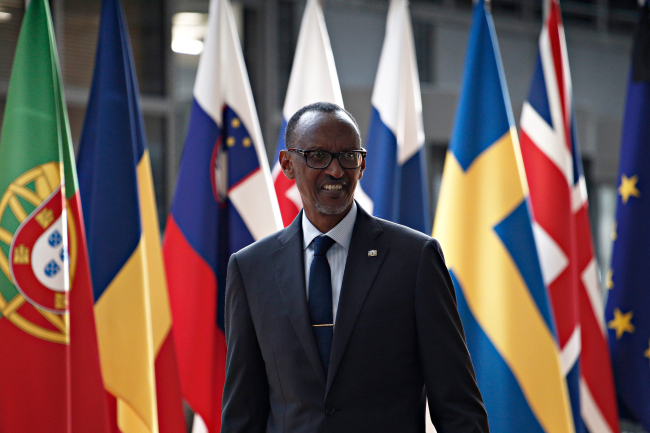
The Vectors and Means of Rwanda’s Growing External Influence under Paul Kagame
For three decades, Paul Kagame’s Rwanda has pursued a foreign policy aimed at increasing investment in the national economy, maximizing military cooperation and intelligence sharing, and promoting a model of post-genocide state reconstruction.
Sudan Wartime Online Propaganda
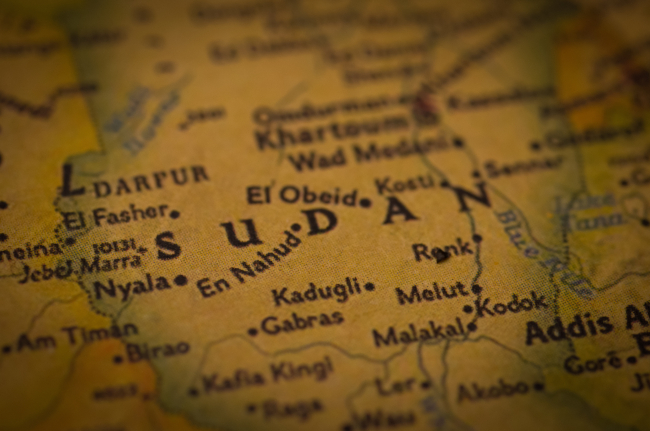
In the Sudan conflict, the propaganda battle between the Sudan Armed Forces (SAF) and the Rapid Support Forces (RSF) on mainstream and social media makes it hard to distinguish real, false, and manipulated information. Furthermore, the lack of field press coverage allows fake and misleading news to spread more easily. Although the SAF and RSF work hard to shape the war narrative by building large supporter networks and using various methods such as disinformation and censorship, it is clear they no longer fully control the flow of information. Social media analysis shows that Sudanese politicians, military figures, influencers, and followers weave a tangled web of exchanges filled with rivalries, lies, and propaganda.
Gabon: Has an — Almost — Exemplary Transition Produced a New Political Model?
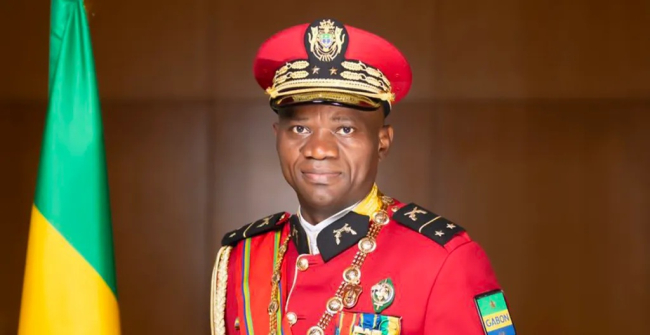
In two rounds of voting, on September 27 and October 11, 2025, the citizens of Gabon elected the members of both their local councils and the new national assembly. This marked almost the final stage of political transition, little more than two years after the coup d’état that had overthrown the more than five decades old dynastic regime of the Bongos — Omar, the father, who died in office in 2009, and then his son Ali, who is now in exile.