


The end of globalization ?

Michael Lind, Policy Director of the Economic Growth Program at the New America Foundation in Washington, D.C, was the guest of the French Institute for International Relations (IFRI) on September 29th 2014. In this video, he analyzes the major economic trends post-2008, and predicts the end of globalization.
To watch the video, click here.

Available in:
Regions and themes
Share

Americas Program
Ifri's work on the Americas region focuses mainly on the United States. Indeed, for more than 20 years, Ifri's Americas Program has provided keys to understanding American society and domestic policy while shedding light on developments in the country's foreign policy, including transatlantic relations and trade issues.
Since 2023, a specific axis on Latin America structures more actively Ifri's research on this region.
Ifri's Canada program was active in 2015 and 2016.
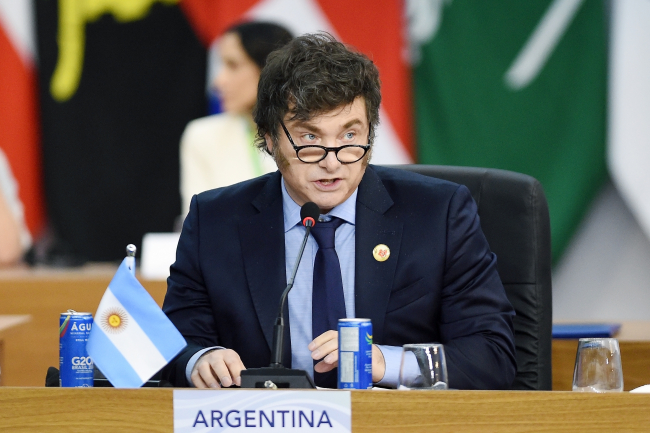
Milei: Three Years of Change, One Year to Win People Over
Following his unexpected election in 2023, President Javier Milei has been on a war path to repair the Argentinian economy by any means necessary and to protect the Argentinian people against the Peronist threat. However, just barely a year from his potential re-election, the results of his intense economic policies toward public finance, hyperinflation, and social policies have left him in a sore spot to convince Argentinians that he remains the solution to their economic woes.
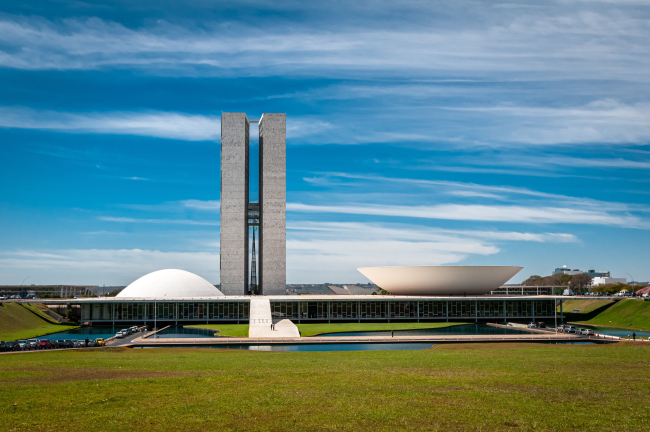
Brazil One Year Away from the October 2026 General Elections
Brazil’s general elections will be held on October 4, 2026, to elect the president, vice-president, members of the National Congress, governors, deputy governors and state legislative assemblies. For the presidential and gubernatorial elections, a second round will be held on October 25 if no candidate obtains a majority of the votes in the first round.
Trump II: The Clash of Ideologies
The second Trump administration brings together a number of very different, even opposing, ideologies: far-right populism, the reactionary Christian right, paleolibertarianism, and technolibertarianism. The most visible measures taken since Donald Trump's return to the White House have been populist in nature, with the president's authority strengthened, checks and balances weakened, a form of identity politics embraced, and economic nationalism implemented.
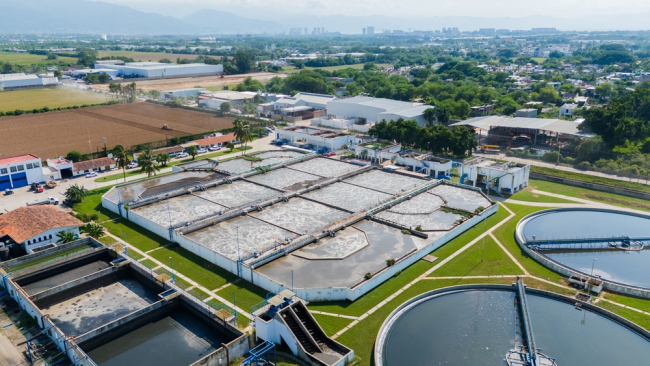
Water in Mexico: an Emergency that Will Wait
Access to water is already and will become increasingly problematic for Mexican economic actors due to the progressive scarcity of the resource resulting from climate change, a geographical distribution that does not coincide with that of the population or economic activity, and management that has so far been far too lax.