



Japan’s Infrastructure Investment in the Indian Ocean: Checking China, Securing the Sea Lanes
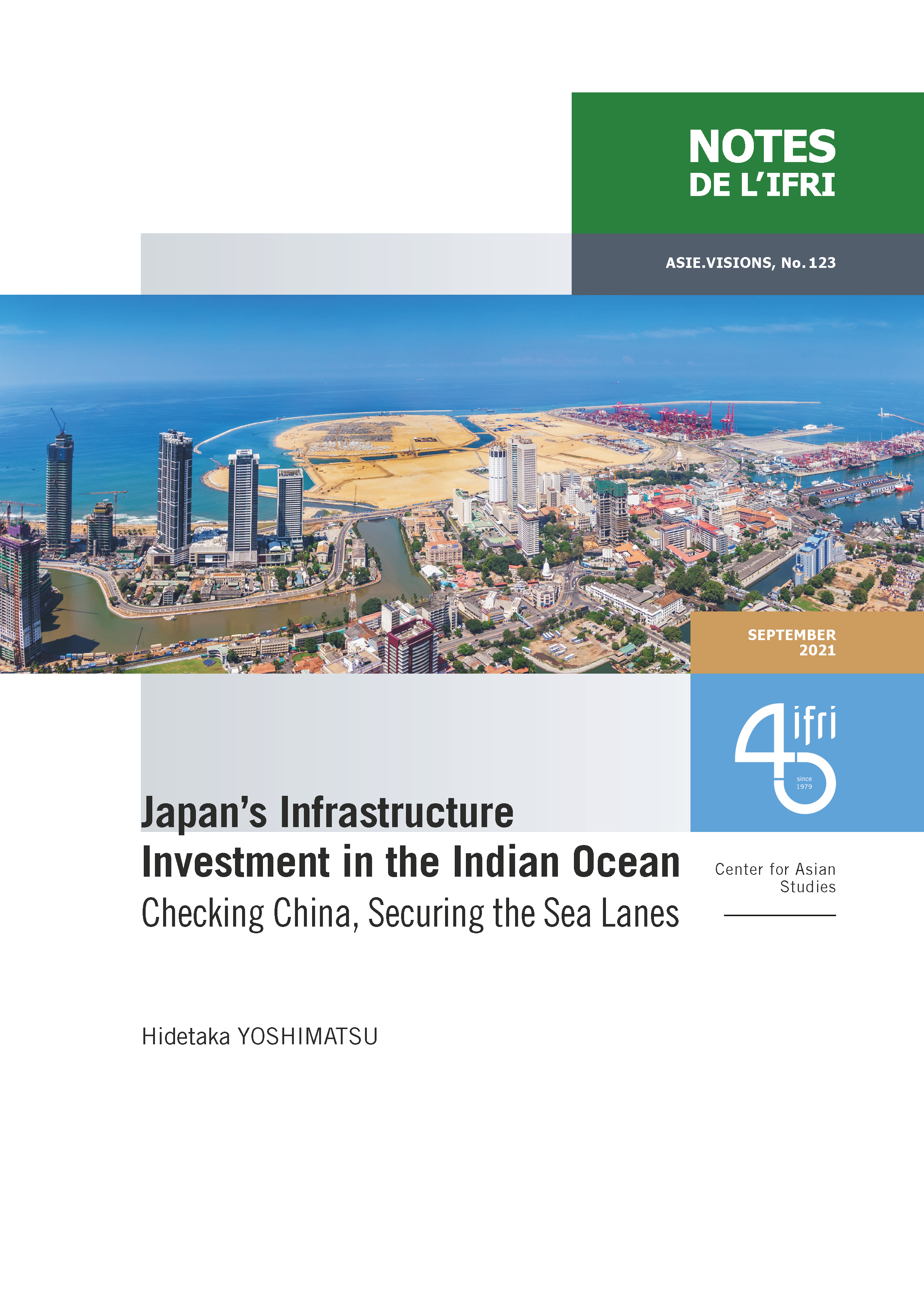
In the 2010s, Japan gradually increased economic connections with the Indian Ocean region (IOR) through trade, foreign direct investment, and official development assistance (ODA).
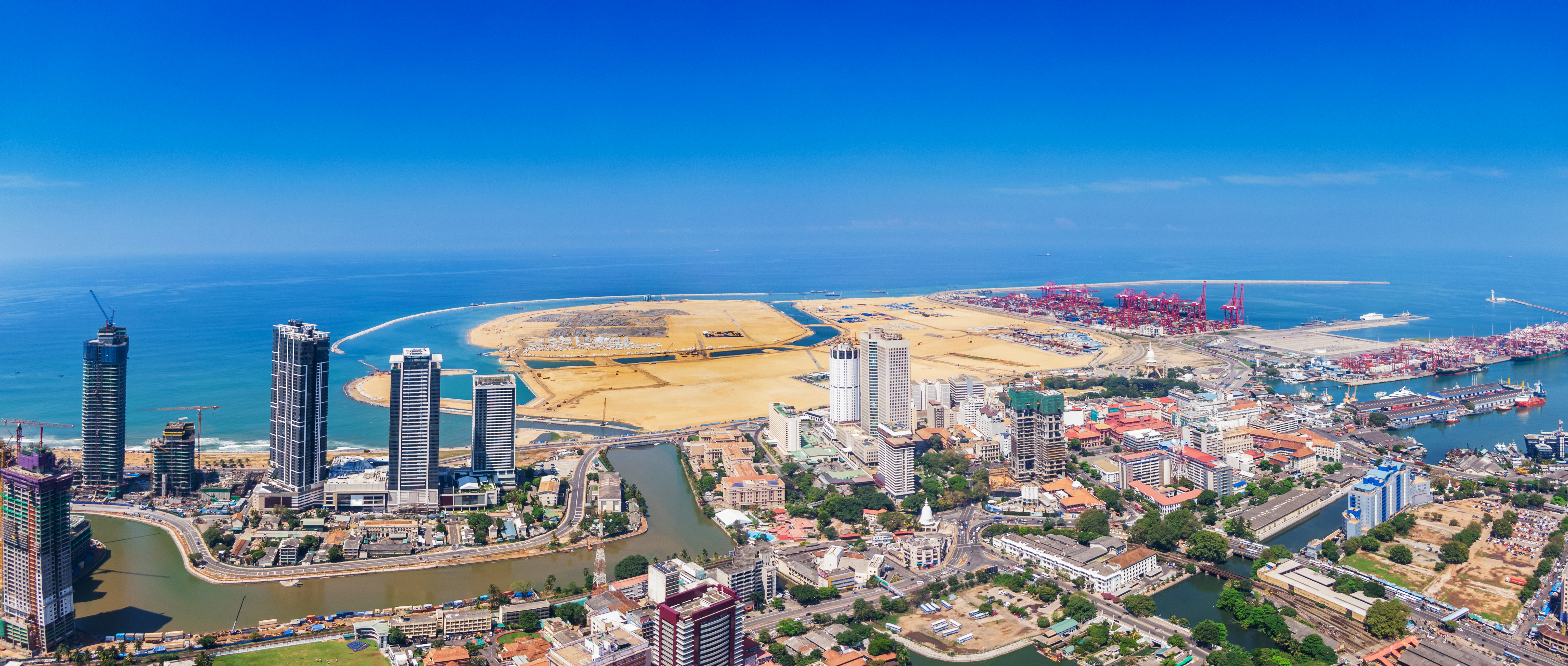
In particular, Japan began to consider the IOR a major destination of investment in maritime infrastructure represented by port facilities. Japan’s increasing engagements in connectivity development are seen in quite a few areas in the IOR such as the ports of Trincomalee and Colombo in Sri Lanka, Mombasa Port in Kenya, Matarbari Port in Bangladesh, and infrastructure facilities on the Andaman and Nicobar Islands in India.
Japan’s engagements in infrastructure and connectivity development in the IOR had much to do with China’s infrastructural push under the Belt and Road Initiative (BRI). Chinese state-owned enterprises have committed to the development of ports and terminals in the region, and the management of port facilities contributed to the increasing presence of the Chinese navy. The IOR offers crucial sea lines of communication (SLOCs) for Japan as Japanese tankers from the Middle East and Europe pass through the waters of the Indian Ocean. China’s increasing maritime presence in the region is likely to be a potential threat to Japan’s sea-line security. Moreover, China’s growing maritime presence leads to undermining Japan’s efforts to maintain a rules-based maritime order.
Japan encounters various challenges in pursuing these strategic objectives of countering China’s growing maritime presence and enhancing the securitization of SLOCs. The first challenge is the formulation of effective initiatives and policies to compete with China’s presence in infrastructure investment in the IOR. Japan needs to strengthen ‘soft infrastructure’, which consists of institutions and procedures that prop up physical infrastructure, such as human capital development and intangible management knowhow, as well as normative standards and principles in infrastructure investment. In this respect, Japan’s commitments to the Asia Pacific Economic Cooperation (APEC) and G20 produced formal policy documents regarding quality principles for infrastructure investment to which the Chinese government has paid due attention.
Moreover, Japan needs to deepen its strategic partnership with India, a country that shares similar concerns about China’s maritime advance in the IOR. India is a crucial partner for Japan as a member of the Quad involving the US and Australia, which has developed since 2017 under the strategic vision of the Free and Open Indo-Pacific (FOIP). The Quad holds a strategic objective to ward off China’s growing geopolitical presence, and maritime security and infrastructure investment have been regarded as key policy agendas for the grouping. A substantial challenge for Japan is how to integrate India in the US-led coalition of democracies, which pursues shared interests in maritime security and infrastructure investment. Japan needs to understand India’s subtle diplomatic position and assist its gradual integration into the US-centered strategic coalition.
Lastly, Japan has to pursue the possibility of collaboration with China in infrastructure and connectivity development. Given that Japan and China have different comparative advantages in infrastructure investment, the effective use of aid funds offered by the two countries under policy coordination will bring about synergetic effects in the economic growth and social upgrading of recipient countries and the comprehensive development of extensive adjacent areas. On this point, Japan must meet the challenge of coordinating a collaborative orientation with confrontational strategies in intensive Sino-US rivalry by forging a common front in domestic politics.
This page contains only a summary of our work. If you would like to have access to all the information from our research on the subject, you can download the full version in PDF format.
Japan’s Infrastructure Investment in the Indian Ocean: Checking China, Securing the Sea Lanes


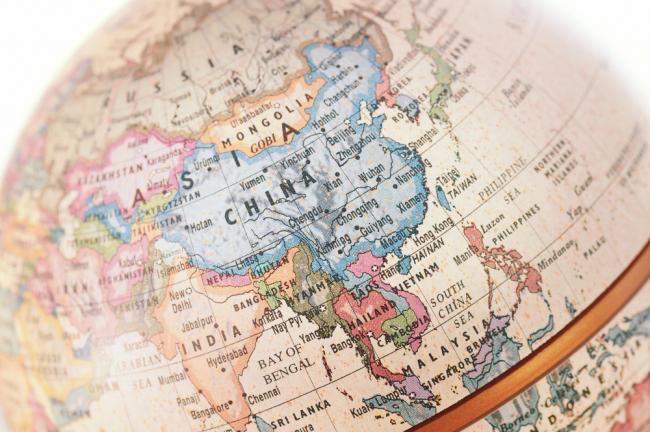
Center for Asian Studies
Asia is a nerve center for multiple global economic, political and security challenges. The Center for Asian Studies provides documented expertise and a platform for discussion on Asian issues to accompany decision makers and explain and contextualize developments in the region for the sake of a larger public dialogue.
The Center's research is organized along two major axes: relations between Asia's major powers and the rest of the world; and internal economic and social dynamics of Asian countries. The Center's research focuses primarily on China, Japan, India, Taiwan and the Indo-Pacific, but also covers Southeast Asia, the Korean peninsula and the Pacific Islands.
The Centre for Asian Studies maintains close institutional links with counterpart research institutes in Europe and Asia, and its researchers regularly carry out fieldwork in the region.
The Center organizes closed-door roundtables, expert-level seminars and a number of public events, including an Annual Conference, that welcome experts from Asia, Europe and the United States. The work of Center’s researchers, as well as that of their partners, is regularly published in the Center’s electronic journal Asie.Visions.

Pakistan and the Israel-Palestine Conflict: Transformation in Pakistan’s Approach After the War in Gaza
Pakistan has long combined vocal support for the Palestinian cause with covert engagement with Israel. Since the war in Gaza, this balance has become untenable: public opinion is united against Israel, joining Trump’s Board of Peace has drawn rare cross-party criticism, and new regional alignments put normalization out of reach.
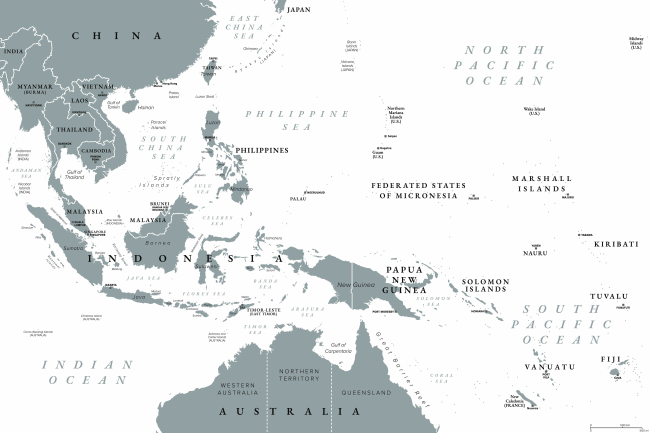
The Oceania Factor in France’s Evolving Indo-Pacific Strategy
This paper examines the two-way relationship between France’s Indo-Pacific strategy and developments in Oceania. Oceania was not a priority in the initial years of France’s Indo-Pacific strategy, as the region was largely treated as secondary to major strategic hotspots and key partnerships, while overseas territories were primarily handled as domestic issues and recipients of a top-down strategy.

France’s View: From Diplomacy to Public-Private Action
France has emerged as the EU’s IMEC forerunner, combining port infrastructure, diplomatic alliances and public-private cooperation. With Marseille Fos at its core, the country brings a strategic hub for logistics, energy and digital connectivity to the corridor.
Trump II, the Crisis of the Rules-Based Order and Europe’s Indo-Pacific Strategy
This article examines the implications of Trump II for Europe’s engagement in the Indo-Pacific. The piece contends that Trump II is accelerating the erosion of the rules-based order and undermining the relevance of the Free and Open Indo-Pacific (FOIP) concept, while forcing Europe to refocus on its own continental security amid US retrenchment. Paradoxically, these very constraints create conditions for a more autonomous, pragmatic, and explicitly interest-driven European engagement in the Indo-Pacific, rather than outright withdrawal.