


"Paris Dialogue" - First Edition, June 2026
Executive Chairman’s Events

Practical information
Accessibility
Themes and regions
This is a private event.
Learn more about our corporate support packages
The first edition of the “Paris Dialogue” took place on 8 and 9 June. The initiative was launched by Ifri, France’s leading think tank, and AGDA, a center of excellence based in Abu Dhabi. It is co-chaired by Thierry de Montbrial, executive chairman of Ifri, and Anwar Gargash, diplomatic advisor to H.H. the President of the United Arab Emirates, and deputy chairman of the board of trustees of AGDA.
The “Paris Dialogue” is convened in a Track 1.5 format, bringing together not only prominent policymakers and CEOs, but also leading thinkers and influential representatives of civil society. Selected leaders from third countries may also be invited.
The “Paris Dialogue” is a non-governmental exclusive forum dedicated to strategic and relevant issues of international relations, including economy and technology. The inaugural edition was devoted to examining the economic, political and security implications of the current crisis in the Middle East.
Related Subjects
Other events
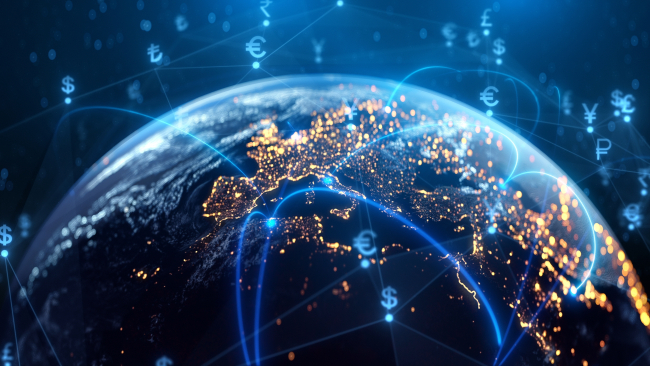
Reinventing Coordination in an Age of Fragmentation 3rd Paris Geoeconomic Dialogue
The world economy is being reordered. The certainties of the post-Cold War era, open trade, dollar centrality, predictable multilateral coordination, are giving way to a landscape shaped by rivalry between the United States and China, the weaponization of interdependence, and a scramble to secure supply chains, technologies and critical resources. What once looked like a stable architecture now appears fragile, contested, and in places actively being dismantled.
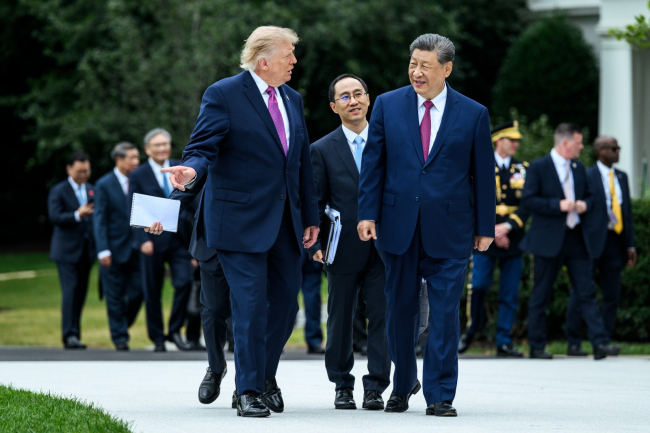
The United States, China and the Derisking Race in a Moment of “strategic stability”
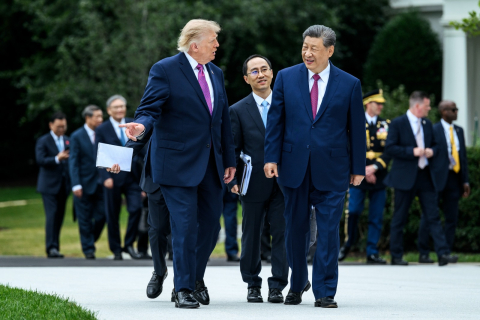
For nearly a decade, relations between Washington and Beijing have been shaped by a contest over technology, supply chains, and the terms of economic interdependence. In The Derisking Race, Aaron Friedberg examines how this contest has moved well beyond tariffs and trade disputes toward a structural realignment of the global economy, in which both powers seek to reduce their exposure to one another even as the costs of doing so become harder to ignore.