





Politique étrangère
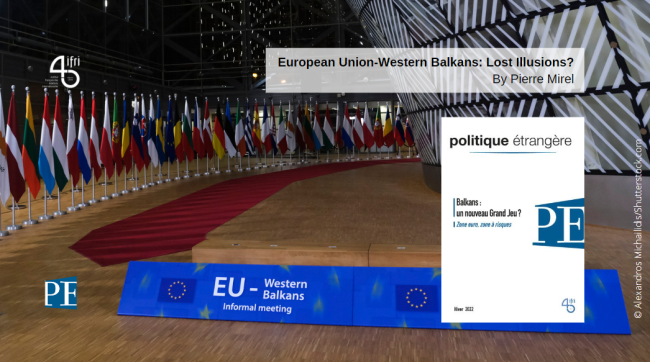
European Union-Western Balkans: Lost Illusions?
The “European prospects” of Balkan countries have evolved little since 2003.
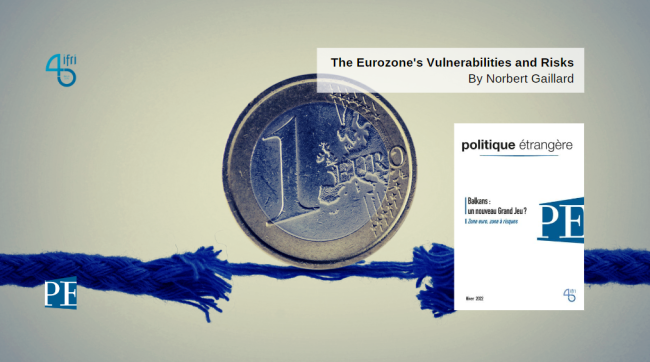
The Eurozone’s Vulnerabilities and Risks
The war in Ukraine has brought to light the European Union’s vulnerabilities.
The Roots of a Quarter-Century of Violence Lie to the East of Congo (Kinshasa)
Almost thirty years after the genocide of the Tutsis in Rwanda, the entire region remains unstable. After Paul Kagame came to power, 1.5 million Hutus fled to the Democratic Republic of the Congo. For the Rwandan president, they represented an unacceptable threat. There then followed the First and Second Congo Wars, the consequences of which are still apparent. The recent attacks perpetrated by the M23 rebels are a new episode in this tragic story.

War in Ukraine: A New World?
Beyond the tactical sphere, the conflict in Ukraine has already had numerous repercussions, and its conclusion will provoke many more in the global system. In this special issue, Politique étrangère explores some potential outcomes.
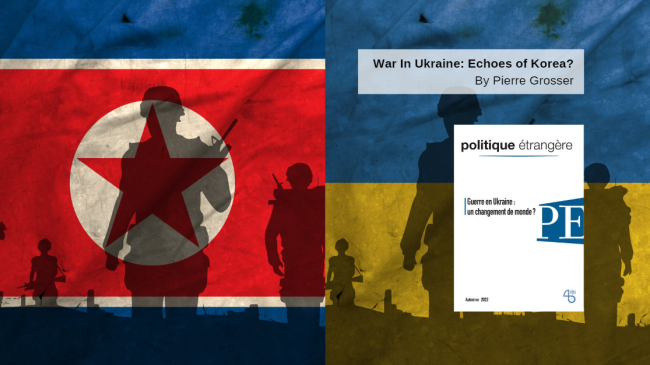
The War in Ukraine: Echoes of Korea?
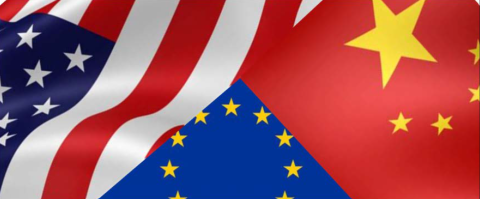
The war in Ukraine has revived discussion about the Washington-Beijing-Moscow triangle as well as Europe’s place in the geopolitical power struggles.
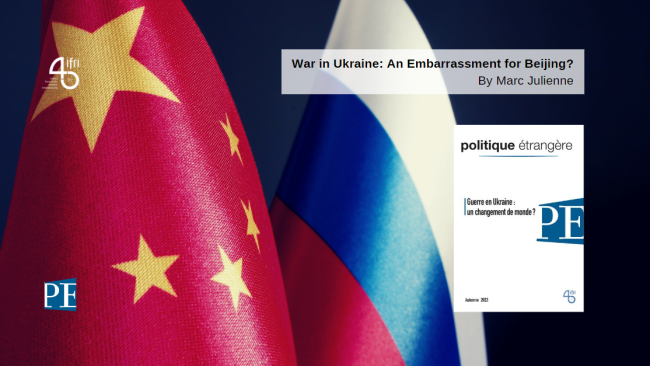
War in Ukraine: An Embarrassment for Beijing
From the beginning of the war in Ukraine, Beijing has adopted an outward posture of neutrality while in fact supporting Moscow.
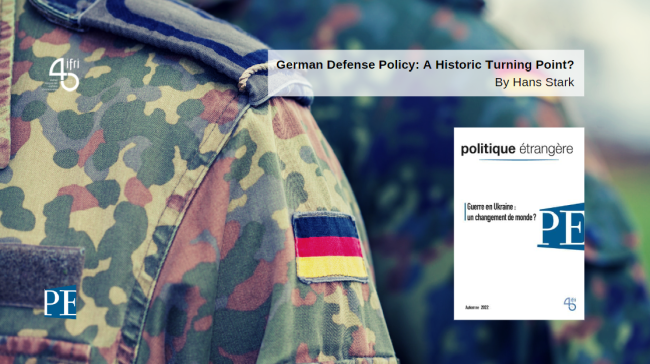
German Defense Policy: A Historic Turning Point?
The war in Ukraine has been a rude awakening for Berlin.
Ifri, a foundation recognized as being of public utility, relies largely on private donors – companies and individuals – to guarantee its sustainability and intellectual independence. Through their funding, donors help maintain the Institute's position among the world's leading think tanks. By benefiting from an internationally recognized network and expertise, donors refine their understanding of geopolitical risk and its consequences on global politics and the economy. In 2026, Ifri partners with over 90 French and international companies and organizations.
