


Politique étrangère
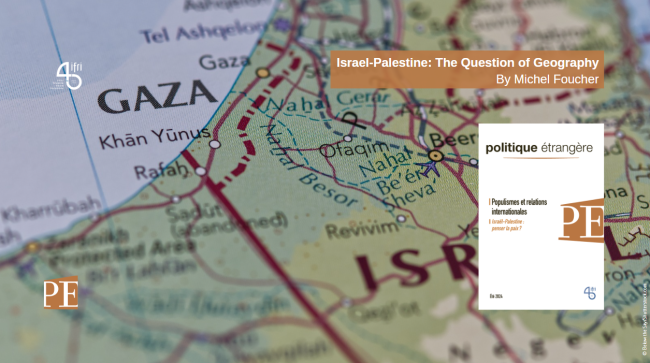
Israel-Palestine: The Question of Geography
The attacks on October 7, 2023, and the Israeli retaliation against Gaza have dramatically highlighted the continued absence of a solution to enable the coexistence of two peoples in the same territory. Both sides reject the idea of a single state. But the geography of Israeli colonization makes the territorial inscription of a Palestinian state almost impossible. The exception would be if Israel, possibly under international pressure, made drastic changes to its colonial settlements in the West Bank.

What Is a Populist Foreign Policy?
It is difficult to identify a shared set of norms implemented by populist governments of all different political positions once in power.

The World Through the Lens of Ukraine
This issue of Politique étrangère looks at three conflicts currently unfolding around the world.
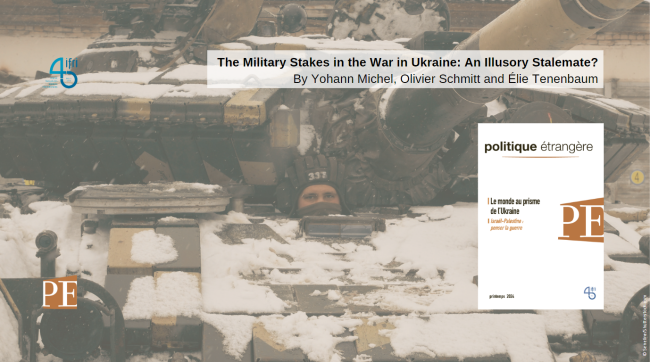
The Military Stakes in the War in Ukraine: An Illusory Stalemate?
The Ukrainian counter-offensive, which was supposed to result in a major breakthrough in 2023, came up against solid Russian defenses and ended in failure.
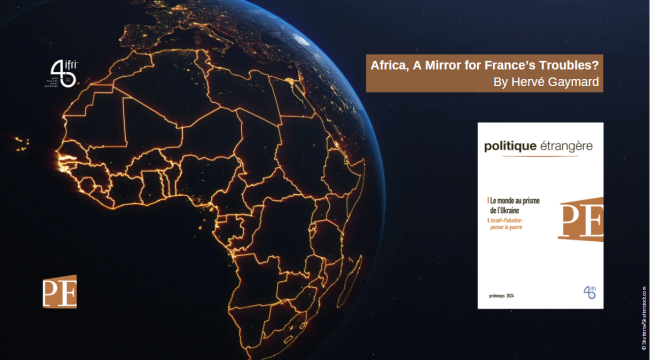
Africa, A Mirror for France's Troubles?
France's setbacks in the Sahel should not lead it to forget the long-standing historical ties that bind it to many African countries.
The South versus the West?
In 2023, forums that amplify the voice of the “Global South” have proliferated and grown louder. As contradictory and divided as they may be, these forums (BRICS+, Shanghai Cooperation Organization (SCO), G20, the Group of 77, the European Silk Road Summit…) attest to the emergence of new power relations, and especially new directions in foreign policy, with states rejecting alignment with the dominant powers of the past in favor of putting their own interests first. A new world is taking shape, with changeable, still uncertain, contours.
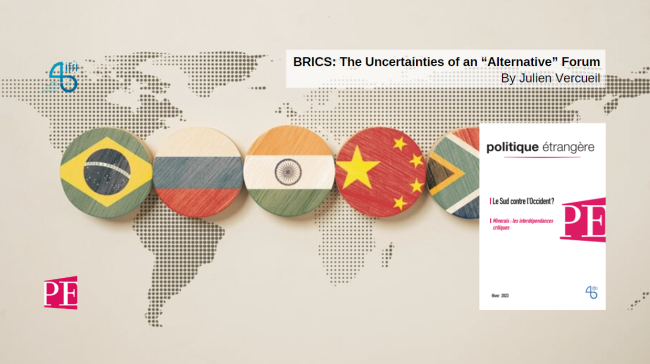
BRICS: The Uncertainties of an “Alternative” Forum
Initially limited to the financial domain, the term BRICS is gradually becoming established in global economic governance.
Support independent French research
Ifri, a foundation recognized as being of public utility, relies largely on private donors – companies and individuals – to guarantee its sustainability and intellectual independence. Through their funding, donors help maintain the Institute's position among the world's leading think tanks. By benefiting from an internationally recognized network and expertise, donors refine their understanding of geopolitical risk and its consequences on global politics and the economy. In 2026, Ifri partners with over 90 French and international companies and organizations.
