


Stepping up Another Gear in Supporting EU Raw Material Value Chains

Practical information
Accessibility
Themes and regions
Related centers and programs
This is a private event.
Learn more about our corporate support packages
What could be further done rapidly as US and China tensions and pressures rise, too little projects take final investment decisions (FIDs) and vulnerabilities remain?
The goal of this closed-door roundtable is to discuss how to implement already agreed measures (c.f. ResourceEU) and expand strategic actions given that:
- Threats of further distortions and weaponisation of minerals/metal trade persist and can further cripple European economies and autonomy.
- The US has sharply ramped up its efforts, deploying a range of policy tools and massive financial resources across the entire value chain, domestically and abroad – competing with Europe.
- EU efforts still see too few FIDs and too many missed opportunities and stalling projects due to the lack of de-risking instruments, first mover risk, and the “chicken and egg” challenge between upstream supply, processing capacity and downstream demand.
The focus of the discussion will be on:
- How to better mobilise public guarantees and strengthen public-private investor cooperation to unleash FIDs in raw materials processing and recycling plants?
- What tools can be used to boost equity taking in projects that are not risk immune?
- How to facilitate offtake contracts with downstream industries?
- How can the planned CRM Center, CRM financing hub and other platforms be best used to accelerate the implementation of RESourceEU, including through faster mobilisation of EU funding?
Program:
12:30 - 12:40 | Introduction: Ifri & EIES on challenges and proposals
12:40 - 13:00 | Impulse statements: 3-4min rapid fire contributions from leading bank, investor, trader, processor, battery manufacturer, automotive company, defence contractor, and recycling company
13:00 - 14:00 | discussion with participants
Kick-off speakers and participants include :
- Marc-Antoine Eyl-Mazzega, Director, Center for Energy & Climate, Ifri
- Albéric Mongrenier, Executive Director, EIES
- Adam Hendley, Global head mining & metals, Natixis
- Denis Bonvillain, Head of EU Affairs, Veolia
- Vincenzo Conforti, Head of European Affairs, Glencore
- Wouter Ghyoot, VP Government Affairs, Umicore
- Nick Bitsios, Head of Brussels Office, Metlen
- Marcel Halma, Global Head of PA, Solvay
- Christophe Roux, Regional Head of Batteries Mining and Industries, Société générale
- Benoît Samanos, Chief Operating Officer, Mecaware
Moderation: Peter Handley, Senior Fellow, EIES
Contact
Alexandra BOR
Assistant to the Center for Energy & Climate, Ifri
Our partners

Related Subjects
Other events
COP31 in Antalaya: State of the Global Climate Governance, Issues, Perspectives
COPs have become a year-end marathon to revigorate a world now entering the era of climate overshoot. While Türkiye exhibits the largest coal-fired power generation in OECD Europe, it has embraced the electrification agenda and aims at joining forces with Australia on fostering action and implementation. This is an unusual de facto co-presidency arrangement, but one that could yield promising results. This webinar will take stock of what climate governance has achieved and of the issues still to be negotiated, and explore what impetus this Turkish–Australian partnership could provide.
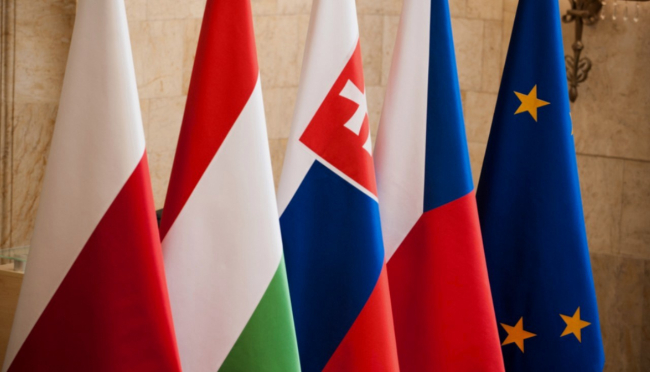
A New Moment for Central Europe? Regional Cooperation in a Time of European Strategic Choices
Recent political developments in Central Europe have revived the debate about the future of regional cooperation and the Visegrád Group. Changes in Hungary, Poland, the Czech Republic and Slovakia, together with Austria’s growing interest in closer cooperation with its neighbours, could create new opportunities for dialogue and coordination around shared priorities.
China’s Nuclear Buildup: Developments, Drivers, and Implications for Major-Power Relations and Arms Control
China has been steadily expanding its nuclear arsenal for several years amid levels of geopolitical tension unseen since the end of the Cold War, marked by a resurgence in nuclear proliferation and a broader, global arms race.