






Tunisia’s Armed Forces and Democratic Transition
Having reportedly helped topple Ben Ali, the Tunisian Armed Forces enjoy substantial support from the population.
Nigeria's 2015 Presidential Election: Deciphering a High-risk Operation
Nigeria is entering a new electoral cycle, holding its sixth general elections since the restoration of civilian rule in 1999. The elections were initially scheduled for February 14 (presidential elections) and 28 (governorship elections), 2015. The first round has now been postponed until March 28. The issue of the threat posed to Nigeria by Boko Haram is not, as one might expect, at the heart of the debate surrounding the presidential campaign in the country. Nevertheless, the peculiar security context in which the forthcoming elections will take place, as well as the changes under way in Nigeria's political landscape, make this vote unique. It is therefore essential to analyze the various issues at stake in the country's sixth general elections.
Jihad in Syria and in Iraq: a Сhallenge for France
One week after the terrorist attacks in Paris, the police killed two jihadists in Belgium. Officials said that the two men were coming back from Syria and were on the brink of targeting Brussels. The capital of Belgium was already targeted a few months ago: in May 2014, Mehdi Nemmouche – a French citizen who had trained in Syria – killed 4 persons in Brussels’ Jewish museum.
Don’t Overhaul French Anti-terrorism
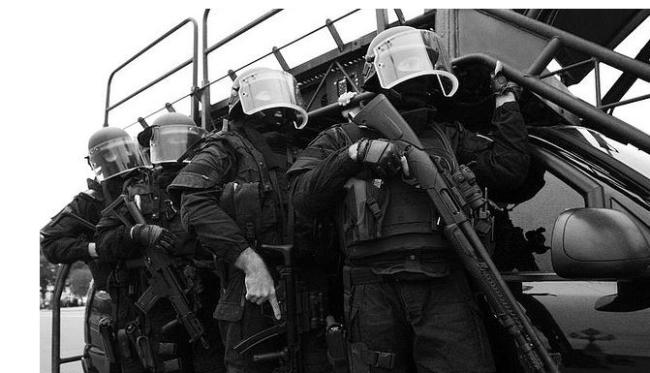
For the past two years, French experts on terrorism have felt anxious. They often emphasized: “The question is not whether France will be targeted by a terrorist attack, but when.” The dreaded attack took place on January 7th, 2015. That evening, various speakers across the media expressed their solidarity with the victims, but also criticized intelligence agencies for their failure, and asked for the implementation of a completely different strategy or the adoption of a new antiterrorist law. Never mind that the last one was only voted on a couple of months ago — the mere occurrence of the attacks shows that something went wrong somewhere. The French Prime Minister, Manuel Valls, didn’t hide this fact and asked for a thorough report. But let’s face it: No antiterrorist scheme is foolproof. The attack against Charlie Hebdo should not lead to an entire rethink of a French system that had become stronger over the years and now seems solid.
The Religious Question in Myanmar’s Transition
In March 2011, after a half-century of relative isolation and autocratic military rule, Myanmar took the world by surprise in announcing an unexpected political transition. Less than two years later the emergence of aggressive Buddhist nationalism grabbed the spotlight. The epidemic of violence against Muslims that began with pogroms in June 2012 in the Arakan region of southwest Myanmar has now spread across a large swath of the country and is a testimony to the seriousness of this phenomenon. In a country with a large Buddhist majority, the presence of Muslims is now considered a threat.
Obama at West Point
President Obama presented the case for his foreign policy last week – again. He addressed the cadet corps at West Point in what was billed as a comprehensive strategic statement for the balance of his tenure in office, and for America's future. Obama's speech came just over a week after John Kerry issued his own call for America to take a large and active role in the world — urging Americans not to "allow a hangover from the excessive interventionism of the last decade to lead now to an excess of isolationism in this decade." It set the pitch and tone for the President's address. [1]
NSA Does the Grand Tour
On Tuesday Barack Obama called President Francois Hollande of France to explain the National Security Agency’s massive surveillance of French government offices, businesses and private citizens. Obama stated that this was a well-meaning attempt to protect both countries from Islamic terrorism. He offered to “reexamine” the program so as to determine whether the right balance was struck between public safety and privacy rights.
France and the Fight against Terrorism in the Sahel: The History of a Difficult Leadership Role
Except for its extreme poverty and the disastrous effects of a series of droughts, the Sahel region has been largely out of the spotlight of international attention in the past. Yet the rise of terrorism and especially the creation of Al-Qaida in the Islamic Maghreb (AQIM) in 2007 brought the region into the focus of world politics. Initially, AQIM"s activities in the Sahel mainly posed a threat to the stability of the Sahelian states themselves. In an effort to internationalize its agenda, however, AQIM also started targeting Western countries.
The Sahel: A Crossroads between Criminality and Terrorism
Besides the ongoing political conundrum in Mali, it is the entire West African region, from Guinea Bissau to Mali, which is under threat of destabilization. Indeed, for many years now, terrorists and drugs traffickers have been synergizing their respective illegal activities, transforming the Sahel into a narcoterrorist zone. As a result, the Sahel has become a dangerous crossroads for drugs, crime, terrorism and insurgency.
Al-Qaeda in a Changing Region
On Tuesday 10 April 2012, Osama bin Laden was finally replaced on the FBI’s most wanted list by a fugitive schoolteacher accused of possessing child pornography. As the United States’ perception of threat has shifted, so too has the broader national security discourse. The prominent al-Qaeda analyst Peter Bergen observed that the terrorist group which launched the 9/11 attacks is now more or less out of business. He argued, too, that it is time to declare al-Qaeda defeated and “move on to focus on the essential challenges now facing America”: fixing the country’s economy, containing a rising China, managing the rogue regime in North Korea, and continuing to delay Iran’s acquisition of nuclear weapons.
Algeria and the Crisis in Mali
The multifaceted crisis in Mali, which has effectively led to state collapse and split the country in two, has drawn international attention to Algeria’s role in the stability of the Sahel. One might expect Algeria, as the region’s preeminent military power, and one that has sought to position itself as a leader in counter-terrorism, to lead the international response to the growing chaos along its volatile southern border.
U.S.-Algerian Security Cooperation and Regional Counterterrorism
This paper explores the recent evolution of security cooperation between the United States and Algeria, which have forged a strong partnership on counterterrorism despite lingering mutual distrust.
Protecting Nuclear Installations: The difference between industrial safety and national security
There is a gritty public debate going on in Europe about what threats should be considered in conducting stress tests on existing nuclear power plants or in establishing safety criteria for new build nuclear power.
Francs-tireurs et Centurions : Les ambiguïtés de l'héritage contre-insurrectionnel français
The war in Afghanistan and David Galula’s reputation in the United States have revived France’s counterinsurgency legacy. This legacy must be divided into two separate periods: the colonial era and later on the wars of decolonization fought by France in Indochina and Algeria.
Caveats to Civilian Aid Programs in Counterinsurgency: The French Experience in Afghanistan
Amaury de Féligonde has just spent one year in Kapisa and Surobi as a project manager within the Afghan-Pakistan Interministerial Unit. Back in France, he expresses his personal views and draws conclusions from his experience.
Potential Strategic Consequences of the Nuclear Energy Revival
Renewed interest throughout the globe in harnessing nuclear energy has raised concern about security threats from states and non-state actors while holding out the promise of more electricity for more people.
Moscow's Counter-Terrorism Drives the Islamization of the North Caucasus
The "International System": Approachs and Dynamics
Thierry de Montbrial
Ifri, a foundation recognized as being of public utility, relies largely on private donors – companies and individuals – to guarantee its sustainability and intellectual independence. Through their funding, donors help maintain the Institute's position among the world's leading think tanks. By benefiting from an internationally recognized network and expertise, donors refine their understanding of geopolitical risk and its consequences on global politics and the economy. In 2026, Ifri partners with over 90 French and international companies and organizations.
