



Europe and Africa

In this special issue of Politique étrangère devoted to the proceedings of the conference organized by Ifri on April 10, 2019, in the Grand Amphitheater of the Sorbonne, on the occasion of its fortieth anniversary, discover the conversation between Louise Mushikiwabo, Secretary General of La Francophonie and Thierrry de Montbrial, Founder and Executive Chairman of Ifri.
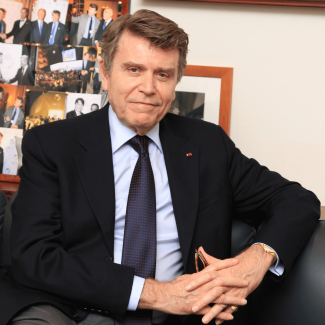
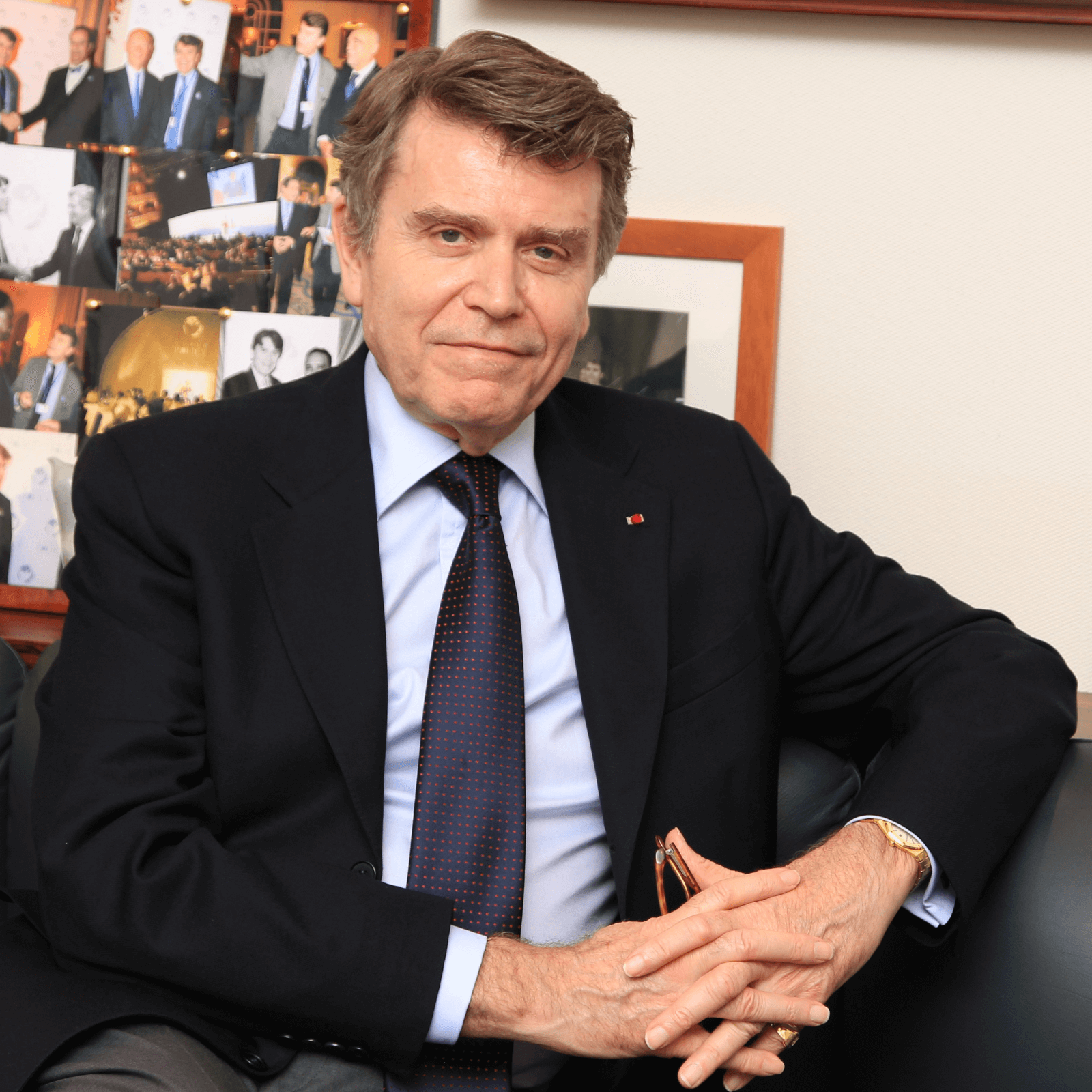
Thierry de Montbrial
Louise Mushikiwabo is quite an extraordinary person, who I have had the honor of knowing for some years. She was the Rwandan Minister of Foreign Affairs for eight years. She obviously has a deep-rooted African culture, even though Africa is a huge continent. She spent twenty years in the United States, and, of course, speaks perfect French. To have a person with a deep-rooted understanding of the American world, the European world and the African world performing her important role is an exceptional opportunity for La Francophonie.
General Secretary, before focusing on Africa, how do you react to what you've heard this morning?
Africa at the world table
Louise Mushikiwabo
The conversations we are having this morning, we should have them more often than every 40 years... The anniversary celebrated today is important, simply because the world is changing, and we citizens of the world, but also, we as institutions or politicians do not have the luxury of not thinking about the state of this world. Relations between Europe and China, or the United States, also represent only a part of what is happening in the world. As for my continent, Africa, I question its future in relation to China, Europe and the rest of the world.
Therefore, it is a very diverse debate, and I've very much enjoyed the preceding panel's comments, because they wanted to guide us towards what brings us together rather than what separates us. The concepts of “economic enemy” or “political enemy” do exist, but, in response to what is happening around the world, and above all in Europe, we are striving to build on what brings us together. Differences exist, the demands of today's world are varied, but trade wars, migration crises, climate crises, confrontations between countries of the Global North and Global South, are also opportunities. It was a bit strange that Africa was absent from the introductions to our debates. We are here to rectify that.
Thierry de Montbrial
Africa, I have mentioned it, but from a particular angle. The big problem for Europeans – I mean: for the European Union – is that they've never had, that we've never had deep-rooted discussions about our different approaches, including between our own countries. Jean-Louis Bourlanges said the same thing in a different way when he noted that we are still searching for an identity that was never actually developed. Once again, you cannot have a foreign policy or political unity, if you have not first clarified your relationship with yourself, and hence if you have not reached a certain unity of point of view vis-à-vis others. This is where we come to Africa: obviously, we do not have a shared vision among Europeans vis-à-vis Africa. [...]
Louise Mushikiwabo, a former Rwandan Minister of Foreign Affairs is Secretary-General of the Organisation internationale de la Francophonie.
Thierry de Montbrial is the Founder and Executive Chairman of Ifri.

Available in:
Themes and regions
Share
This page contains only a summary of our work. If you would like to have access to all the information from our research on the subject, you can download the full version in PDF format.
Europe and Africa

Thierry de MONTBRIAL
Founder and Executive Chairman of Ifri - Member of the Institut de France (Académie des Sciences morales et politiques)
Iran: Anatomy of a Power at War
The elimination of Supreme Leader Ali Khamenei and several high-ranking officials at the outset of the 2026 American-Israeli operation did not succeed in bringing down the Iranian regime. The regime had prepared for such a scenario, notably by decentralizing its structures. Moreover, it continues to adapt to war. The power of the Islamic Revolutionary Guard Corps is growing at the expense of the Shiite clergy. The security apparatus defends the country’s sovereignty and justifies its actions in the name of raison d’état.
“Remodeling” the Middle East?
Chaos continues to spread, seemingly without end, across the Middle East. The Israeli-American attack on Iran has resulted in a clear military and diplomatic failure, but it is paving the way for a regional realignment, the consequences of which remain uncertain. New regional groupings are taking shape, either centered around Israel or built on the prospect of coexistence with Tehran, alongside a decline in American influence and the marginalization of Europe, while China maintains a low-key presence.
Silicon Valley and War: Lessons from Ukraine
Over the course of international conflicts, and particularly in Ukraine, major tech companies have emerged as central actors. Initially subject to wartime maneuvering, they have since become decisive actors in their own right, privatizing a significant share of wartime exchanges, shaping the information flows of societies, and presenting themselves as providers of security. This situation raises important questions about states’ autonomy in making decisions and taking action.
Does Artificial Intelligence Change the Nature of War?
From Gaza to Ukraine and Iran, current conflicts are being shaped by the arrival of artificial intelligence and robots on the battlefield. The changes under way are so profound that humans risk rapidly losing control over entire aspects of the conduct of military operations. While these technological developments are altering the character of war, their impact on the very nature of war itself remains a matter of debate.