




Spat in the East China Sea Offers Lesson on Raw Material Dependence
There is a valuable lesson to be learned about raw material dependence from the tensions between China and Japan in the East China Sea. It’s not about the oil and gas that is thought to be stored under the seabed in disputed waters, but rather the so-called “rare earth elements”, of which China produces 97% of the global supply.
The spat that resulted from a maritime incident on September 7, 2010, added a new dimension when accusations began to fly that China was restricting exports of rare earth metals to Japan over the incident. Rare earth elements are essential for hybrid vehicles, windmills, precision-guided munitions, cell phones and a long list of technologies for the world of both today and tomorrow. While China is the world’s dominant rare earth producer, Japan is its largest foreign customer. The United States and Europe are also major consumers of China’s rare earths and importers of rare earth-based technology from Japan.
The report that China was restricting rare earth exports to Japan first appeared in the New York Times on September 23. China’s Prime Minister Wen Jiabao had threatened “unspecified action” against Japan if it did not release the captain of the trawler who was arrested in Japan after ramming two Japanese coast guard ships in disputed waters. Unnamed industry officials said that rare earth materials were being prevented from loading at Chinese ports and talk of a Chinese rare earth embargo on Japan has been circulating ever since. China has officially denied the accusations. While some industrialists in Japan have reported shipping delays in rare earths, Japanese officials have so far sought to downplay the issue as delays in shipping are rather common. Coincidentally, China’s strict limits on total rare earth exports, listed at just over 30,000 tons of rare earth oxide for 2010, or a 40% drop from 2009, are quickly being reached. Thus, any reduction in exports to Japan could be independent of the incident in the East China Sea. Whatever the truth, a major warning signal must be heeded and the world’s dependence on China for rare earth production must be addressed.
In 1992, Deng Xiaoping famously observed that “there is oil in the Middle East; there are rare earths in China.” The importance of diversifying supplies of oil in order to ensure the security of supply is clearly understood in the West. So why have we been content to allow 97% of the rare metals that are crucial for the economies of today and tomorrow to become concentrated in the hands of a single producer? China now has a strong card to play in gaining a comparative advantage in technological innovation and producing the latest defense, energy and consumer technologies. But, this latest imbroglio over a (possible) Chinese rare earth embargo on Japan displays the power China could wield in global markets. This is one obvious reason to diversify the global supply of rare earths.
Another reason is that, even without a row over maritime borders, China is likely to keep a tight lid on its rare earth exports, even as global demand grows. For a number of reasons that include guaranteeing dwindling domestic supplies for its own industries, attracting foreign investors and foreign technology, and bringing some order to the environmental disaster that a chaotic rare earth industry has caused, China will want to keep its raw rare earths at home. At the same time, the world should not want nearly all of its rare earth needs to be met by one supplier.
Accessible, minable reserves exist outside of China today. It is essential that new mines outside of China be explored and brought online as soon as possible. Public policies must be adopted to support this necessary action while simultaneously ensuring responsible mining practices.
For a more complete analysis of the rare earth question see: John Seaman, Rare Earths and Clean Energy: Analyzing China’s Upper Hand, Note de l’Ifri, September 2010.

Available in:
Regions and themes
Share


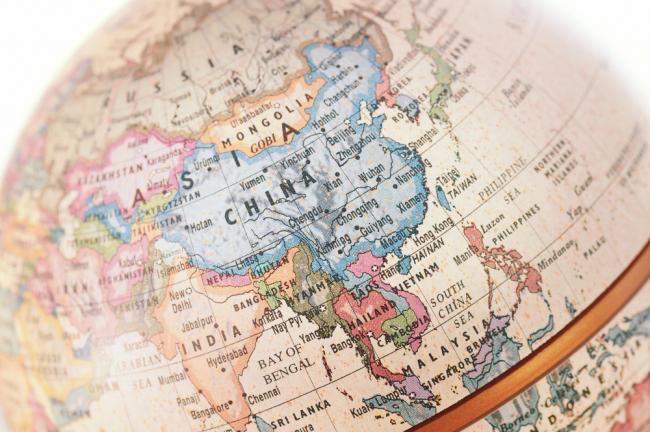
Center for Asian Studies
Asia is a nerve center for multiple global economic, political and security challenges. The Center for Asian Studies provides documented expertise and a platform for discussion on Asian issues to accompany decision makers and explain and contextualize developments in the region for the sake of a larger public dialogue.
The Center's research is organized along two major axes: relations between Asia's major powers and the rest of the world; and internal economic and social dynamics of Asian countries. The Center's research focuses primarily on China, Japan, India, Taiwan and the Indo-Pacific, but also covers Southeast Asia, the Korean peninsula and the Pacific Islands.
The Centre for Asian Studies maintains close institutional links with counterpart research institutes in Europe and Asia, and its researchers regularly carry out fieldwork in the region.
The Center organizes closed-door roundtables, expert-level seminars and a number of public events, including an Annual Conference, that welcome experts from Asia, Europe and the United States. The work of Center’s researchers, as well as that of their partners, is regularly published in the Center’s electronic journal Asie.Visions.
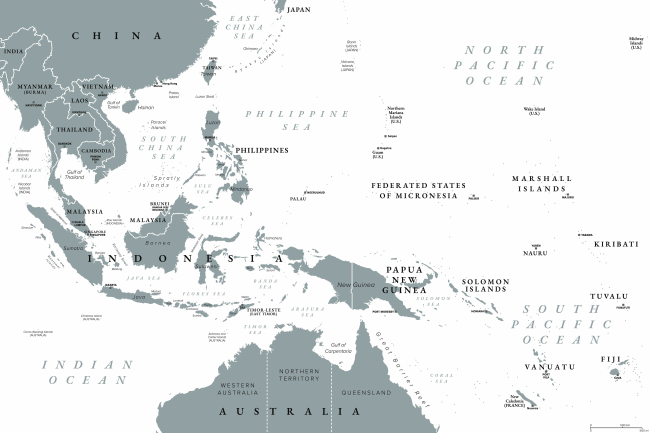
The Oceania Factor in France’s Evolving Indo-Pacific Strategy
This paper examines the two-way relationship between France’s Indo-Pacific strategy and developments in Oceania. Oceania was not a priority in the initial years of France’s Indo-Pacific strategy, as the region was largely treated as secondary to major strategic hotspots and key partnerships, while overseas territories were primarily handled as domestic issues and recipients of a top-down strategy.

France’s View: From Diplomacy to Public-Private Action
France has emerged as the EU’s IMEC forerunner, combining port infrastructure, diplomatic alliances and public-private cooperation. With Marseille Fos at its core, the country brings a strategic hub for logistics, energy and digital connectivity to the corridor.
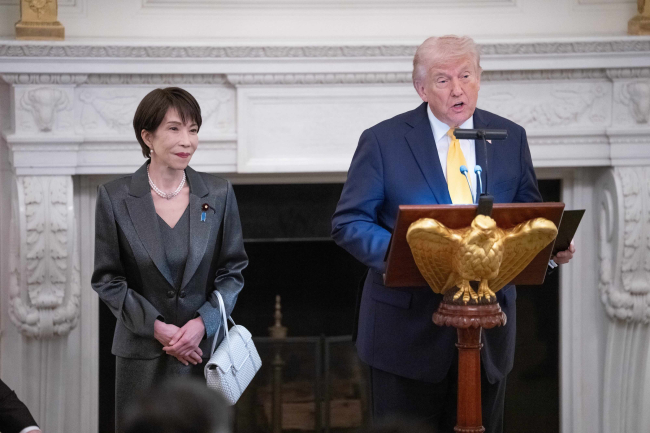
Trump II, the Crisis of the Rules-Based Order and Europe’s Indo-Pacific Strategy
This article examines the implications of Trump II for Europe’s engagement in the Indo-Pacific. The piece contends that Trump II is accelerating the erosion of the rules-based order and undermining the relevance of the Free and Open Indo-Pacific (FOIP) concept, while forcing Europe to refocus on its own continental security amid US retrenchment. Paradoxically, these very constraints create conditions for a more autonomous, pragmatic, and explicitly interest-driven European engagement in the Indo-Pacific, rather than outright withdrawal.
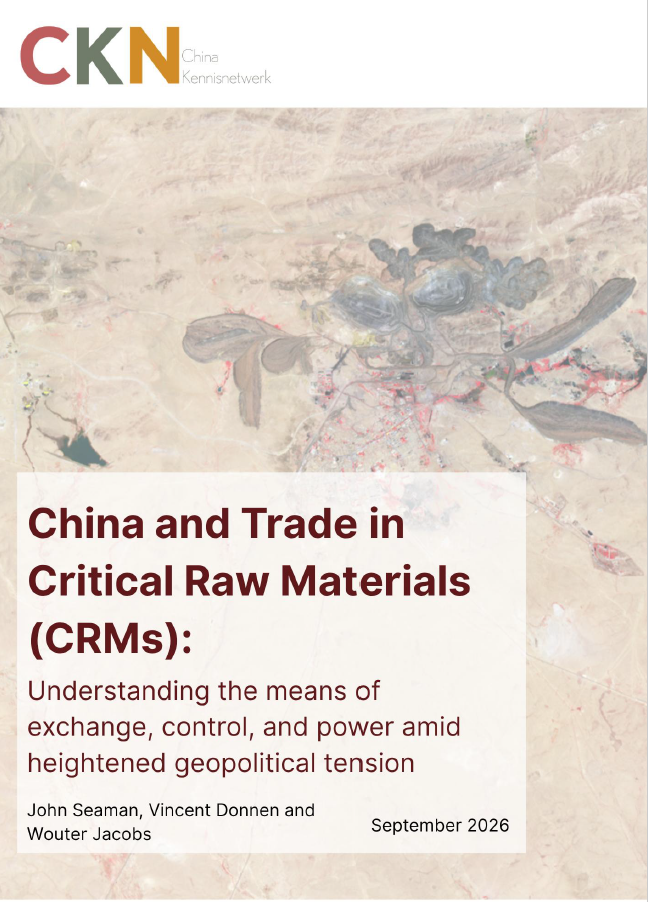
China and Trade in Critical Raw Materials (CRMs)
Critical raw materials (CRMs) have become central features of a new dynamic in global power politics, with China now wielding considerable leverage. Amid rising regional and global uncertainty, resource security is back in the spotlight as a key determinant of sovereignty and national security for Europe, its allies and its partners. The very survival of key, even vital industries, from automotive to aerospace to health to energy to defense, is at stake.