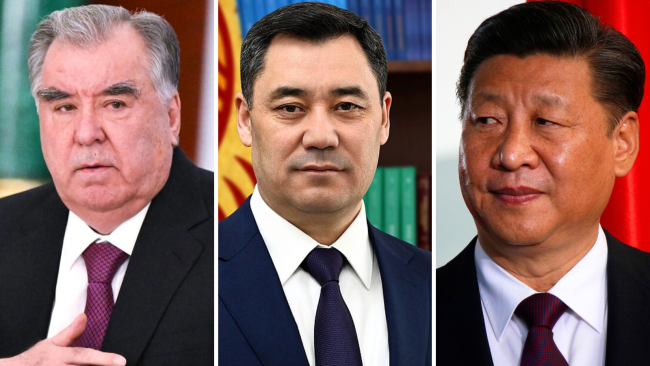
China in Kyrgyzstan and Tajikistan: From Economic Presence to a New Security Role
Over the past three decades, China’s influence in Central Asia has steadily expanded, but in the last three to five years this process has entered a markedly accelerated phase. Following 2022, Beijing effectively revised both its strategy and its operational approach toward the region.
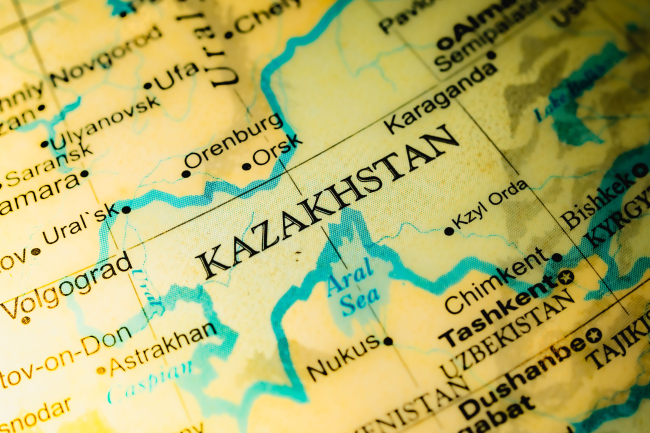
Kazakhstan After the Double Shock of 2022: Political, Economic and Military Consequences
The year 2022 represented a dual shock for Kazakhstan. In January, the country faced its most severe political crisis since independence, followed in February by Russia’s full-scale invasion of Ukraine, which cast uncertainty over the borders of post-Soviet states. These consecutive crises profoundly shaped Kazakhstan’s domestic and foreign policy.
Central Asia: Making Use of a Historic Opportunity
This report analyzes the economic and geopolitical situation in Central Asia.


French Expert Says Afghanistan-Related Challenges Loom Large for Central Asia as Geopolitical Competition Intensifies
Addressing the situation in Afghanistan remains on top of the agenda for Central Asia, said Michael Levystone, an associate research fellow at the Institut Français des Relations Internationale (IFRI) Russia/Eurasia Center, in an exclusive interview with The Astana Times. The expert, who participated in the Astana International Forum (AIF) on June 8-9, also discussed the intensifying geopolitical competition in Central Asia, regional connectivity and water scarcity.
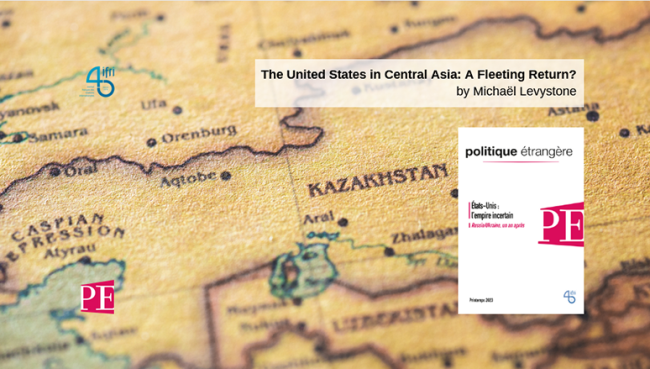
The United States in Central Asia: A Fleeting Return?
The chaotic retreat of the United States from Afghanistan in August 2021 might lead to an expectation of a lasting loss of influence in central Asia.

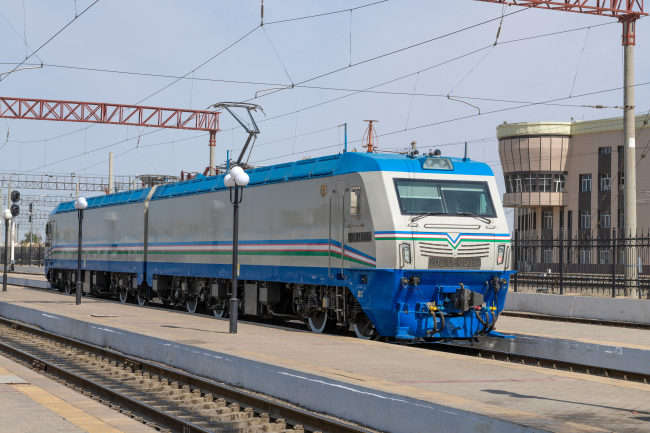
Connectivity in Central Asia at the Crossroads of International Crises: Transport, Energy and Water from Interdependence to New Cooperation Ways
From the reestablishment of an Islamic Emirate in Afghanistan by the Taliban to the war in Ukraine, not forgetting climate change, the most serious international crises, whether circumstantial or systemic, are having a severe impact on connectivity in Central Asia with regard to transport, energy, and water.
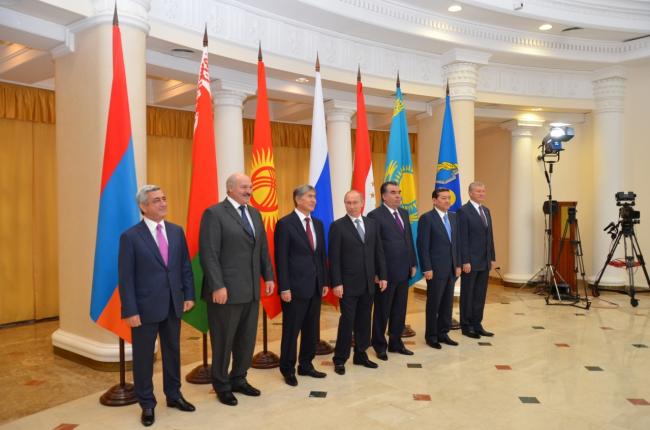
Reflection on Russia’s Changing Image in the Post-Soviet Region
The two years preceding the Russian invasion of Ukraine suggested that Russia had adopted a measured policy toward the post-Soviet space. Faced with social protests in Belarus, a coup in Kyrgyzstan, the victory of pro-European president Maia Sandu in Moldova, the second war in Nagorno-Karabakh, and riots in Kazakhstan, Russia showed diplomatic ability without any hard arm-twisting of partners. In 2020, then Carnegie Moscow Center director Dmitry Trenin even concluded that “there will be no new edition of the empire”. The war in Ukraine has completely changed this analysis.
Envisioning Opportunities for U.S.-Russia Cooperation in and with Central Asia
Central Asia is conventionally seen as a conflicting space for great powers.
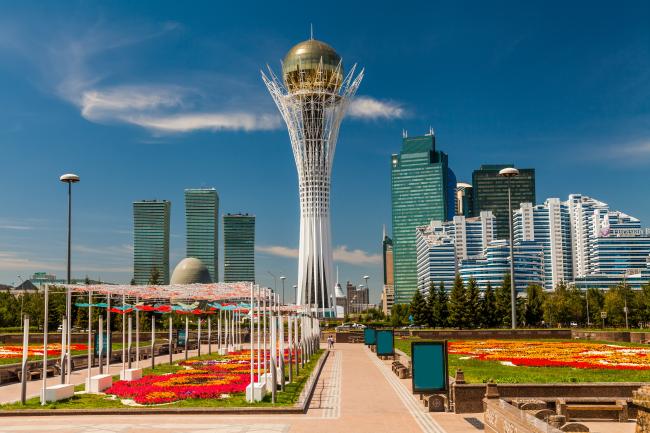
Japan and Central Asia: Do Diplomacy and Business Go Hand-in-Hand?
Japan’s policies in post-Soviet Central Asia, similarly to its actions in other Asian subregions, have often been interpreted recently as reactions to China’s advances – in particular, the Belt and Road Initiative. This first impression can be misleading.
Central Asia: Facing Radical Islam
Twenty-five years after the fall of the Soviet Union and the declaration of independence by the republics of Central Asia, the issue of guaranteeing stability and security still looms large on Central Asia’s agenda.
U.S. Engagement Towards Central Asia: No Great Game After All?
Since the collapse of the Soviet Union in the 1990s, Washington has defined general foreign policy objectives towards the Republics of Kazakhstan, Kyrgyzstan, Tajikistan, Turkmenistan, and Uzbekistan.
Frontiers New and Old: Russia’s Policy in Central Asia
For much of the post-Soviet period, Central Asia has been a backwater of Russian foreign policy. But things are changing. Circumstances in and beyond the region are driving a more committed approach in Moscow.
Asia-Pacific: China’s Foreign Policy Priority
China is increasingly active in the Asia-Pacific region, an area that makes up the main focus of its foreign policy.
Trans Caspian Gas: A Worthy Teething Ring for Europe's Energy Diplomats
As an early task in its efforts to build a common external energy policy, the Commission has announced it will turn its attention to bringing the vast gas resources of Turkmenistan to European consumers. This will be an excellent place for the Commission to test its ability to speak with one voice for its polyglot constituency. First, their task may be facilitated by the fact that on this topic, no European voices are yet particularly audible.
The Shanghai Cooperation Organization as "Geopolitical Bluff?" A View from Astana
Since the mid-1990s, the Shanghai Cooperation Organization (SCO) has been an important factor in, and exerts significant influence on both Kazakhstan's international situation and geopolitical processes in Central Asia. Various aspects of Kazakhstan's interests are included in the SCO, among them geopolitics, security, the economy and regional politics. The topics addressed by the SCO can be divided into wide-ranging and often unconnected problems, which are more often than not solved outside the framework of the SCO. In the end, the SCO is only a great 'geopolitical bluff.' And while the USA seems to be almost an 'unofficial partner' because it so influences Central Asia as a whole, the European Union has almost entirely withdrawn from that geopolitical scene. As yet, the SCO poses more challenges and risks for Kazakhstan than it offers advantages.
China in Kyrgyzstan and Tajikistan: From Economic Presence to a New Security Role
Over the past three decades, China’s influence in Central Asia has steadily expanded, but in the last three to five years this process has entered a markedly accelerated phase. Following 2022, Beijing effectively revised both its strategy and its operational approach toward the region.
Kazakhstan After the Double Shock of 2022: Political, Economic and Military Consequences
The year 2022 represented a dual shock for Kazakhstan. In January, the country faced its most severe political crisis since independence, followed in February by Russia’s full-scale invasion of Ukraine, which cast uncertainty over the borders of post-Soviet states. These consecutive crises profoundly shaped Kazakhstan’s domestic and foreign policy.
Central Asia: Making Use of a Historic Opportunity
This report analyzes the economic and geopolitical situation in Central Asia.
Reflection on Russia’s Changing Image in the Post-Soviet Region
The two years preceding the Russian invasion of Ukraine suggested that Russia had adopted a measured policy toward the post-Soviet space. Faced with social protests in Belarus, a coup in Kyrgyzstan, the victory of pro-European president Maia Sandu in Moldova, the second war in Nagorno-Karabakh, and riots in Kazakhstan, Russia showed diplomatic ability without any hard arm-twisting of partners. In 2020, then Carnegie Moscow Center director Dmitry Trenin even concluded that “there will be no new edition of the empire”. The war in Ukraine has completely changed this analysis.
Envisioning Opportunities for U.S.-Russia Cooperation in and with Central Asia
Central Asia is conventionally seen as a conflicting space for great powers.
U.S. Engagement Towards Central Asia: No Great Game After All?
Since the collapse of the Soviet Union in the 1990s, Washington has defined general foreign policy objectives towards the Republics of Kazakhstan, Kyrgyzstan, Tajikistan, Turkmenistan, and Uzbekistan.
Trans Caspian Gas: A Worthy Teething Ring for Europe's Energy Diplomats
As an early task in its efforts to build a common external energy policy, the Commission has announced it will turn its attention to bringing the vast gas resources of Turkmenistan to European consumers. This will be an excellent place for the Commission to test its ability to speak with one voice for its polyglot constituency. First, their task may be facilitated by the fact that on this topic, no European voices are yet particularly audible.
French Expert Says Afghanistan-Related Challenges Loom Large for Central Asia as Geopolitical Competition Intensifies
Addressing the situation in Afghanistan remains on top of the agenda for Central Asia, said Michael Levystone, an associate research fellow at the Institut Français des Relations Internationale (IFRI) Russia/Eurasia Center, in an exclusive interview with The Astana Times. The expert, who participated in the Astana International Forum (AIF) on June 8-9, also discussed the intensifying geopolitical competition in Central Asia, regional connectivity and water scarcity.
Ifri, a foundation recognized as being of public utility, relies largely on private donors – companies and individuals – to guarantee its sustainability and intellectual independence. Through their funding, donors help maintain the Institute's position among the world's leading think tanks. By benefiting from an internationally recognized network and expertise, donors refine their understanding of geopolitical risk and its consequences on global politics and the economy. In 2026, Ifri partners with over 90 French and international companies and organizations.