



China in Kyrgyzstan and Tajikistan: From Economic Presence to a New Security Role
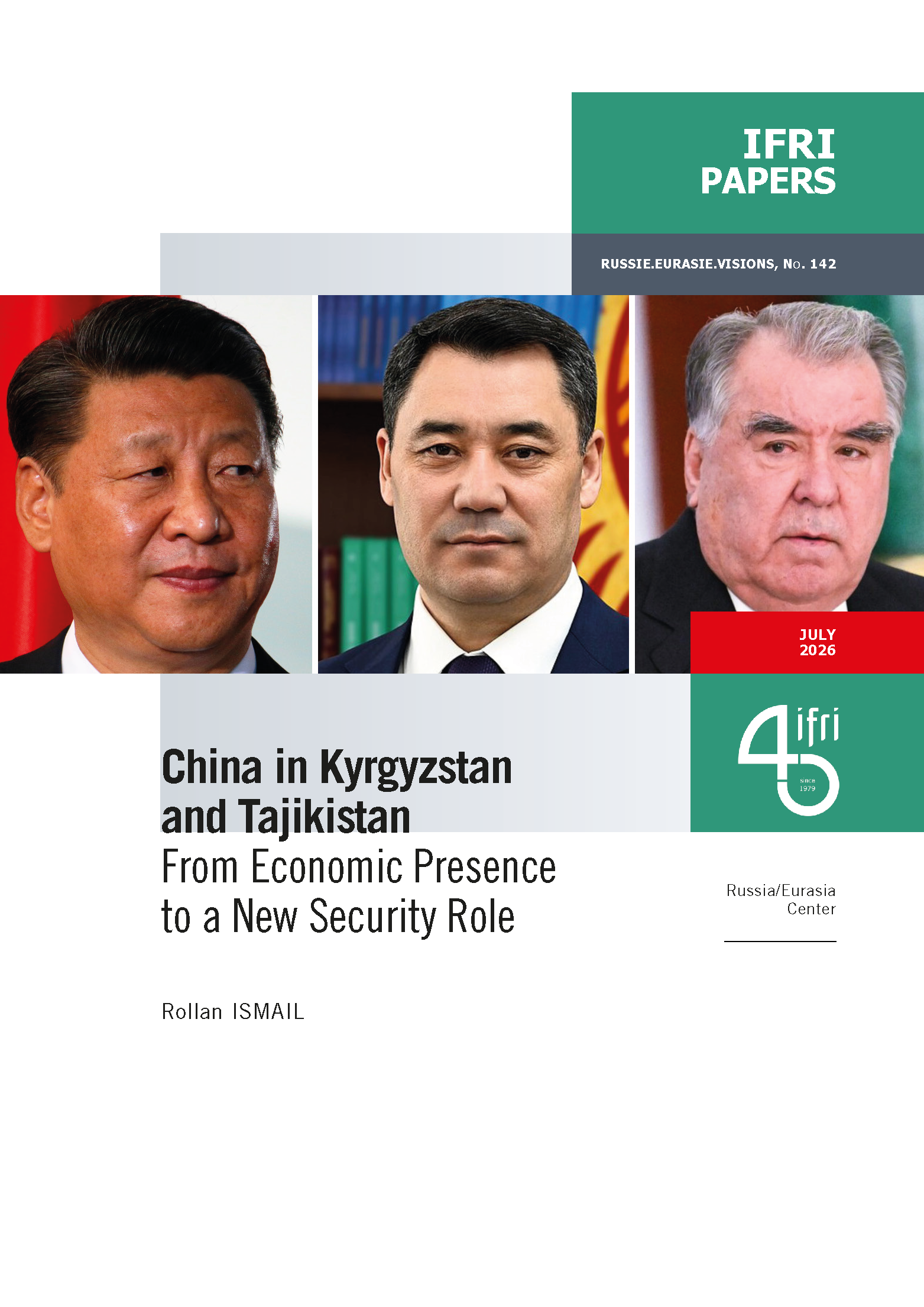
Over the past three decades, China’s influence in Central Asia has steadily expanded, but in the last three to five years this process has entered a markedly accelerated phase. Following 2022, Beijing effectively revised both its strategy and its operational approach toward the region.
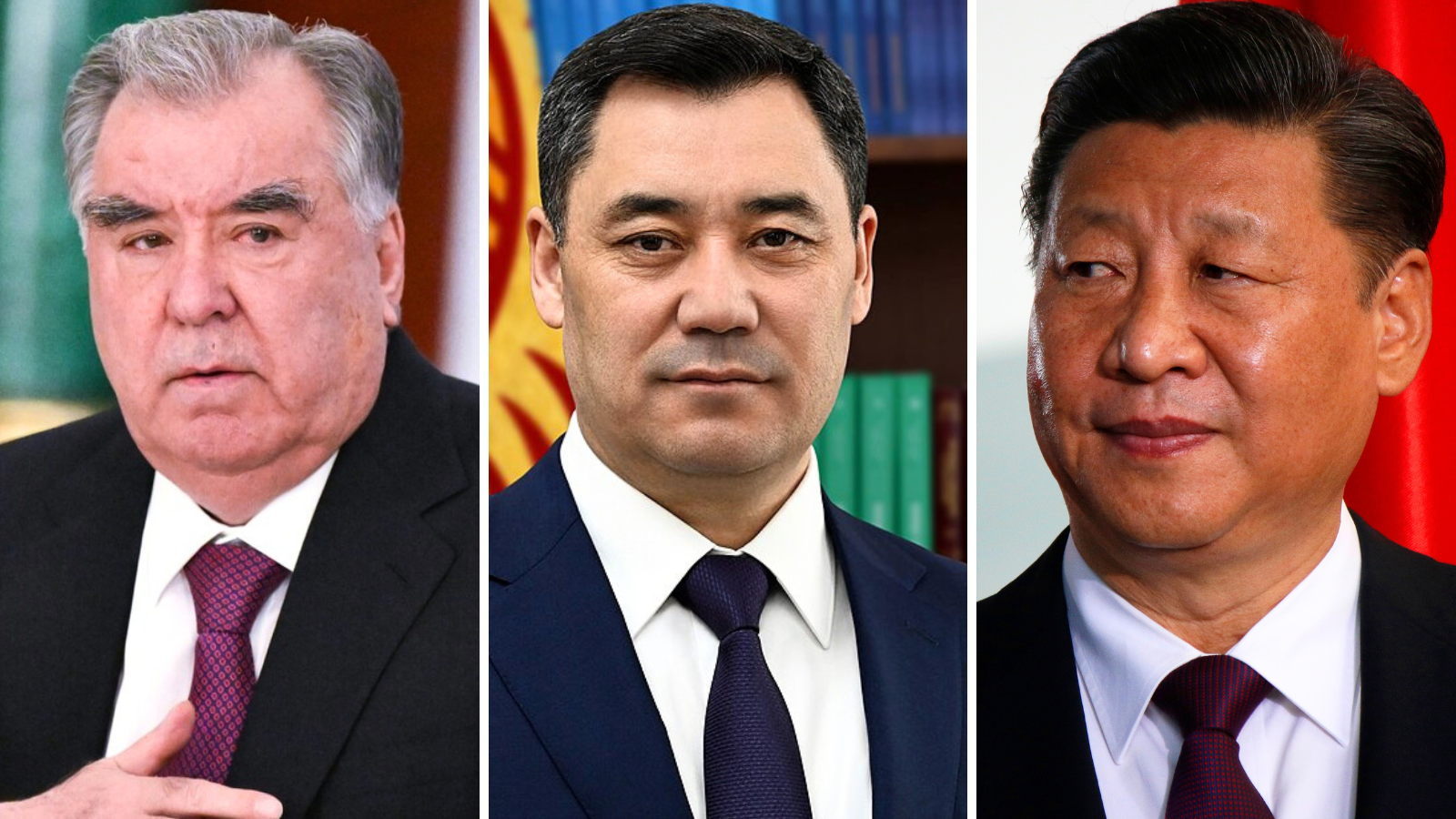
This report examines how China is building its own security architecture in Central Asia by increasing its influence over the domestic stability of regional states and gradually eroding the role of traditional external security guarantors.
Using the cases of Tajikistan and Kyrgyzstan, the study highlights the practical mechanisms through which China’s emerging strategy is being implemented. It argues that the securitization of Chinese influence is fostering growing yet largely concealed competition within the framework of the Sino-Russian partnership while creating new challenges for the states of the region. Increasing dependence on Beijing’s resources and political support is compelling the Central Asian republics to seek new ways of preserving their strategic autonomy amid a shifting regional balance of power.
Central Asia is once again assuming a growing role in international affairs, largely as a result of intensified competition among external powers for strategic influence across the Eurasian continent. Against this backdrop, the notion of China’s “growing influence” has become a widely accepted narrative. In our view, however, this formulation no longer fully captures the complexity and depth of the transformations currently underway. Rather, it would be more accurate to argue that, particularly since 2022, the region has witnessed a qualitatively new phase in the expansion of China’s strategic influence and policy instruments in Central Asia. This transformation has been driven by several interrelated factors.
First, as a result of a deliberate long-term strategy, China is evolving from a predominantly economic partner into an increasingly significant political actor and, in some cases, a provider of security. Beijing is moving beyond its traditional focus on trade and energy imports, extending its reach from digital and critical infrastructure into the spheres of regional security and military-technical cooperation.
Second, Chinese engagement has become increasingly institutionalized through the C5+China format, which has emerged as Beijing’s principal mechanism for engagement with all five Central Asian states at the highest political level.
Third, much as Russia did in previous decades, China has begun paying closer attention to domestic political dynamics in Central Asian countries. Beijing increasingly recognizes that the protection of its long-term interests depends on the preservation of stable and politically friendly regimes and elites. Although China does not yet possess the same degree of political influence as Russia, the broader trend is evident: Beijing is gradually moving beyond a model centered primarily on economic engagement toward a more comprehensive strategy aimed at safeguarding its position in the region. This does not entail direct intervention along Russian lines. Rather, it involves the expansion of indirect influence through closer engagement with ruling elites, stronger party-to-party ties, and the promotion of governance, surveillance, and digital-management solutions linked to state administration and security. For China, the stability of Central Asian regimes is important not only for protecting investments and transport corridors but also for preventing the mobilization of anti-Chinese sentiment, the rise of nationalism, and the penetration of competing external actors. It is therefore reasonable to expect that, in the coming years, Beijing will continue to expand its presence—cautiously but steadily—in those sectors most closely connected to the domestic resilience of regional states, thereby increasing their dependence on Chinese resources, technologies, and political support.
Fourth, despite the officially proclaimed strategic partnership between Moscow and Beijing, the expansion of Chinese influence in Central Asia inevitably creates the conditions for latent tensions with Russian interests. As China moves beyond trade, investment, and infrastructure and becomes increasingly active in domains traditionally regarded as areas of privileged Russian influence, the scope for tacit competition is bound to expand. For Moscow, this trend implies the gradual erosion of its exclusive status as the region’s primary external security guarantor. For Beijing, it offers an opportunity to draw Central Asian states more deeply into its own emerging security ecosystem. The result is the gradual emergence of a new model in which Russia and China continue to demonstrate coordination and mutual support at the official level, while at the practical level they engage in cautious competition over access to political elites, influence over strategic decision-making, and the long-term configuration of regional order.
Finally, these developments have generated mixed reactions within the Central Asian states themselves. While China’s growing presence creates new economic opportunities, it also generates challenges for national security by increasing structural dependence and narrowing the space for strategic maneuver.
Against this backdrop, the present report examines the trends and drivers underpinning the qualitative expansion of China’s strategic influence in Central Asia. Particular attention is paid both to Beijing’s policies and to the responses of regional states. The cases of Tajikistan and Kyrgyzstan serve as the report’s primary focus. These countries increasingly function as testing grounds for new methods and instruments of Chinese regional strategy, offering especially revealing examples of China’s growing influence in sensitive security-related domains. An examination of developments in these two republics makes it possible to identify with particular clarity the early signs of latent competition that may, over time, generate new sources of tension between established and emerging external actors in the region.
At the same time, the strengthening of Chinese influence should not be interpreted as the automatic displacement of Russia from Central Asia. Moscow continues to enjoy significant advantages based on the enduring role of the Russian language, extensive political and security networks, institutional legacies, and its position as the principal destination for labor migration from the region. For both Tajikistan and Kyrgyzstan, migrant remittances remain a critical component of economic stability. Consequently, the current process is better understood not as a replacement of Russian influence by Chinese influence, but rather as a more complex reconfiguration of external power relations. Nevertheless, Beijing is increasingly seeking to convert its economic and financial capital into political and strategic leverage.
From a methodological perspective, this study deliberately moves beyond more traditional analytical frameworks. Rather than examining shifts in the regional balance of power solely through the strategic imperatives of Beijing or other major powers, it also considers the perspectives of Central Asian elites and societies themselves. Concepts such as the “Great Game” or “Greater Central Asia” illustrate the enduring tendency to view the region primarily through the interests of external actors. Such approaches often distort reality by marginalizing the agency of Central Asian states and overlooking their domestic motivations and priorities.
To ensure analytical depth and objectivity, the report relies on a broad empirical foundation. First, it conducts a systematic examination of primary sources, including official documents, development strategies, and bilateral agreements between China, Tajikistan, and Kyrgyzstan. Second, the study draws on semi-structured in-depth interviews with experts from Kyrgyzstan and Tajikistan as a key tool for validating findings and identifying less visible trends. Interviewees were selected on the basis of professional expertise and direct engagement with the issues under examination. All interviews were conducted on an anonymous basis, enabling respondents to speak more openly about sensitive topics and providing access to assessments that are not always reflected in the public domain.
Rollan Ismail is a sinologist and an expert at a private think tank in one of the Central Asian countries. His research focuses on the evolution of China’s strategy in the region within the context of broader discussions on multipolarity and the transformation of the international order.

Available in:
Themes and regions
ISBN / ISSN
Share
This page contains only a summary of our work. If you would like to have access to all the information from our research on the subject, you can download the full version in PDF format.
China in Kyrgyzstan and Tajikistan: From Economic Presence to a New Security Role

Russia/Eurasia Center
Founded in 2005 within Ifri, the Russia/Eurasia Center conducts research and organizes debates on Russia, Eastern Europe, Central Asia, and the South Caucasus. Its goal is to understand and anticipate the evolution of this complex and rapidly changing geographical area in order to enrich public discourse in France and Europe and to assist in strategic, political, and economic decision-making.
The Plight of Russia’s Air Power in the Ukraine War: Drone-Driven Innovations and Transformation of Traditional Air Force
Since the start of the Ukraine War, Russian strategic guidelines on the application of air power—seen as the decisive instrument for achieving success in modern wars—have proven to be outdated, irrelevant and even self-defeating.

Between Russia and Europe, between War and Peace: What is at Stake in Armenia’s Upcoming Elections?
Armenia’s June 7, 2026, parliamentary election is shaping up less as a routine vote than as a referendum on Nikol Pashinyan’s post-2020 course, which includes peace with neighbors, reduced dependence on Russia, and a more explicit European orientation. The ruling Civil Contract party is still the frontrunner, but its position is fragile, as the campaign is being fought in a highly polarized environment shaped by the trauma of defeat in the war against Azerbaijan, the displacement of Karabakh Armenians, and the massive election interference from Russia.
Russia, the Palestinians and Gaza: Adjustments after October 7th
The Soviet Union (USSR), and subsequently the Russian Federation as its internationally recognized legal successor, has consistently sought to play a visible role in efforts to resolve the Israeli-Palestinian conflict.
Deathonomics: The Social, Political, and Economic Costs of War in Russia
The report attempts to outline and examine a truly new phenomenon in Russian society, dubbed “deathonomics”—the making of a mercenary army against the backdrop of the Kremlin’s war in Ukraine, eventually replacing both the Soviet (conscript) and early new Russian (contract) armies. It notes that, by the end of 2023, this trend had turned the military service into one of the highest-paying professions in the country, something not seen in Russia on such a scale since the late 17th century.