








El desfile militar pone a prueba las tensas relaciones entre China y Japón
Los actos que esta semana organiza China para conmemorar el 70 aniversario de su victoria ante Japón, coronados por un desfile militar en la plaza de Tiananmen, plantean un nuevo desafío a los lazos entre Pekín y Tokio, ya dañados en los últimos años por desavenencias históricas y territoriales.
Chine/Corée du Sud/Japon: un passé qui ne passe pas
Cet été marque le 70ème anniversaire de la fin de la deuxième guerre mondiale avec le largage des bombes atomiques sur Hiroshima et Nagasaki en Août 1945. Alors que les relations entre la Chine et la Corée du Sud sont au beau fixe, Pékin et Séoul entretiennent des rapports tendus avec Tokyo.
Why Putin Is Squaring Off With Tokyo Over Some Pacific Rocks
Disputed rocks and Beijing’s bad behavior in the South China Sea dominate the headlines these days. But there’s another showdown over disputed islands in the Pacific that is increasingly casting a shadow over Asia-Pacific security: a bitter fight between Japan and Russia over the Kurils...
Japan's Energy and Climate Policy: Towards Dispelling the Uncertainties
Four years after the Great East Japan Earthquake and a few months before the opening of the Paris Climate Conference, Japan is about to clarify its energy and climate policy.
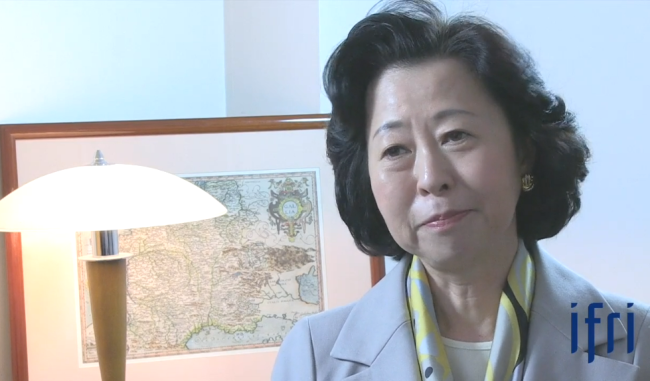
(Dis)integrating Asia? - Interview with Yukiko Fukagawa
Yukiko Fukagawa, Professor at the Graduate School of Economics, Waseda University, explained Japan's role in the regional integration process.
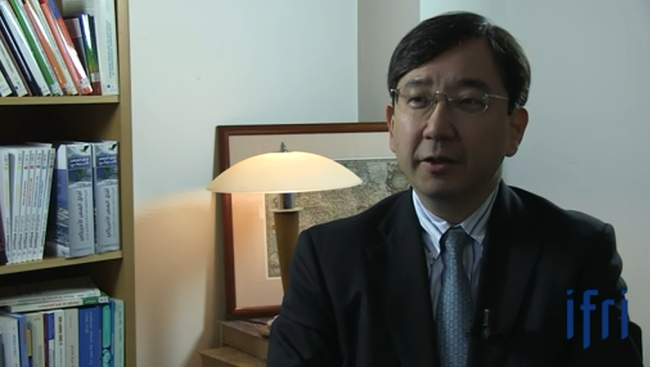
(Dis)integrating Asia? Interview with Toshiro Iijima
Toshiro Iijima, Deputy Director-General of the Japan Institute of International Affairs (JIIA), expressed his views on the following questions:
- How is the geopolitical transformation of Asie most affecting Japan?
- What is Japan's vision on shaping regional frameworks?
- Which regional entities should be the primary drivers in shaping regional frameworks?
Click here to read the program of the conference.

Nationalism in China and Japan and Implications for Bilateral Relations
Nationalism appears to be an important part of the growing frictions between China and Japan.
In Japan, the return to power of Shinzo Abe as prime minister, and the historic breakthrough of an extreme right-wing party onto the political scene reinforce the view that there has been a clear shift to the right. Public opinion is today also more realistic about direct security threats to Japan.
Volcanic Activity and Nuclear Security in Japan
At the beginning of 2014, Japan experienced the deadliest volcanic eruption on its territory in over a century. The unpredictable nature of the event reignited fears of the risks of nuclear power plants.
European Defense Revisited / The United Kingdom and the EU: in or out?
The United States - South Korea Military Alliance in Question
The alliance born of the Korean War trades the assurance of security for Seoul with a certain alignment with Washington.
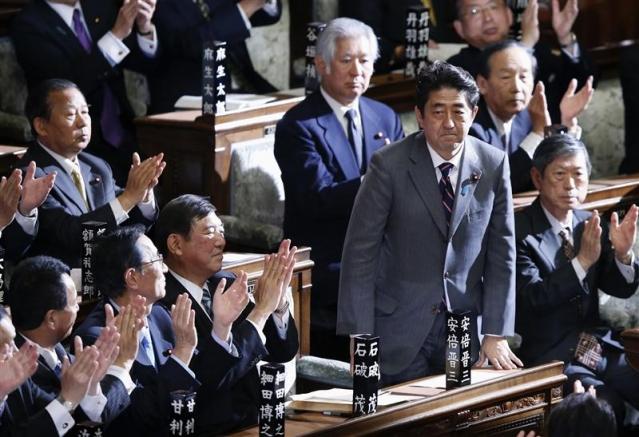
Législatives au Japon: une victoire pour les "abenomics"
Lancées début 2013 pour tirer l’Archipel de la déflation, les « Abenomics » sont d’ambitieux programme de relance du premier ministre, Shinzo Abe.
Invité: l’économiste Claude Meyer spécialiste de la zone Asie.
Japan's Energy Policy in a Post-3/11 World: Juggling Safety, Sustainability and Economics
The March 2011 accident at the Fukushima Daiichi Nuclear Power Station turned Japan’s energy policy on its head, shedding a harsh new light on Japan’s energy policy and power supply system, and throwing into relief six major problem areas that had largely escaped scrutiny before the disaster.
Abe’s Japan and Xi’s China: from Cold Peace to Hot War?
Sino-Japanese relations have deteriorated since Shinzo Abe and Xi Jinping came to power.
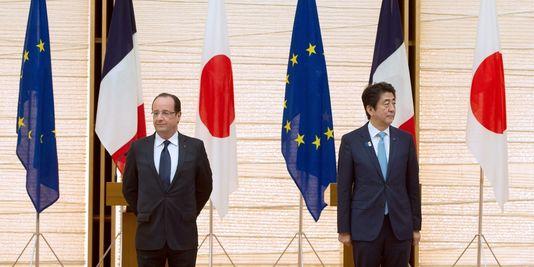
Will Europe’s Past be East Asia’s Future?
There are some disturbing similarities between present-day Asia and pre-1914 Europe.
Japon : la cure de jouvence d'Abe
À rebours de la stratégie européenne d'austérité et de réduction des déficits, Tokyo a fait le choix de la relance et de l'investissement pour redresser une économie mise à mal depuis vingt ans.
Ballistic Missile Defense in Japan: Deterrence and Military Transformation
In December 2003, Japan decided to be the second country in the Asia-Pacific to deploy a ballistic missile defense (BMD) system.
A EU-Japan Free Trade Agreement: Toward More Solid Economic Relations
Ifri, a foundation recognized as being of public utility, relies largely on private donors – companies and individuals – to guarantee its sustainability and intellectual independence. Through their funding, donors help maintain the Institute's position among the world's leading think tanks. By benefiting from an internationally recognized network and expertise, donors refine their understanding of geopolitical risk and its consequences on global politics and the economy. In 2026, Ifri partners with over 90 French and international companies and organizations.
