










After support for Ukraine, Kishida aims for NATO unity on China
When Prime Minister Fumio Kishida becomes the first Japanese leader to attend a NATO leaders summit on Wednesday, he’ll be looking to stress the need for unity in preventing China from taking the “wrong lessons” from the Ukraine war as the bloc looks to expand its footprint in the Indo-Pacific.
Japan steps up its Africa engagement
Laying the foundation for the Eighth Tokyo International Conference on African Development (TICAD), Japanese Foreign Minister Yoshimasa Hayashi held talks on 28 March 2022 with ministers from 50 African nations. Hayashi expressed concerns that the COVID-19 pandemic and the war in Ukraine had increased the economic and social vulnerabilities of African countries — deepening their dependence on China. He subsequently committed to increase Japan’s cooperation with Africa.

Rapprochement in Times of Crisis: War in Ukraine and the EU-Japan Partnership
The war in Ukraine has shaken the foundations of European security and of the global rules-based order. In many ways, Russia’s aggression has been a wake-up call for the EU, adding a sense of urgency to its ongoing transformation to becoming a stronger geopolitical actor, materialised by the recent publication of its Strategic Compass – its first-ever white paper for security and defence.
Japan's upgraded economic security strategy
An interview with Kazuto SUZUKI, Professor, Graduate School of Public Policy, University of Tokyo.
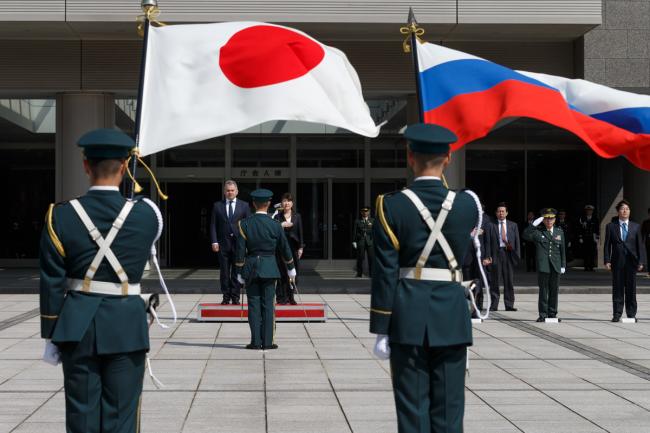
Japan-Russia: The end of delusions
The war in Ukraine has led to a major rift between Japan and Russia.

Convince and Coerce: U.S. Interference in Technology Exchanges Between its Allies and China
The tough-on-China policy adopted by the Trump and Biden administrations has – and will increasingly have – important consequences for Washington’s allies, both on their infrastructure choices (5G, submarine cables...) and on their technological exchanges with China.
Developments in Japan’s Defense Strategies and Readiness: Is the Glass Half Full or Half Empty?
On December 18, 2018, the Japanese government issued its latest National Defense Program Guidelines (NDPG), marking another step in Japan’s defense planning and the readiness of the Japan Self-Defense Force (JSDF).

Japan’s Infrastructure Investment in the Indian Ocean: Checking China, Securing the Sea Lanes
In the 2010s, Japan gradually increased economic connections with the Indian Ocean region (IOR) through trade, foreign direct investment, and official development assistance (ODA).

Can the Biggest Emitters Set Up a Climate Club? A Review of International Carbon Pricing Debates
The world’s largest emitting countries are reconsidering the role of carbon pricing instruments and increasingly looking at carbon border adjustment mechanisms (CBAMs) to address leakage concerns. This renewed momentum should trigger a broader discussion on how to make trade policies compatible with the climate agenda.
EU-Japan Relations: Moving Forward
EU-Japan relations have undergone a major uplift over the past 5 years. Bound by the Economic and Strategic Partnership Agreements, as well as the Partnership on Sustainable Connectivity, the two once-distant players have been stepping up efforts to address the many shared security concerns in the Indo-Pacific and beyond. Ahead of the upcoming EU-Japan summit, this Policy Brief takes stock of the current state of play and offers some food for thought on how to move forward with the bilateral relationship.

Tensions at Sea in East Asia: A Japanese View on Chinese Lawfare Practices
Tensions at sea are growing and multiplying both in the East and the South China Seas.
As Europe's interest in the Indo-Pacific grows, is Japan ready to lead the way?
Alarmed by China’s rising power, its frictions with neighboring countries in the East and South China seas, allegations of human rights abuses in the Xinjiang region and crackdowns in Hong Kong, European countries are seeking to step up their involvement in the Indo-Pacific region.
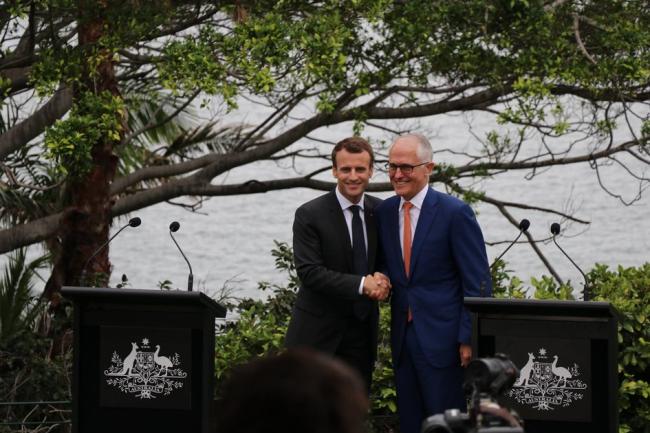
France’s strategic engagement in the Indo-Pacific makes a difference: Here is why
Let’s face it: while there are growing expectations for a French and European enhanced engagement in the Indo-Pacific, when Europeans step up their commitment, or express their willingness to do so, they are often met with disdain, on the ground that they would not make a big difference in front of China. Is that really so?

Digitalization in the (post) COVID World: Views from Japan and Europe
The COVID-19 crisis has highlighted the importance of accelerating the digital transformation of both the industry and the society.

Rethinking Health Governance in the COVID era: Visions from Europe and Japan
The COVID-19 pandemics has highlighted the significance, as well as the deep crisis of the health governance system.
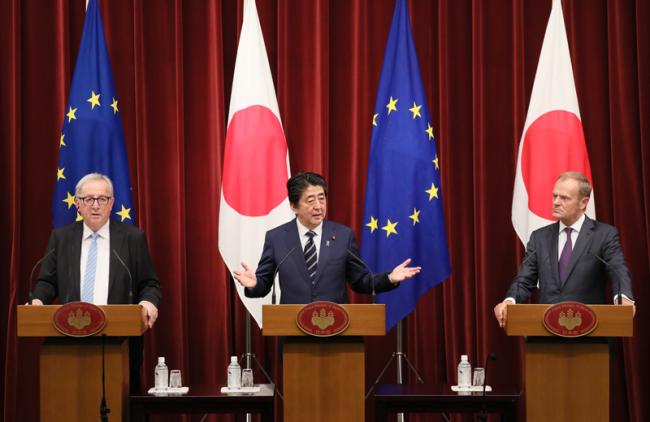
The EU-Japan partnership in the Indo-Pacific: opportunities and challenges
This paper analyses the common and divergent interests of Japan and the EU in the Indo-Pacific and identifies the most promising areas for cooperation.
Japan’s Cybersecurity Strategy: From the Olympics to the Indo-Pacific
In September 2020, the Ifri Center for Asian Studies held an online event on Japan’s cybersecurity strategy.
Japan’s Economic Diplomacy in Africa: Between Strategic Priorities and Local Realities
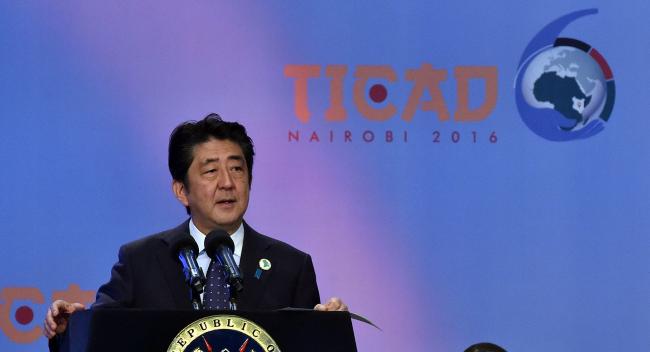
During his term in office (2012-2020), Prime Minister Shinzo Abe sought to demonstrate Japan's high level of interest in Africa, including by pledging a total of $ 60 billion in financial support at the 2013 and 2016 Tokyo International Conference on African Development (TICAD) summits and announcing his vision for a “Free and Open Indo-Pacific” (FOIP) at the TICAD-VI in Nairobi.

Improving Economic Security: Proposals from Japan
The COVID-19 crisis has made clear the importance of resilient supply chains and effective economic security.
What are the impact of the COVID-19 crisis on Japan's economic security?
In this interview, Shin Oya, Senior Consulting Fellow, Asia Pacific Initiative and Chief Representative for Strategic Research, JBIC looks at COVID-19's impact on economic security in Japan.
Japan’s Trade Policy in the Midst of Uncertainty
The multilateral trading system under the World Trade Organization (WTO) has been of the utmost importance for Japan’s trade policy.
A New Japan-France Strategic Partnership: A View from Tokyo
On the occasion of the conference held on the 22 November 2018 marking the 160th anniversary of Franco-Japanese diplomatic relations, Ifri publishes two parallel articles offering French and Japanese perspectives on the bilateral security partnership. Céline Pajon’s analysis of French point of view is available here.
A New Japan-France Strategic Partnership: A View from Paris
On the occasion of the conference held on the 22 November 2018 marking the 160th anniversary of Franco-Japanese diplomatic relations, Ifri publishes two parallel articles offering French and Japanese perspectives on the bilateral security partnership. Michito Tsuruoka's analysis of Japan's point of view is available here.

Japan’s Hydrogen Strategy and Its Economic and Geopolitical Implications
With the Basic Hydrogen Strategy (hereafter, the Strategy) released on December 26, 2017, Japan reiterated its commitment to pioneer the world’s first “Hydrogen Society”. The Strategy primarily aims to achieve the cost parity of hydrogen with competing fuels, such as gasoline in transport and Liquified Natural Gas (LNG) in power generation.
The Japan-India Economic Partnership: A Politically Driven Process
In the last decade, the strengthening of the India-Japan strategic partnership has been primarily driven by geopolitical considerations, in an era of competing regional visions and influence.

Catching Up or Staying Ahead. Japanese Investment in the Mekong Region and the China Factor
There is no denying that the Mekong region has become an economic battleground where Japan and China are competing to gain and sustain economic influence in the region.
Democracy in Asia: Models, Trends and Geopolitical Implications
Assessing the state of democracy in Asia is a challenge. While some countries, such as Japan and India, have been showing the way from early days, some others, such as in Southeast Asia are still struggling to ensure stable and sustainable democratic institutions and practices.
A Brave New World for Trade
The global environment for trade is undergoing significant changes. New emerging players such as China are aiming to adapt the rules and institutions inherited from the postwar Bretton Woods system.
Japan and Russia’s Small Steps Strategy
On the eve of the Vladivostok Summit, should we expect any significant progress in the laborious rapprochement between Japan and Russia?
France and Japan in Africa: a Promising Partnership
If some African countries are on their way to achieving dynamic economic growth, many are also still struggling with a lack of economic and social infrastructure, latent governance issues and often complex and risky security environments. In this context, both Japan and European countries, especially France, are making efforts to increase not only their development assistance, but also private investments and security cooperation in Sub-Saharan Africa.
Japan's Security Policy in Africa: The Dawn of a Strategic Approach?
This paper documents new features of Japan's diplomacy that tends to gradually integrate Africa into Japan's strategic interests.

Political Targets: Womenomics as an Economic and Foreign Relations Strategy
This paper provides an overview of the womenomics strategy launched by Japan Prime Minister Shinzo Abe, and shows how a plan designed to mitigate Japan’s demographic crises and labor shortages also evolved into a foreign relations strategy to help manage Japan’s reputation abroad on gender equality.

Japan: The Reluctant Cyberpower
Japan’s cyberdefenses remain underdeveloped compared to the country’s great reliance on information and communications technology. Despite Japan’s initial slow response to the security challenges emerging from cyberspace, this paper posits that cybersecurity under the administration of Japanese Prime Minister Shinzo Abe has moved to the core of the country’s national security policy. The 2020 Olympics Games are a major catalyst for this.
South China Sea and the Law of the Sea: Where is China’s Power Heading?
On Tuesday July 12th, after three years of deliberations, the Permanent Court of Arbitration finally delivered its verdict on the conflict opposing the Philippines and China over status of the Spratly Islands in the South China Sea. The judgment is historic, as it goes far beyond the expectations of the involved parties and observers.
Japan's New Dual-Use Space Policy: The Long Road to the 21st Century
Japan’s latest space policy is designed to support a more proactive US-Japan alliance role in containing China, and robustly defend Japan against North Korean ballistic missile threats.

Tokyo face aux désastres naturels : leçons, enjeux et défis
While Tokyo prepares to welcome the 2020 Summer Olympic Games, the likelihood that a massive earthquake will occur in the capital city within the next thirty years is estimated at 70 %. This fact alone reflects the challenges that Japan must face in managing the risk of natural disasters.
Determinants of Japan’s ODA Allocation in Africa
The debate on emerging donors raises a question whether traditional donors really follow their own ODA (Official Development Assistance) policies or not. This paper addresses the question by investigating Japan’s adherence to its own ODA policies.

Japan's Challenges in Public Diplomacy, An American Vision
Japan’s public diplomacy (PD) profile rests almost exclusively on the promotion of its cultural soft power. Today, in the complex geopolitical setting of Asia, in which national rivalries are reviving competing wartime history narratives and territorial disputes, this approach is no longer sufficient to advance Japan’s own national interests and gain favorable opinion abroad. Under the Prime Minister Abe, Japan has begun to transform and upgrade its public diplomacy. However, the country is still facing a number of challenges.
Nationalism in China and Japan and Implications for Bilateral Relations
Nationalism appears to be an important part of the growing frictions between China and Japan.
In Japan, the return to power of Shinzo Abe as prime minister, and the historic breakthrough of an extreme right-wing party onto the political scene reinforce the view that there has been a clear shift to the right. Public opinion is today also more realistic about direct security threats to Japan.
European Defense Revisited / The United Kingdom and the EU: in or out?
Ifri, a foundation recognized as being of public utility, relies largely on private donors – companies and individuals – to guarantee its sustainability and intellectual independence. Through their funding, donors help maintain the Institute's position among the world's leading think tanks. By benefiting from an internationally recognized network and expertise, donors refine their understanding of geopolitical risk and its consequences on global politics and the economy. In 2026, Ifri partners with over 90 French and international companies and organizations.
