

Abe dissolves Japan Parliament ahead of snap elections
On Thursday, Japanese Prime Minister Shinzo Abe dissolved Japan’s parliament, the starting pistol for the snap elections he called a year early to get over a “national crisis.”
Japan and Russia’s Small Steps Strategy
On the eve of the Vladivostok Summit, should we expect any significant progress in the laborious rapprochement between Japan and Russia?
France and Japan in Africa: a Promising Partnership
If some African countries are on their way to achieving dynamic economic growth, many are also still struggling with a lack of economic and social infrastructure, latent governance issues and often complex and risky security environments. In this context, both Japan and European countries, especially France, are making efforts to increase not only their development assistance, but also private investments and security cooperation in Sub-Saharan Africa.
What Role for Japan in Africa's Security After Withdrawal from South Sudan?
There is still a big gap between the discourse and the reality of what Japan wants - and what it can achieve in Africa.
Japan's Security Policy in Africa: The Dawn of a Strategic Approach?
This paper documents new features of Japan's diplomacy that tends to gradually integrate Africa into Japan's strategic interests.

Political Targets: Womenomics as an Economic and Foreign Relations Strategy
This paper provides an overview of the womenomics strategy launched by Japan Prime Minister Shinzo Abe, and shows how a plan designed to mitigate Japan’s demographic crises and labor shortages also evolved into a foreign relations strategy to help manage Japan’s reputation abroad on gender equality.

Japan: The Reluctant Cyberpower
Japan’s cyberdefenses remain underdeveloped compared to the country’s great reliance on information and communications technology. Despite Japan’s initial slow response to the security challenges emerging from cyberspace, this paper posits that cybersecurity under the administration of Japanese Prime Minister Shinzo Abe has moved to the core of the country’s national security policy. The 2020 Olympics Games are a major catalyst for this.
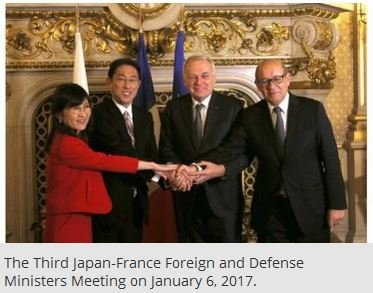
Japan and France: Slowly but Surely Moving Forward on Security Cooperation
Despite being geographically distant, France and Japan share a number of converging interests.
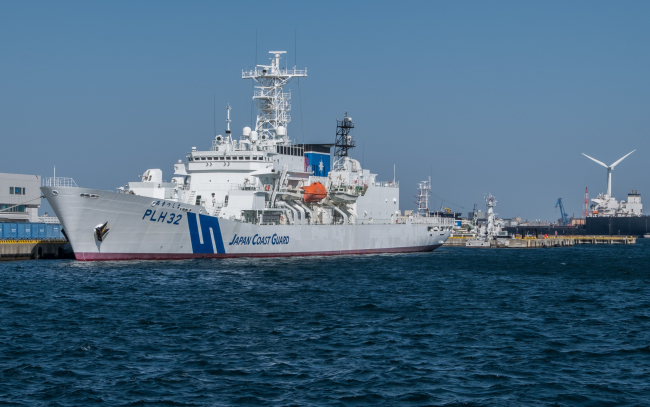
Japan’s Coast Guard and Maritime Self-Defense Force in the East China Sea: Can a Black-and-White System Adapt to a Gray-Zone Reality?
This essay examines the need for growing coordination between the Japan Coast Guard (JCG) and the Japan Maritime Self-Defense Force (JMSDF) to better cope with gray-zone situations.
Japan's New Dual-Use Space Policy: The Long Road to the 21st Century
Japan’s latest space policy is designed to support a more proactive US-Japan alliance role in containing China, and robustly defend Japan against North Korean ballistic missile threats.
Latin America's Dashed Hopes
Only recently, Latin America seemed to embody an inexorable movement towards political democratization, towards a decrease in stark inequalities as well as greater involvement in the global economy. But the dream remains unrealized.
South China Sea and the Law of the Sea: Where is China’s Power Heading?
On Tuesday July 12th, after three years of deliberations, the Permanent Court of Arbitration finally delivered its verdict on the conflict opposing the Philippines and China over status of the Spratly Islands in the South China Sea. The judgment is historic, as it goes far beyond the expectations of the involved parties and observers.

The Role of Sub-National Actors in Climate Change Policy. The Case of Tokyo
Tokyo is known as a pioneer throughout the history of Japan’s environmental policy, often being compared to California in the United States or Paris in France. Following the global trend of growing local initiatives tackling climate change, Tokyo introduced a cap-and-trade scheme in 2010 ahead of a national implementation.
Determinants of Japan’s ODA Allocation in Africa
The debate on emerging donors raises a question whether traditional donors really follow their own ODA (Official Development Assistance) policies or not. This paper addresses the question by investigating Japan’s adherence to its own ODA policies.
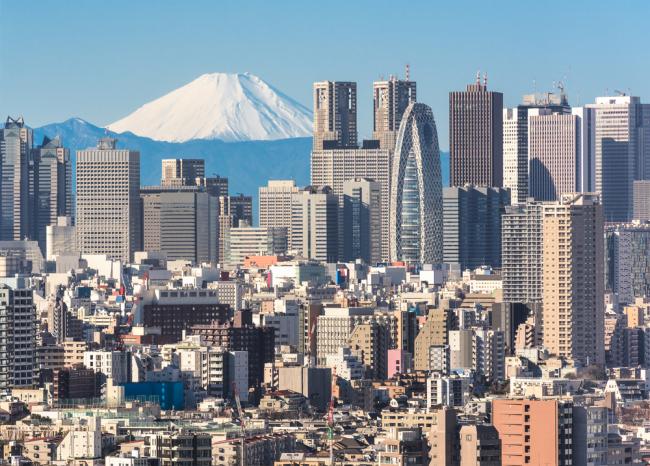
Tokyo face aux désastres naturels : leçons, enjeux et défis
While Tokyo prepares to welcome the 2020 Summer Olympic Games, the likelihood that a massive earthquake will occur in the capital city within the next thirty years is estimated at 70 %. This fact alone reflects the challenges that Japan must face in managing the risk of natural disasters.
Cooperation Despite Frictions in Northeast Asia
Despite the political tensions that oppose Japan, China and South Korea, recent months have seen a certain rapprochement between Tokyo, Seoul and Beijing. The first trilateral summit in three years was held in November 2015.
Cooperation Despite Frictions in Northeast Asia
Cooperation Despite Frictions in Northeast Asia
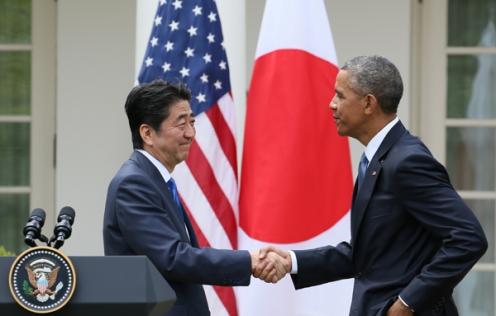
Japan and its Alliance with the US. Structure, Dynamics, Evolution to 2030
China’s rise, US rebalancing in Asia, historic defense reforms in Japan, the adoption of new Guidelines for bilateral cooperation: the Japan-US alliance has reached a turning point in its history.
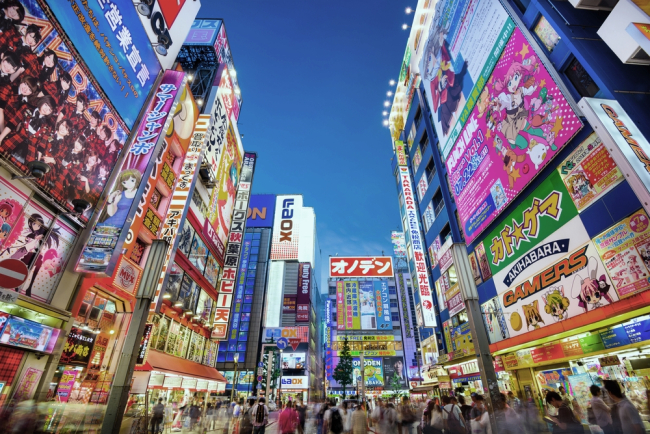
Japan's Challenges in Public Diplomacy, An American Vision
Japan’s public diplomacy (PD) profile rests almost exclusively on the promotion of its cultural soft power. Today, in the complex geopolitical setting of Asia, in which national rivalries are reviving competing wartime history narratives and territorial disputes, this approach is no longer sufficient to advance Japan’s own national interests and gain favorable opinion abroad. Under the Prime Minister Abe, Japan has begun to transform and upgrade its public diplomacy. However, the country is still facing a number of challenges.
Ifri, a foundation recognized as being of public utility, relies largely on private donors – companies and individuals – to guarantee its sustainability and intellectual independence. Through their funding, donors help maintain the Institute's position among the world's leading think tanks. By benefiting from an internationally recognized network and expertise, donors refine their understanding of geopolitical risk and its consequences on global politics and the economy. In 2026, Ifri partners with over 90 French and international companies and organizations.