





Kazakhstan After the Double Shock of 2022: Political, Economic and Military Consequences
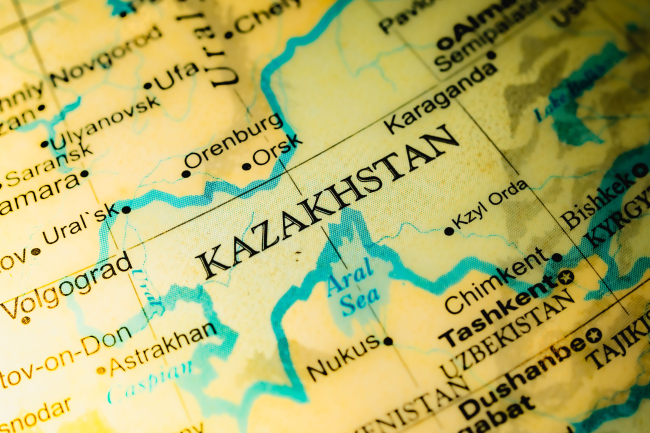
The year 2022 represented a dual shock for Kazakhstan. In January, the country faced its most severe political crisis since independence, followed in February by Russia’s full-scale invasion of Ukraine, which cast uncertainty over the borders of post-Soviet states. These consecutive crises profoundly shaped Kazakhstan’s domestic and foreign policy.
Central Asia: Making Use of a Historic Opportunity
This report analyzes the economic and geopolitical situation in Central Asia.


French Expert Says Afghanistan-Related Challenges Loom Large for Central Asia as Geopolitical Competition Intensifies
Addressing the situation in Afghanistan remains on top of the agenda for Central Asia, said Michael Levystone, an associate research fellow at the Institut Français des Relations Internationale (IFRI) Russia/Eurasia Center, in an exclusive interview with The Astana Times. The expert, who participated in the Astana International Forum (AIF) on June 8-9, also discussed the intensifying geopolitical competition in Central Asia, regional connectivity and water scarcity.


After the riots, a new era in Kazakhstan?
In January 2022 Kazakhstan underwent its most serious political crisis since its independence, proclaimed on December 16, 1991. The increase in the price of fuel has set ablaze the west of the country in the grip of socio-economic marginalization, then the southern regions, traditionally more resistant to central power. What actually happened, and what consequences did these troubles have at the national and regional levels?
Navigating the Storm: ‘OPEC+’ Producers Facing Lower Oil Prices
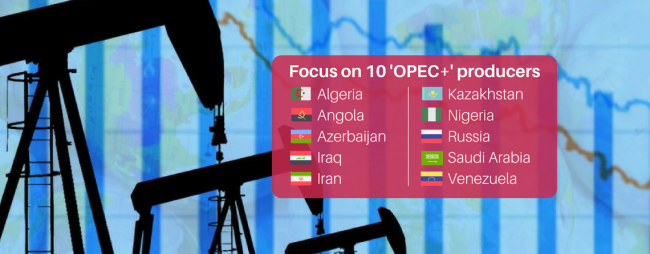
On 22 June 2018, “OPEC+” oil Ministers (Organisation of Petroleum Exporting Countries members and an ad hoc alliance with several non-OPEC producers, notably with Russia, Kazakhstan and Azerbaijan) will gather in Vienna to discuss the status and future of their production limitation agreement which was initiated in November 2016 and runs until the end of December 2018.
Central Asia: Facing Radical Islam
Twenty-five years after the fall of the Soviet Union and the declaration of independence by the republics of Central Asia, the issue of guaranteeing stability and security still looms large on Central Asia’s agenda.
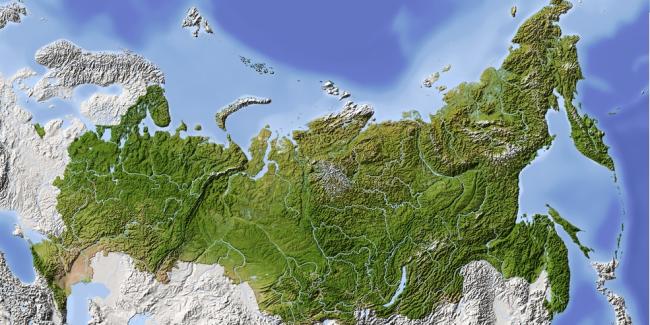
Eurasia in Russian Foreign Policy: Interests, Opportunities and Constraints
The Eurasian axis of Russian foreign policy has been given several impetuses over the last two years. The most important of these has been the sharp deterioration in relations with the West against the backdrop of the Ukraine crisis.
The Shanghai Cooperation Organization as "Geopolitical Bluff?" A View from Astana
Since the mid-1990s, the Shanghai Cooperation Organization (SCO) has been an important factor in, and exerts significant influence on both Kazakhstan's international situation and geopolitical processes in Central Asia. Various aspects of Kazakhstan's interests are included in the SCO, among them geopolitics, security, the economy and regional politics. The topics addressed by the SCO can be divided into wide-ranging and often unconnected problems, which are more often than not solved outside the framework of the SCO. In the end, the SCO is only a great 'geopolitical bluff.' And while the USA seems to be almost an 'unofficial partner' because it so influences Central Asia as a whole, the European Union has almost entirely withdrawn from that geopolitical scene. As yet, the SCO poses more challenges and risks for Kazakhstan than it offers advantages.
Kazakhstan After the Double Shock of 2022: Political, Economic and Military Consequences
The year 2022 represented a dual shock for Kazakhstan. In January, the country faced its most severe political crisis since independence, followed in February by Russia’s full-scale invasion of Ukraine, which cast uncertainty over the borders of post-Soviet states. These consecutive crises profoundly shaped Kazakhstan’s domestic and foreign policy.
Central Asia: Making Use of a Historic Opportunity
This report analyzes the economic and geopolitical situation in Central Asia.
Navigating the Storm: ‘OPEC+’ Producers Facing Lower Oil Prices
On 22 June 2018, “OPEC+” oil Ministers (Organisation of Petroleum Exporting Countries members and an ad hoc alliance with several non-OPEC producers, notably with Russia, Kazakhstan and Azerbaijan) will gather in Vienna to discuss the status and future of their production limitation agreement which was initiated in November 2016 and runs until the end of December 2018.
Ifri, a foundation recognized as being of public utility, relies largely on private donors – companies and individuals – to guarantee its sustainability and intellectual independence. Through their funding, donors help maintain the Institute's position among the world's leading think tanks. By benefiting from an internationally recognized network and expertise, donors refine their understanding of geopolitical risk and its consequences on global politics and the economy. In 2026, Ifri partners with over 90 French and international companies and organizations.
