




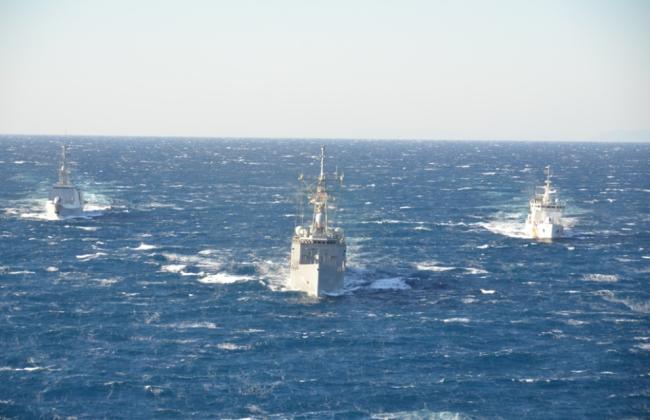
The French Military's Perception of the Turkish Military and Turkey's Expansion in the Eastern Mediterranean
In the summer of 2020, the Central and Eastern Mediterranean became the center of unusual tensions between France and Turkey. Given that these tensions were also military, which is uncommon for the two countries, the perception that the French military has of Turkey’s army and its doctrine is particularly relevant to address.
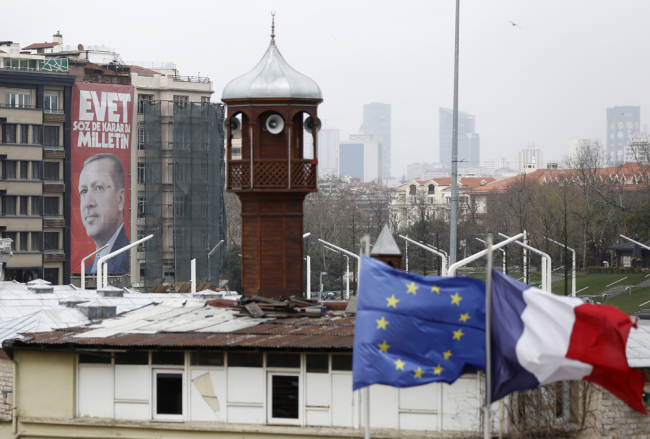
Building European Strategic Autonomy vs. Turkish Strategic Depth: Macron's Diplomatic Gamble
Since coming into office in 2017, Emmanuel Macron has been the loudest advocate for the development of European ‘strategic autonomy’, which aims at reinforcing the European Union’s geo-strategic independence. Asserting the EU’s role on the international stage, starting with its immediate neighborhood, directly clashes with Recep Tayyip Erdogan's long-term expansion strategy in several key areas.
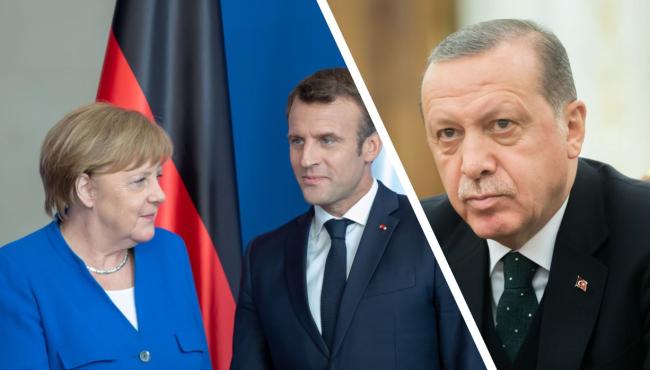
Conflicts in the EastMed: From Germany’s and France’s Conflicting Strategies to a Dual Approach
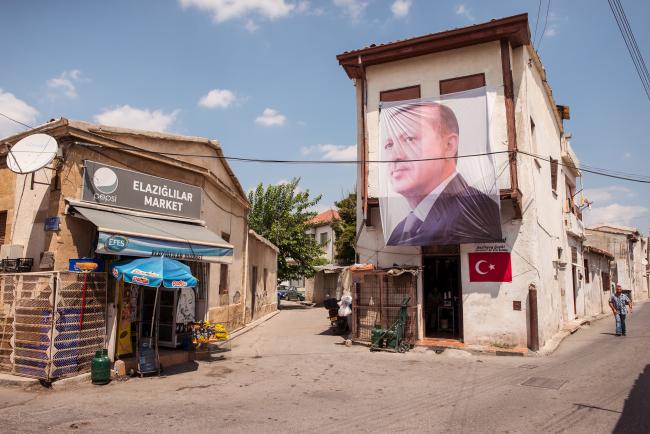
Turkey's Method in the Mediterranean: The Hold over Northern Cyprus
On July 20, 2021, Turkish President Recep Tayyip Erdoğan celebrated with his Turkish Cypriot counterpart Ersin Tatar the 47th anniversary of the Turkish military intervention in Northern Cyprus. This ceremony marks the strategic reinvestment of the Cypriot file by Turkey.
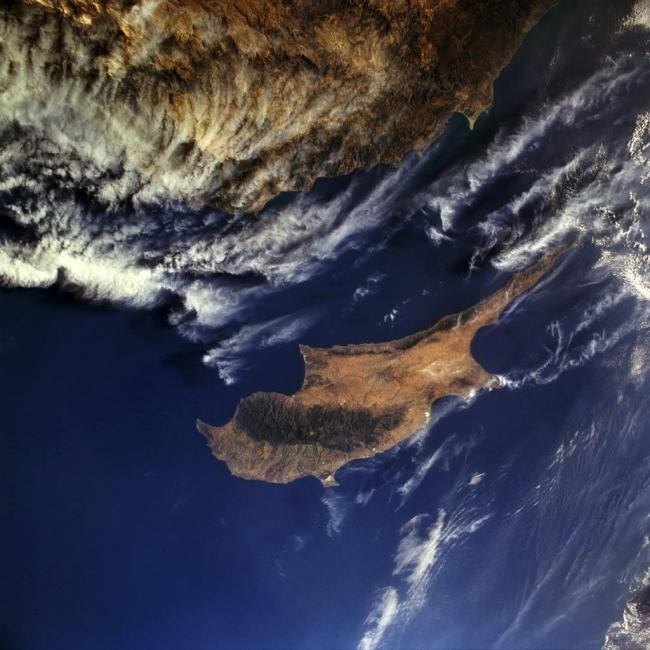
Back to “the Tradition”: Turkey’s Changing Position from a Federal to a Two-State Solution to the Cyprus Conflict
When it came to power in 2002, the Justice and Development Party (AKP) defended a bicommunal, federal solution for Cyprus, and supported the Annan Plan to reunite the island.
France vs. Turkey in the EastMed: A Geopolitical Rivalry between a “Keeper” of the Old Order and a Challenging Emergent Power
The Franco-Turkish standoff is first and foremost a geopolitical contest for influence in the EastMed area. It must be understood in light of Turkey’s rise as an emergent power in quest for geostrategic autonomy and France’s unease with Ankara’s growing assertiveness in a region that Paris traditionally views as part of its sphere of influence.
Russia and Turkey. Strategic Partners and Rivals
The extraordinarily troublesome year 2020 tested many international institutions and bilateral ties, but few experienced sharper challenges than the complex relations between Russia and Turkey, which have a strong impact on crisis developments in Europe’s immediate neighborhood.

Mavi Vatan, the "Blue Homeland": the Origins, Influences and Limits of an Ambitious Doctrine for Turkey
Turkey’s activism in the Eastern Mediterranean now appears to be guided by an ambitious legal and geopolitical doctrine, based on the claim of a vast maritime domain – the “Blue Homeland” or Mavi Vatan in Turkish.
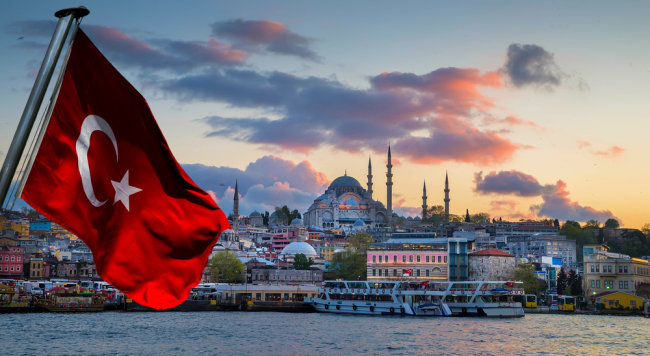
2021, year of the revival of EU-Turkey relations?
The EU and Turkey both say they are ready to iron out their differences and step up bilateral cooperation, which could take place in many areas. But Ankara will have to prove its goodwill.
Turkey-China Relations: Ambitions and Limits of the Economic Cooperation
At first glance, China and Turkey have many interests to cooperate. The deployment of the Chinese Belt and Road Initiative (BRI), Turkey's colossal investment and financing needs, as well as President Erdogan's mistrust of the West, appear as many converging interests. Yet economic cooperation between the two countries is struggling to achieve its full potential. Political differences persist, particularly the question of the Uyghurs.
Turkey’s New Gas Discovery in the Black Sea and Its Potential Implications
Turkish President Recep Tayyip Erdogan announced Turkey’s biggest gas discovery ever on August 21, 2020. Initial findings show that the estimated reserve capacity is 320 billion cubic meters (bcm) of gas.
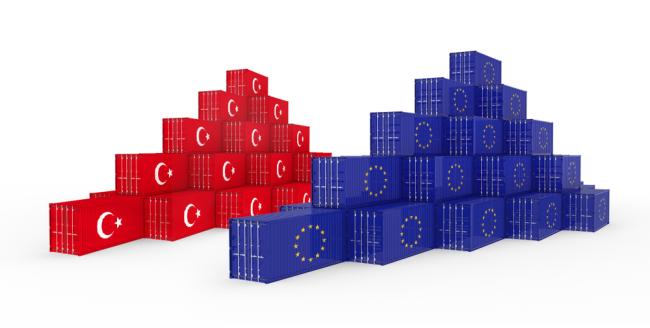
France and the Modernization of the EU-Turkey Customs Union: Interests and Obstacles
This report is part of a joint endeavor of the Centre for Applied Turkey Studies (CATS) at Stiftung Wissenschaft und Politik (SWP), along with Elcano Royal Institute (ELCANO, Madrid), The Polish Institute of International Affairs (PISM, Warsaw), Istituto Affari Internazionali (IAI, Rome) and the Hellenic Foundation for European and Foreign Policy (ELIAMEP, Athens), to open perspectives for the modernization of the European Union-Turkey Customs Union (EU-Turkey CU).


Turkey fuels regional power game over Mediterranean gas reserves
Competing claims have left Ankara isolated. Its efforts to stall projects threaten billions of dollars in investment. Europe’s top diplomat smiled for the camera as he took a helicopter flight over the disputed waters of the island of Cyprus at the end of June.
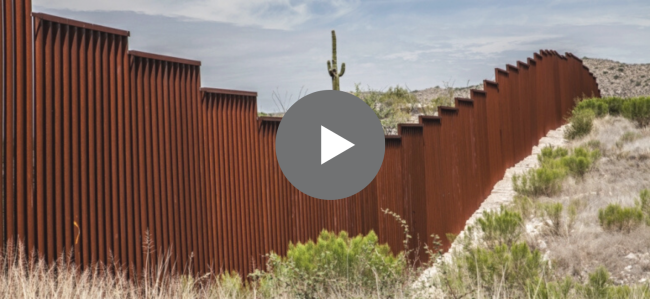
Immigration in the EU and the US: Comparing Border Policies
Both in the US and in Europe, border control has become one central component of immigration and asylum policies with seemingly the same objective: preventing irregular entries of migrants and refugees. This trend has accelerated in recent years, with ever stricter border controls, more detention of migrants and refugees, the use of the notion of “safe third country” and partnerships with third countries, some of which now play a pivotal role in controlling the borders of their US and European neighbors, such as Turkey and Mexico.
What are the differences and similarities in the policies implemented in the EU and the US? What is their impact on the fundamental rights of migrants and refugees? In both contexts, what relative weight is given to the rights of migrants and refugees on the one hand, and to border enforcement measures on the other? Finally, what long-term consequences will the COVID-19 crisis have on border policies in both cases?
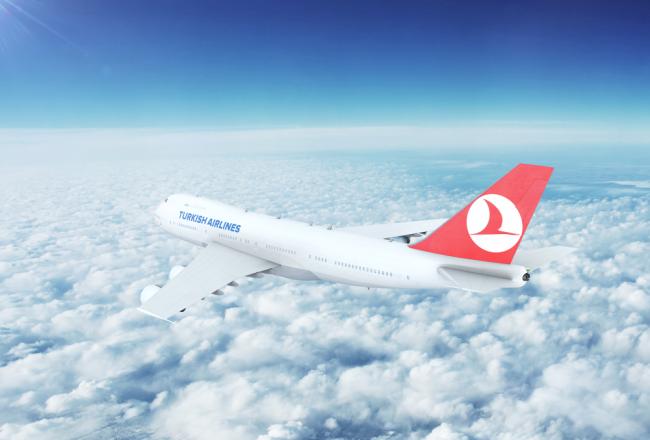
Turkish Airlines: An International Strategic Instrument for Turkey
Turkey has undergone significant transformations since the Justice and Development Party (AKP) came to power in 2002, as illustrated by the notable growth of its airline industry. Turkish Airlines (THY) is the main company based in the country, and has dramatically extended its network of destinations in the past 15 years.

EU border crisis : an interview with Matthieu Tardis
Matthieu Tardis, Research Fellow at the Center for Migration and Citizenship spoke about the European Union's migration policy and the crisis at the Turkish-Greek border on Euronews's program, Now.
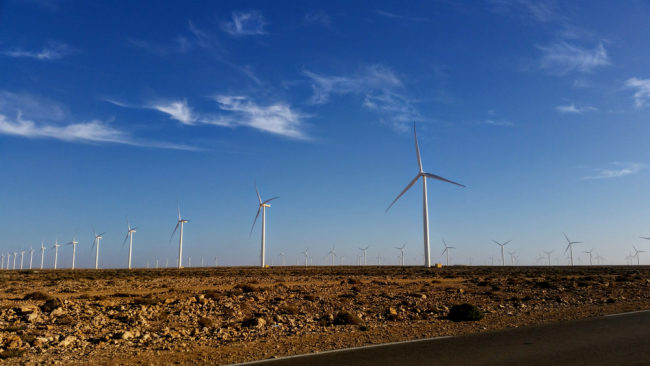
Accelerating the Energy Transition in the Southern Mediterranean
The Mediterranean region has been identified as one of the most affected regions by climate change endangering human security at the food-water-energy nexus.

The 2016 Failed Coup in Turkey: What Is the Impact on Turkish-African Relations?
The July 2016 failed coup against President Recep Tayyip Erdoğan’s government not only resulted in a dramatic upheaval in Turkey, it also had a significant impact on the structure of its international relations and its networks of influence abroad.

Turkey end French studies in response to call for Koran reform
Turkey has decided to suspend the opening of several French studies departments in its universities, in a context of bilateral tensions after the publication of a "manifesto against new anti-Semitism" last month, calling for the correction of some parts of the Quran. Dorothée Schmid, head of the Contemporary Turkey program at Ifri, analyses the reasons behind this decision and its implications for the two countries.
Mind the Gap: How France and Germany Can Spearhead Joint Foreign Policy Initiatives Now
In light of the current instability on Europe’s borders and uncertainties about the international role of the US under the administration of President Donald Trump, it is high time for Franco-German foreign policy initiatives. With the formation of a new German government, a window of opportunity opens for new joint action by the two countries at the core of the EU. At the same time, differences between France and Germany, both on policy issues and in terms of their strategic cultures, could impede any such cooperation.
Turkey's re-imagined neighborhood policy after the Arab Spring
Joshua W. Walker was a speaker at the international conference on “The international consequences of the Arab Spring” held at Ifri on March 13th, 2012. This paper is a follow up on his oral intervention.
Is Turkey an Economic Exception?
This roundtable dealt with the specificities of Turkey"s economy, which is completing major economic achievements in particularly difficult times. François Faure analyzed the risks of an economic backlash following the European crisis; Turkey appears indeed in a weaker position than in 2008 and difficult times could lie ahead. Esen Çağlar pointed out how Turkey progressed from a low-technology to medium-technology economy, thus ensuring considerable levels of growth. Yet, a renewed reform agenda is needed if Turkey wants to maintain its economic performance. Deniz Ünal addressed the issue of economic governance under the AKP and the consistency of their economic policy agenda. In any case, Europe will most certainly play a role in the country"s economic future. According to Rémi Bourgeot, the Middle East cannot provide an alternative to European markets even if it offers interesting opportunities for the Turkish South East. Turkey"s future growth will also depend on its capacity to impose itself as a corridor between Europe and its neighbours energy resources.
Kanal Istanbul: Pipedream or Politics ?
This paper examines Kanal Istanbul, a plan proposed by recently re-elected Turkish Prime Minister Recep Tayyip Erdogan to bypass the Bosphorus Strait by creating a canal west of Istabul.
Ifri, a foundation recognized as being of public utility, relies largely on private donors – companies and individuals – to guarantee its sustainability and intellectual independence. Through their funding, donors help maintain the Institute's position among the world's leading think tanks. By benefiting from an internationally recognized network and expertise, donors refine their understanding of geopolitical risk and its consequences on global politics and the economy. In 2026, Ifri partners with over 90 French and international companies and organizations.
