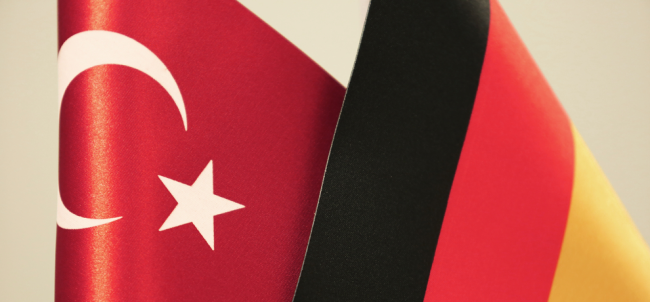
German Politics towards Turkey under Merkel: a Critical Assessment
Turkish President Erdoğan demanding blood tests for German MPs with Turkish origin or Nazi comparisons coming from Ankara: German-Turkish relations have reached rock bottom and bonds of trust between both countries are almost completely disrupted.
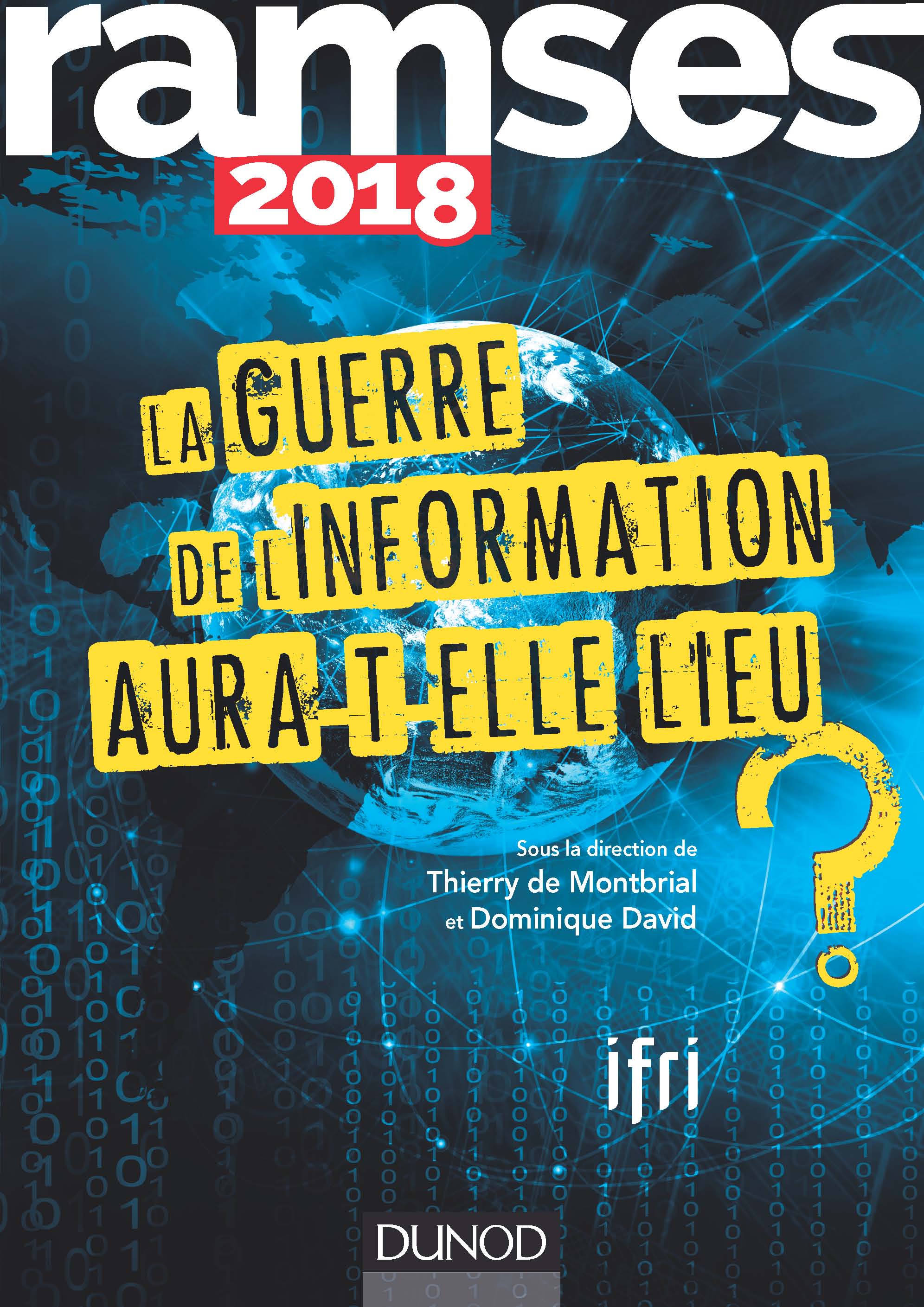
RAMSES 2018. Will the Information War Take Place?
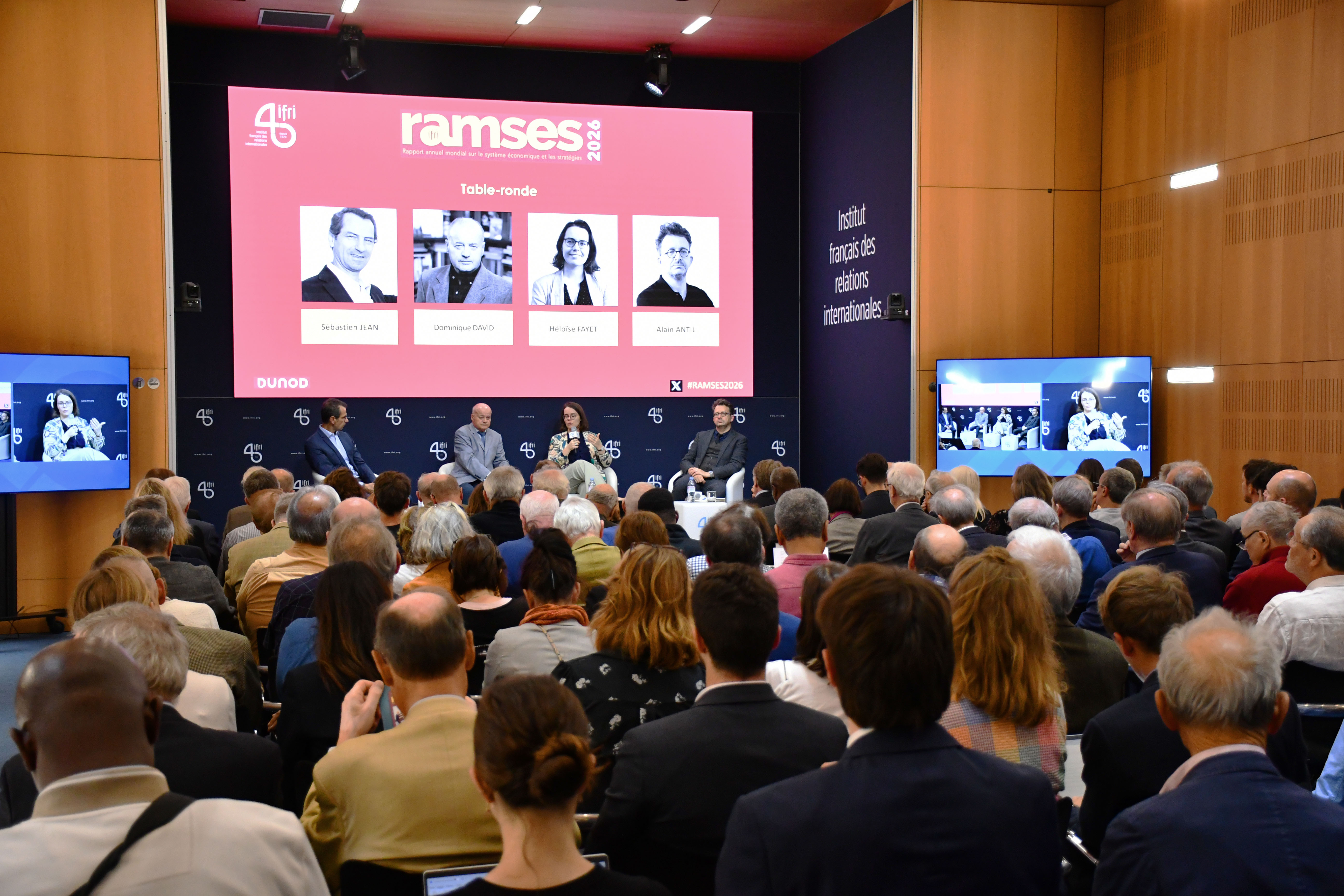
RAMSES 2018. Will the Information War Take Place?, written by Ifri's research team and external experts, offers an in-depth and up-to-date analysis of global geopolitics.
Trade without Religion between Turkey and Syria
A saying claims that trade has no religion; it even adapts to a war situation, as demonstrated by the real-time reorganisation of trade channels at the Turkish-Syrian border.
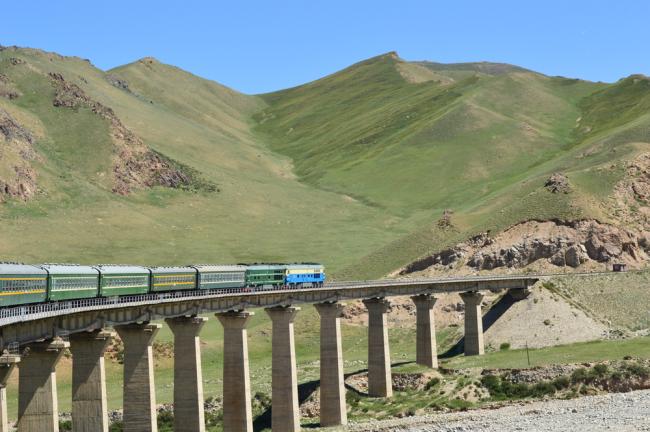
Three Years of China’s New Silk Roads: From Words to (Re)action?
More than three years have already passed since China’s new silk roads were launched by President Xi Jinping. When he first mentioned the idea in an autumn 2013 speech in Kazakhstan, questions quickly emerged on the meaning of this general concept, which soon became widely promoted through a large-scale and well-coordinated public diplomacy strategy both in and outside China.
The Taboo of the Armenian Genocide, Part Two: The Politics of American Avoidance
The Armenian Genocide has been a topic of trials and tribulations in American politics for quite some time. It has been an issue in Presidential campaigns, like that of now-President Obama: when he promised to recognize it. It has been the topic of votes, such as the most recent 2010 vote which failed to recognize the genocide. It has been a funnel for interests, lobbying, and foreign investment. With Germany recently recognizing the genocide and an American Presidential election at hand, speculation of American recognition is once again at a high. As politicians debate the issue, or avoid it altogether, the American political system moves forward. There are various key players in American politics, but in specificity to the Armenian Genocide issue, there are the Armenian, Turkish, and Israeli lobbies, and the constituencies they represent.
The Taboo of the Armenian Genocide, Part One: Global Reaction and American Inaction
In the Syrian refugee crisis enveloping Europe, Turkey has become the bottleneck toward which migrants are flowing into Europe, a factor increasingly important for Germany in particular. Relations have been strained, however, due to disputes over the possibility of lifting visa requirements.
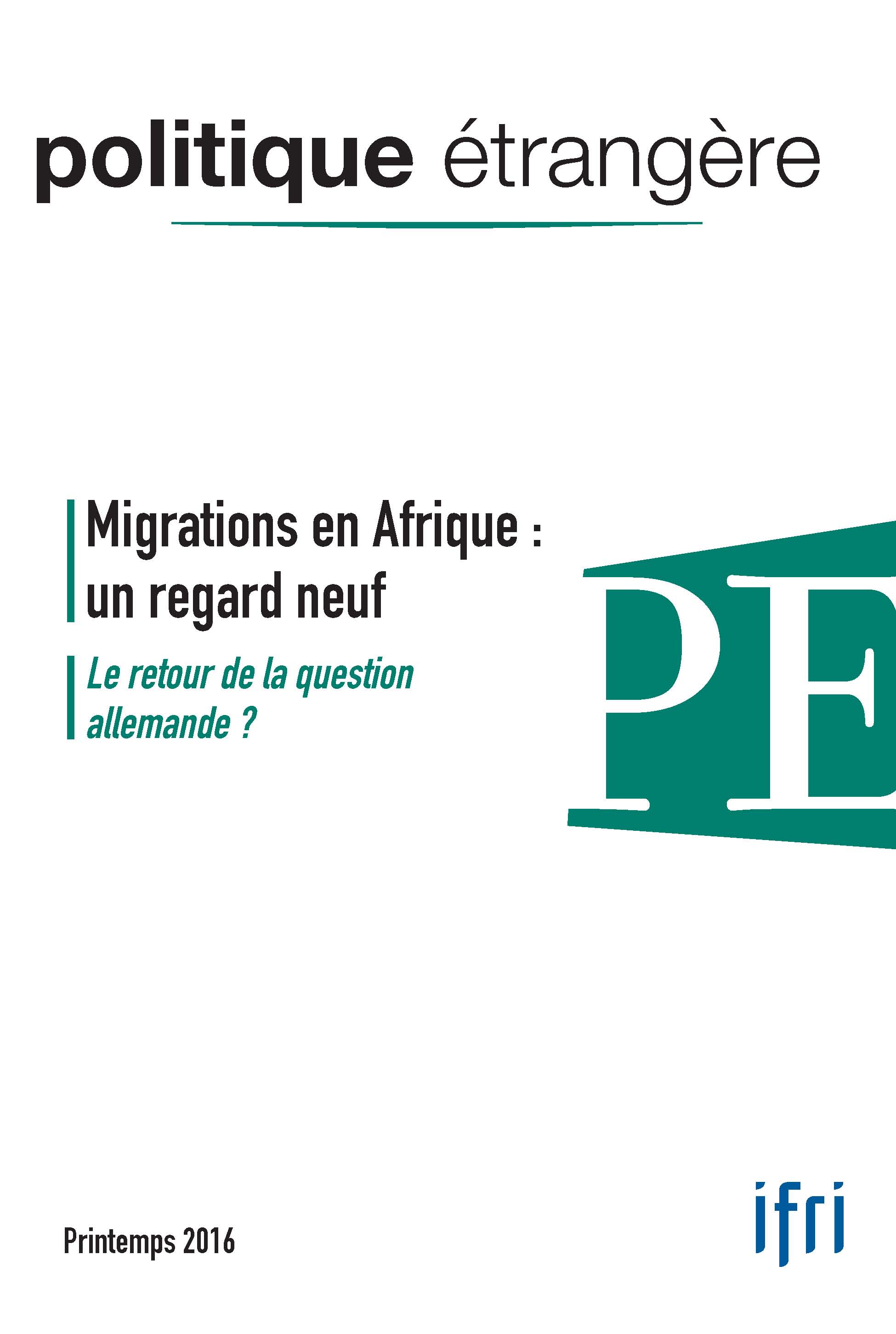
Migrations in Africa: Another Look
Migration in Africa is a major concern, but largely for Africans alone. To adequately study the question of international migration, one must look beyond Europe’s current predicament. Through its dossier on “Migrations in Africa: Another Look”, this issue of Politique étrangère examines a number of factors that determine migration movements, how states in Africa attempt to manage the significant problem of internal migration, the difficulties of integrating migrant workers into their host societies, and the false pretenses of Euro-African agreements on readmission.
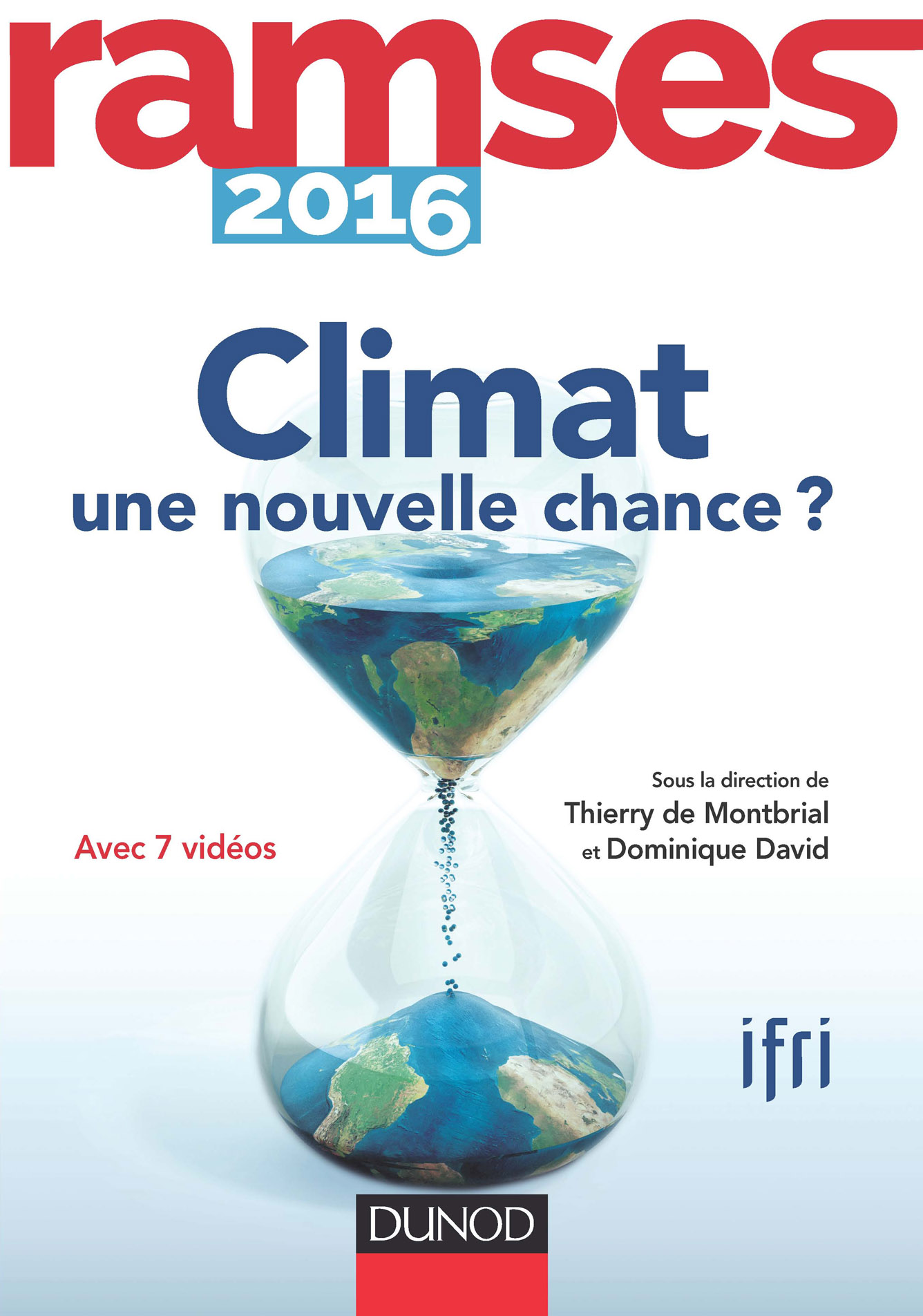
RAMSES 2016. Climat : une nouvelle chance ?
Written by Ifri's research team and its network of associates, the new RAMSES 2016 analyses geopolitics on a worldwide scale. The major theme of this 34th edition is Climate: A new chance? In addition, RAMSES 2016 tackles the insertion of Africa in globalization and the uncertainties of democracy today in post-industrial societies, but also in the South.

Revisiting Relations 100 Years After the Armenian Genocide
The 100th anniversary of the Armenian genocide will not mark a great historical moment in Armenian-Turkish relations.
Algeria, a New Regional Force? / Armenia-Turkey: the Wasted Centennial
Algeria has appeared strangely calm despite an explosive regional environment. Nevertheless, a number of storm clouds lurk on the horizon: the fall of oil prices in a highly resource-driven economy; a decrease in revenues that have stood to maintain social peace; paralysis of the political system; instability in the Maghreb (Tunisia, Libya…) and the Sahel (Mali…). Algiers is faced with many difficult choices. How should the succession of president Bouteflika be settled in a society that is increasingly depoliticized but that nevertheless contests the regime’s opacity? Is it possible to finally diversify an economy that is still structured on rent from the country’s resources? How can the country protect itself from external disorder? As the major military power in the region, Algeria has followed a path of non-engagement in external affairs for decades. This is no longer viable. At both the internal and external level, the regime will have to demonstrate flexibility in dealing with new, potentially dangerous situations.
This issue of Politique étrangère also deals with two major themes of 2015: the 100 year anniversary of the Armenian genocide, which was a wasted opportunity to link Ankara and Erevan, but has proven to be revealing Turkish contradictions, among other things; the shifting of international migrations, in particular those involving Europe and the Mediterranean region.
A range of other topics are also explored in this issue that strike at the heart of many of the most pressing international debates today: The negotiation of a possible Transtlantic Trade and Investment Partnership (TTIP), Chinese visions of the “New Silk Roads”, the state of Somalia, piracy in the Gulf of Guinea, and relations between Muslims states and Islam in France.
Turkey and the Armenian Genocide: from Denial to Recognition?
At the close of World War I, denial of the Armenian genocide became a central point in Turkey’s official doctrine.
Russia’s New Energy Alliances: Mythology versus Reality
This brief paper analyzes the energy relations between Russia and its “new” energy partnerships – with China and Turkey – that the Kremlin tends to publicly promote as an alternative to energy relations with the West.
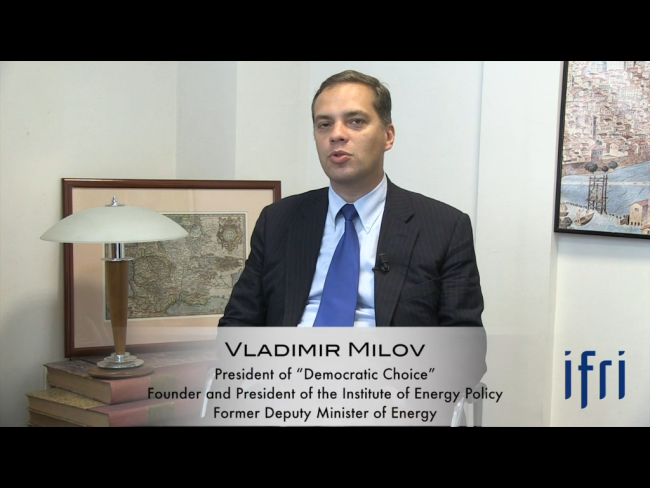
"Russia New Energy Alliances: Mythology versus Reality", Interview with Vladimir MILOV
"Past year has been marked not only with the Ukrainian crisis and unprecedented tensions in political relations between Russia and the West, but also with somewhat radical change of Moscow’s approach to international energy affairs. Widely promoted new energy partnerships with countries like China and Turkey were supposed to demonstrate that Russia has a choice of alternatives for mass-scale international energy cooperation, as compared to previous domination of European dimension, and if West wishes to cut ties with the Kremlin, Russia has somewhere else to go.
Does Russia really have an option of developing new international energy partnerships comparable in scale and significance to those with Europe as the consumer of energy, and with Western IOCs as key agents helping to secure further exploration and development of Russian oil & gas resources?"
Turkey: the Sèvres Syndrome, or the Endless War
For Turks, the Treaty of Sèvres symbolises the dissolution of the empire and the carving up of Turkey by foreign powers.
Syria: Ankara versus Tehran?
Turkish leaders would like to turn their country into the leader of the Middle East. However, they are in competition with another of the region’s key players: Iran.
The Left in Turkey: A Fragmented History
The Gezi protest movement gripped Turkey throughout the summer of 2013 and reignited observers’ interest in Turkey’s left-wing activist groups, which participated in the protests.
Kurds and the State Option
The Kurds in Iraq occupy what is practically a state. The Syrian civil war has resulted in the autonomization of the country’s Kurdish population. To Kurdish advantage, the JDP’s (Justice and Development Party – Turkey) ambiguous policy has cleared a new political space in Turkey.
What Kurdish Policy Will the JDP Adopt?
The emergence of an autonomous Iraqi Kurdistan, the civil war in Syria, and the electoral ambitions of the JDP (Justice and Development Party) have led to new policy being formed by the Turkish government regarding the Kurdish issue.
Ifri, a foundation recognized as being of public utility, relies largely on private donors – companies and individuals – to guarantee its sustainability and intellectual independence. Through their funding, donors help maintain the Institute's position among the world's leading think tanks. By benefiting from an internationally recognized network and expertise, donors refine their understanding of geopolitical risk and its consequences on global politics and the economy. In 2026, Ifri partners with over 90 French and international companies and organizations.