
Media Interventions
Our researchers intervene in the public debate and bring their light to the French and international media. Discover all their media interventions.

South Africa : internal dissensions within the ANC
How to explain the decline of the ANC during the last election? Why 2017 is a decisive year for the ANC? How to explain the student protests during the past two years?
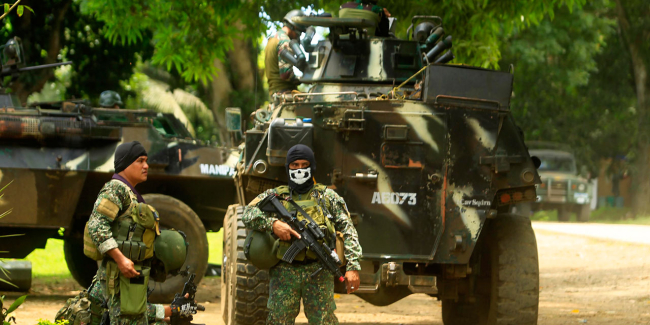
Menace islamiste, loi martiale, ... que se passe-t-il aux Philippines?
Philippines' President wants to limit islamist groups' capacity after several attacks in the South of the country.
Russia and Information Warfare: Aims, Tools and Implications for the West
How can the West counter Russia's cyber and psychological operations? Can we talk about a "militarization" of information in Russia?
Russia and Information Warfare: Aims, Tools and Implications for the West - Keir Giles
How can the West counter Russia's cyber and psychological operations? Can we talk about a "militarization" of information in Russia?
Donald Trump's challenge to American democracy and the western alliance
On April 27, 2017, Ifri hosted David FRUM (former speechwriter for President George W. Bush, senior editor for The Atlantic magazine) to discuss Donald Trump's challenge to American democracy and the western alliance.
Emerging Countries and the "Return of Geopolitics": Economic and Geopolitical Cross-Sectional Perspectives
In 2014, the deceleration of global growth trends revealed wide disparities between emerging countries. While the big emerging countries face a decline in their growth potential, smaller ones continue to show resilience and drive in what seems to be a difficult international grid.


From Russia, with love
Russia is trying to “sow chaos” in Europe by betting big on Marine Le Pen and France's far right.
Alternative für Deutschland: right-wing populism or extreme right?
An interview with Fabian Virchow, professor at the University of Applied Sciences in Düsseldorf and head of the extreme right Program at Hans-Böckler Foundation. M. Virchow came to Paris in April to speak at a conference on the German parti AfD -Alternative for Germany- organised by the Study Committee on French German relations.
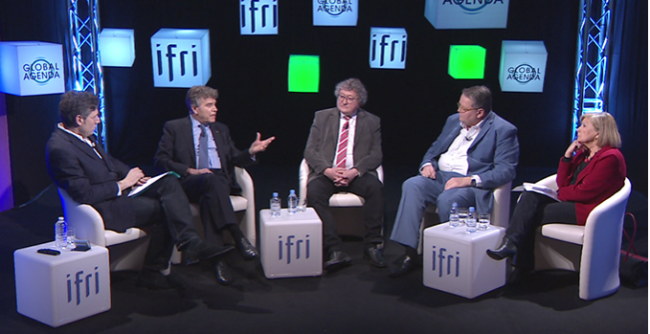
Populism: In the Heat of the Moment
The UK leaving the EU. Donald Trump's victory in the US presidential election. The crushing defeat of Italy's prime minister in a national referendum. 2016 was a year of massive change led by populism. The roots of this trend are widespread, and they involve the ideological divide between the elites of current political systems and ordinary citizens, as well as the widening gaps in social inequality that can be attributed to growing globalization.
Moscow Eyes the French Elections
With just a few weeks left until French voters head to the polls, far-right presidential candidate Marine Le Pen made her way to Moscow for a surprise meeting with Russian President Vladimir Putin.
Germany: with AfD the extreme right will enter the Bundestag
The Netherlands and France are not the only founding member states of the European Union that see extreme right party’s on the rise. The “Alternative für Deutschland” gathers 10 percent of voting intentions in Germany – especially in the East. Some of its leaders don’t hesitate to use vocabulary banished since 1945.

Allies Fear Trump Is Eroding America’s Moral Authority
PARIS — When the State Department released its annual human rights report last week, it contained many of the usual tough American judgments of other countries. Iran was criticized for restricting freedom of religion and the media; Russia for discriminating against minorities; Eritrea for using torture; Bulgaria for violence against migrants and asylum seekers. The list went on.

EU Leaders Meet in Versailles to Hash Out Bloc’s Future
Four top European leaders hold talks Monday on the future of the European Union, at a time when it faces multiple crises that are sparking doubts about its very existence. Hosted by French President Francois Hollande at the iconic Versailles palace outside Paris, the dinner meeting that brings together German, Italian and Spanish leaders comes amid heated discussion about how to move forward the deeply troubled European Union in the face of Brexit, rising nationalism and an EU-skeptic Trump administration in Washington.
AfD and National Front converge ahead of elections
The right-wing spiral of Germany’s anti-EU Alternative für Deutschland party (AfD) has brought it shoulder to shoulder with France’s National Front (NF). The two parties see eye-to-eye on a number of issues, including Russia.

Sweden brings back military conscription amid Baltic tensions
The Swedish government has decided to reintroduce military conscription - a move backed by the country's MPs. Why is this happening? And how will it work? How does it impact regional security? And which other European countries have conscription?
Siloviki: What Influence on Russia's Domestic and Foreign Policy?
3 questions to Mark GALEOTTI, Senior Researcher at the Institute of International Relations Prague, Director of Mayak Intelligence consultancy.

Does Merkel want to regain popularity at the expense of Europe?
Angela Merkel loosing the elections in Germany could be one of the many electoral suprises in 2017. Surveys on voting intentions for the legislative elections in September show that her opponent Martin Schulz (social-democrat) has started overtaking her.

Emmanuel Macron aide blames Russia for hacking attempts
Russia watchers say Moscow is deploying considerable resources to swing the French election.
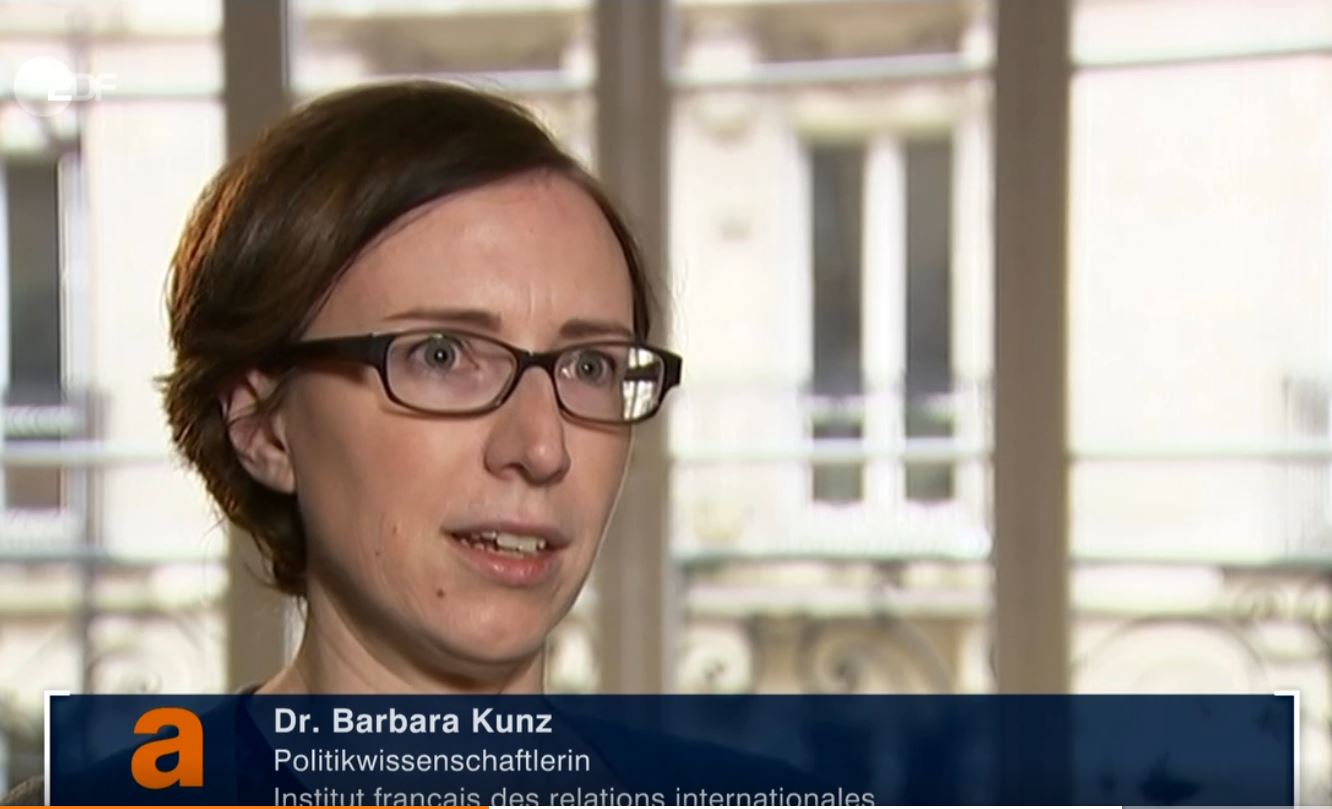
The fight for the Elysée ...and for Europe
On Germanys second channel, ZDF, Barbara Kunz enlarges upon the French presidential election in May.
Tough Balancing Act for Japan’s Abe in Second Meeting With Trump
Japanese Prime Minister Shinzo Abe was the first foreign leader to meet with U.S. President-elect Donald Trump after his election. On Friday, Feb. 10, he will meet with President Trump, before spending the weekend at Mar-a-Lago in Florida.

Ifri, a foundation recognized as being of public utility, relies largely on private donors – companies and individuals – to guarantee its sustainability and intellectual independence. Through their funding, donors help maintain the Institute's position among the world's leading think tanks. By benefiting from an internationally recognized network and expertise, donors refine their understanding of geopolitical risk and its consequences on global politics and the economy. In 2026, Ifri partners with over 90 French and international companies and organizations.

Titre container
In the News
Titre en savoir plus
View our latest interventions in the press
View our latest interventions in the press
Titre en savoir plus
You would like our research fellows to participate in interviews and debates with your media channels
You would like our research fellows to participate in interviews and debates with your media channels