





"Information Fusion": A Lever of Maritime Power for France?

France is a seafaring nation. The stability of its national economy, trade, and security are inextricably linked to the maritime character of international trade.
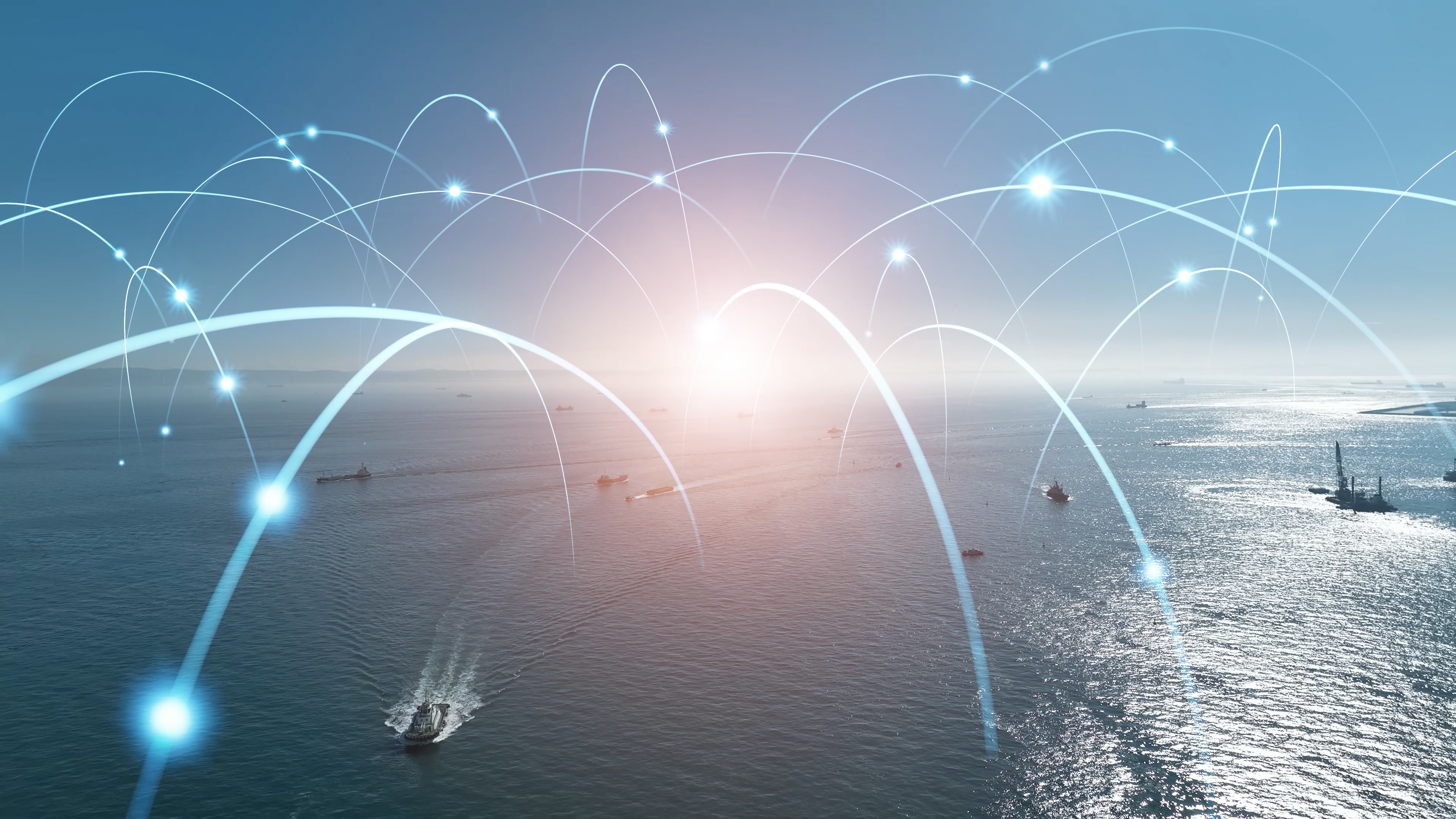
Yet the world’s seas and oceans have always lent themselves to various illegal activities due to their immensity, remoteness, and the freedom of navigation that characterizes their legal regime. The sea offers a wide range of potential targets for terrorism or piracy, including merchant vessels, offshore platforms, and submarine cables, the destruction or disruption of which would inflict colossal physical and economic damage. The deliberate use of the maritime domain to commit harmful, hostile, or illegal acts, including against the maritime transportation system, is now a constant threat.
In 2003, the US developed an “information dominance” strategy that gave rise to Geospatial Intelligence (GEOINT). This discipline enables the collection, processing, and dissemination of geo-referenced and geospatial information via the fusion of multi-layer and multi-sensor data. Since 2007, technological innovations, as well as new regulations resulting from the Safety of Life at Sea (SOLAS) Convention, have gradually increased the amount of usable data, as well as our ability to monitor and control activities at sea, while simultaneously developing the maritime aspects of GEOINT.
Against this backdrop, the US developed the concept of maritime domain awareness (MDA). In the US, MDA is understood as a shared approach to maritime threats and changes therein, incorporating several actors to better facilitate coordination and cooperation between the various organizations responsible for security at sea, at the national and international levels. The International Maritime Organization (IMO) defines MDA as “the effective understanding of anything associated with the maritime domain that could impact security, safety, the economy or the marine environment.”
This briefing calls for France to implement a “national plan” and an interministerial governance structure specifically for MDA. This reform would streamline the existing, scattered framework and contribute to at least three of the strategic functions cited in the 2022 National Strategic Review: prevention, knowledge-appreciation-anticipation, and influence.
This Briefing is also available in French: La « fusion de l’information » : levier de la puissance maritime française ?
This page contains only a summary of our work. If you would like to have access to all the information from our research on the subject, you can download the full version in PDF format.
"Information Fusion": A Lever of Maritime Power for France?



Jérémy BACHELIER
Former Military Fellow, Security Studies Center, Ifri

Security Studies Center
Heir to a tradition dating back to the founding of Ifri, the Security Studies Center provides public and private decision-makers as well as the general public with the keys to understanding power relations and contemporary modes of conflict as well as those to come. Through its positioning at the juncture of politics and operations, the credibility of its civil-military team and the wide distribution of its publications in French and English, the Center for Security Studies constitutes in the French landscape of think tanks a unique center of research and influence on the national and international defense debate.

Confronting Russia’s High-Velocity Arsenal: European Challenges and Solutions
Since February 2022, Russian missile and long-range drone strikes against Ukraine have served as near-daily reminders of what European states could face in a war with Russia. The same weapon systems battering Ukrainian infrastructure and population centers would be directed against European military and civilian targets in any confrontation between Russia and NATO. As Russian missile production expands and its arsenal diversifies, Europe must confront an uncomfortable question: how to deter, and if push comes to shove, fight Russia's long-range strike arsenal?

The War on Terrorism: Global Experts Reflect on Lessons Learned Twenty-Five Years After 9/11
Twenty-five years ago, the September 11 attacks prompted the invention of new security architectures that shaped the war on terrorism. Sixteen think tank experts from fifteen countries reflect on the successes, failures, and missed opportunities in the fight against terrorism—a fight that is still ongoing.
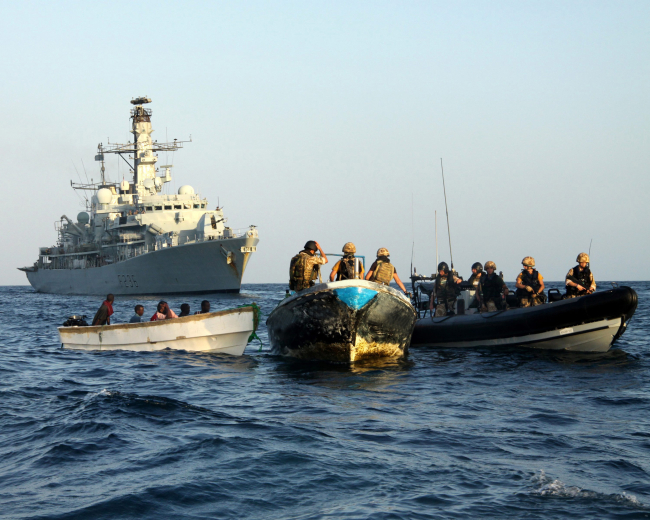
From Corsairs to Private Military Contractors. Nonmilitary Maritime Actors and the Historical Continuities of Naval Warfare
Since late 2023, several Houthi attacks on commercial shipping have involved privately contracted armed teams conducting defensive engagements and coordinating immediate response efforts, often in the relative absence of regular naval forces during the immediate hostilities at sea. These cases highlight a strategic tension that increasingly confronts modern navies. On the one hand, they are expected to conduct persistent, low-intensity maritime security tasks such as counterpiracy, maritime policing, and the protection of commercial shipping. On the other hand, they face renewed pressure to prepare for high-intensity conflict against peer and near-peer adversaries amid the return of great power competition.
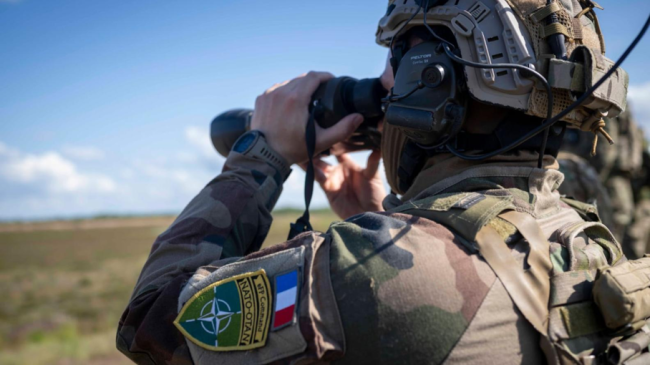
Framework Nation: A European Challenge and French Ambition
First appearing in the early 2000s, the framework nation concept follows several distinct rationales, whether it refers to a country assuming the leadership of a military operation, directing a multinational capability project, or commanding a permanent force structure. In every case, the country that takes on this role fully intends to derive from it additional politico-military influence.