



The Nuanced Relationship Between Public Opinion and Foreign Policy
Public sentiment is something decision-makers must contend with, especially in democratic states. However, the extent to which public opinion shapes foreign policy varies. Three Council of Councils experts in France, India, and Nigeria reflect on how public opinion does—and sometimes does not—affect foreign policy decisions.
In France, foreign policy falls within what is commonly referred to as the president of the republic’s domaine réservé (reserved domain). Since taking office, President Emmanuel Macron has never openly acknowledged any influence of public opinion on his foreign policy. Instead, he has sought to persuade the French public of the relevance of his decisions, particularly on sensitive issues. It must be noted that opinion polls cannot demonstrate that policy shapes public opinion, nor, conversely, that public opinion shapes policy: correlation does not imply causation. Three examples illustrate the unclear link between public opinion and French foreign policy.
Let’s consider first the case of Ukraine: Macron was well aware that sanctions against Russia would weigh on his fellow citizens’ purchasing power and risk backlash. Nevertheless, he chose to uphold the policy, explained it publicly, and the French populace repeatedly expressed clear support for the sanctions, though that support eventually declined.
Another example is the Israeli-Palestinian conflict, which is arguably the most mobilizing issue in international affairs among the French public. Since the Six-Day War in 1967, a pro-Palestinian movement has emerged that has sought to influence French foreign policy.
Large demonstrations have accompanied every major outbreak of violence in the Middle East, including in the aftermath of the October 7, 2023, attack. For many years, numerous opinion polls have shown that a majority of French citizens support the creation of a Palestinian state. This leads one to ask if Macron ultimately yielded to public opinion when he recognized the State of Palestine in September 2025.
However, the reality is more complex. On the one hand, the president put forward other arguments to justify the recognition. On the other hand, at the time he announced his intention to proceed with recognition—while the war in Gaza raged and Israelis remained hostages of Hamas—a poll showed that only 22 percent of the French public supported immediate and unconditional recognition.
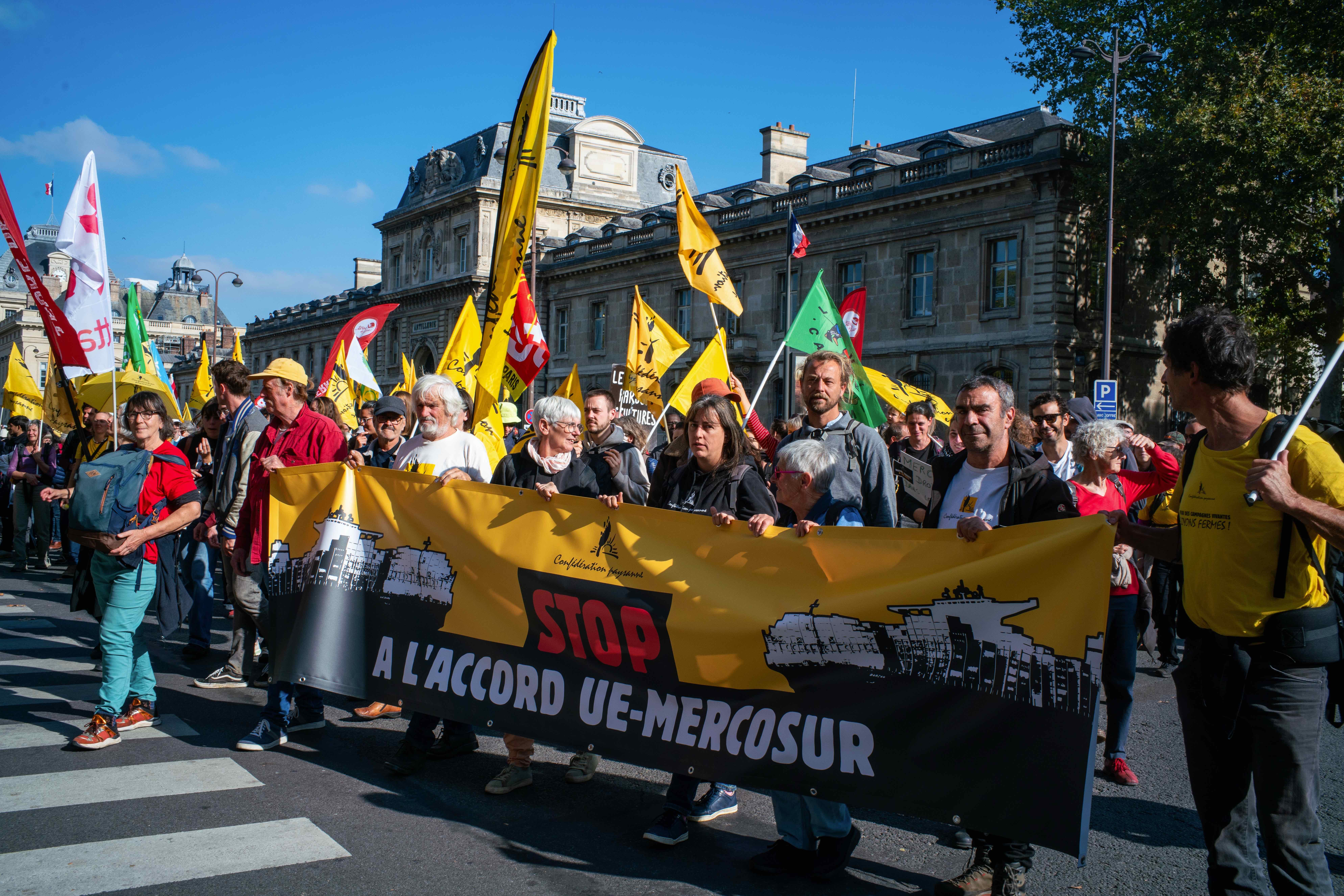
A final example deserves mention: France’s opposition to the free trade agreement between the European Union and Southern Common Market (Mercosur). The prospect of the agreement triggered farmers’ protests and generated widespread opposition among the French public. Macron’s position appeared to evolve over time. He sought to reach a more favorable agreement and succeeded in obtaining several concessions from the European Commission that negotiated on behalf of the EU Members States. Nevertheless, in January 2026, he decided to vote against its signature, citing “unanimous political opposition” in both the National Assembly and the Senate. In this case, only the French president can answer the question of whether he yielded to public opinion.
As Macron’s second and final term draws to a close in the coming months, it is not clear that his foreign policy choices have been significantly shaped by domestic public opinion. Other factors—a combination of national interests and values—have probably played a more important role in shaping the president’s stance on the international stage.
> Read the article on the Council on Foreign Relations' website

Available in:
Themes and regions
Share

Marc HECKER
Executive Director of Ifri, Editor-in-Chief of Politique étrangère, and Research Fellow at the Security Studies Center, Ifri
Security Studies Center
Heir to a tradition dating back to the founding of Ifri, the Security Studies Center provides public and private decision-makers as well as the general public with the keys to understanding power relations and contemporary modes of conflict as well as those to come. Through its positioning at the juncture of politics and operations, the credibility of its civil-military team and the wide distribution of its publications in French and English, the Center for Security Studies constitutes in the French landscape of think tanks a unique center of research and influence on the national and international defense debate.

Confronting Russia’s High-Velocity Arsenal: European Challenges and Solutions
Since February 2022, Russian missile and long-range drone strikes against Ukraine have served as near-daily reminders of what European states could face in a war with Russia. The same weapon systems battering Ukrainian infrastructure and population centers would be directed against European military and civilian targets in any confrontation between Russia and NATO. As Russian missile production expands and its arsenal diversifies, Europe must confront an uncomfortable question: how to deter, and if push comes to shove, fight Russia's long-range strike arsenal?

The War on Terrorism: Global Experts Reflect on Lessons Learned Twenty-Five Years After 9/11
Twenty-five years ago, the September 11 attacks prompted the invention of new security architectures that shaped the war on terrorism. Sixteen think tank experts from fifteen countries reflect on the successes, failures, and missed opportunities in the fight against terrorism—a fight that is still ongoing.
From Corsairs to Private Military Contractors. Nonmilitary Maritime Actors and the Historical Continuities of Naval Warfare
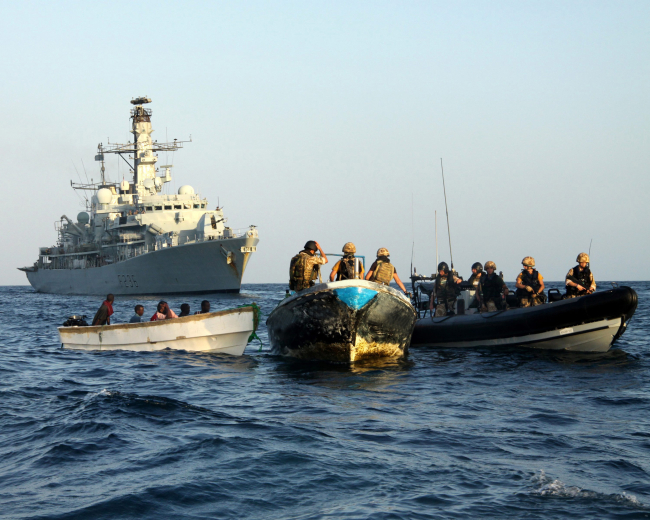
Since late 2023, several Houthi attacks on commercial shipping have involved privately contracted armed teams conducting defensive engagements and coordinating immediate response efforts, often in the relative absence of regular naval forces during the immediate hostilities at sea. These cases highlight a strategic tension that increasingly confronts modern navies. On the one hand, they are expected to conduct persistent, low-intensity maritime security tasks such as counterpiracy, maritime policing, and the protection of commercial shipping. On the other hand, they face renewed pressure to prepare for high-intensity conflict against peer and near-peer adversaries amid the return of great power competition.
Framework Nation: A European Challenge and French Ambition
First appearing in the early 2000s, the framework nation concept follows several distinct rationales, whether it refers to a country assuming the leadership of a military operation, directing a multinational capability project, or commanding a permanent force structure. In every case, the country that takes on this role fully intends to derive from it additional politico-military influence.